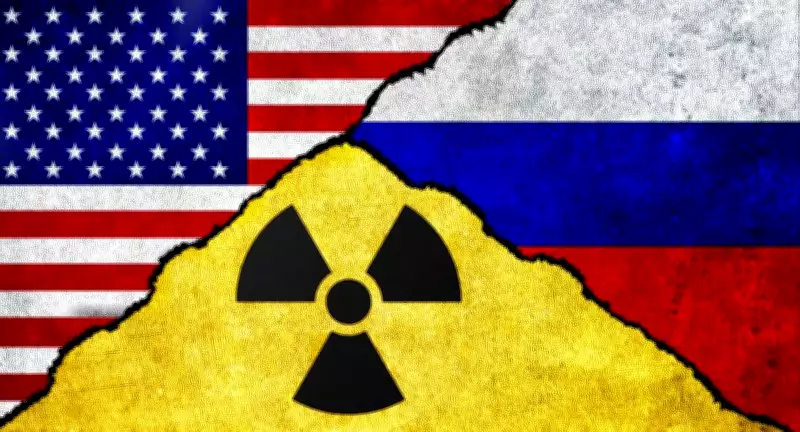
The START Nuclear Treaty: A Critical Juncture in Global Arms Control
The Strategic Arms Reduction Treaty (START), a cornerstone of international nuclear arms control for decades, has reached its expiration date, creating a significant void in the global security architecture. This development marks a pivotal moment that demands urgent attention from world powers and has profound implications for nations like India, which navigate a complex geopolitical landscape.
Understanding the START Treaty and Its Historical Significance
The START treaty series, initiated during the Cold War era, represented a landmark effort to limit and reduce the nuclear arsenals of the United States and Russia, the world's two largest nuclear powers. These agreements were designed to enhance transparency, build mutual trust, and prevent an unchecked arms race that could destabilize international peace. Over the years, START treaties have included rigorous verification mechanisms, such as on-site inspections and data exchanges, which have been instrumental in maintaining a degree of predictability in nuclear postures.
The treaty's framework not only capped the number of deployed strategic nuclear warheads but also restricted the delivery systems, including intercontinental ballistic missiles (ICBMs), submarine-launched ballistic missiles (SLBMs), and heavy bombers. By setting these limits, START contributed to a more stable strategic environment, reducing the risk of miscalculation or accidental escalation during times of tension.

Why the Expiry of START Matters: Global and Regional Ramifications
The expiration of the START treaty is not merely a procedural lapse; it carries substantial consequences for global security dynamics. Without the treaty's binding constraints, there is a heightened risk of a renewed nuclear arms race, as both the US and Russia may feel less compelled to restrain their modernization programs. This could lead to an increase in nuclear stockpiles, undermining decades of progress in disarmament efforts.
For the international community, the lapse raises alarms about the erosion of multilateral arms control regimes. It signals a potential retreat from cooperative security measures, which could encourage other nuclear-armed states to pursue more aggressive postures. In regions like Asia, where nuclear tensions already exist, the absence of a robust US-Russia framework might exacerbate existing rivalries and increase the likelihood of proliferation.
India, as a responsible nuclear power, finds itself at a crossroads. The country has consistently advocated for global nuclear disarmament while maintaining a credible minimum deterrent. The expiry of START could impact India's strategic calculations, as it may face a more unpredictable security environment. India's diplomatic stance will likely emphasize the need for renewed dialogue and inclusive arms control measures that address contemporary threats, such as cyber warfare and space-based weapons.
India's Strategic Response and the Path Forward
In response to the treaty's expiry, India is expected to reinforce its commitment to nuclear restraint and non-proliferation. The Indian government may leverage this moment to call for a broader, more inclusive arms control dialogue that involves all nuclear-weapon states, including China and Pakistan. India's approach has historically balanced its security needs with a vision for a nuclear-weapon-free world, as outlined in various United Nations forums.
Key considerations for India include:

- Enhancing Diplomatic Engagement: India might intensify its efforts in multilateral platforms like the Nuclear Non-Proliferation Treaty (NPT) review conferences to advocate for universal disarmament norms.
- Strengthening Regional Stability: Given its neighborhood, India could focus on confidence-building measures with neighboring nuclear powers to prevent escalation.
- Monitoring Global Developments: India's strategic community will closely watch how the US and Russia navigate post-START scenarios, as their actions will set precedents for global nuclear governance.
The expiry of the START treaty serves as a stark reminder of the fragility of international arms control agreements. It underscores the urgent need for renewed political will and innovative diplomatic solutions to address emerging security challenges. As the world grapples with this transition, India's role as a stabilizing force in global nuclear diplomacy becomes increasingly vital, highlighting its potential to bridge divides and foster cooperative security frameworks for the future.