

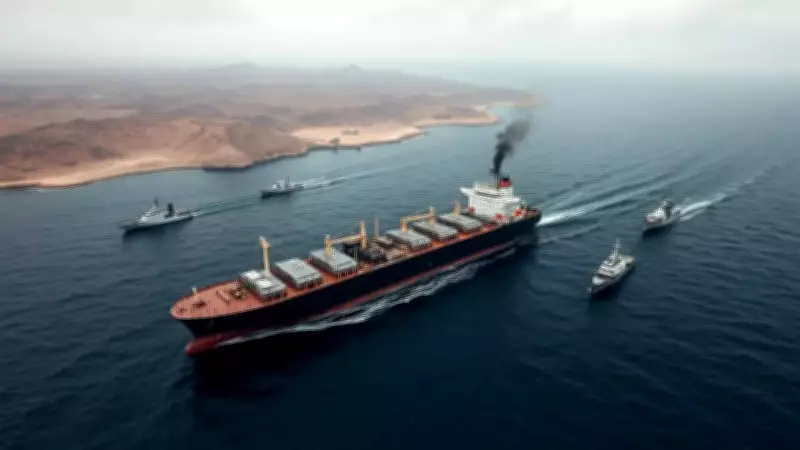
Strait of Hormuz Closure Persists Amid Naval Mine Threats and Diplomatic Stalemate
The strategic Strait of Hormuz continues to operate below normal capacity, posing significant challenges to global energy flows and international trade. This critical maritime chokepoint, which handles nearly one-fifth of the world's oil supply, remains a focal point in the ongoing conflict involving the United States, Iran, and Israel.
Iran's Naval Mines Create Unseen Dangers at Sea
Iran's inability to fully reopen the Strait of Hormuz stems primarily from the naval mines deployed during the early stages of the conflict. According to US officials and reports from the New York Times, many of these mines, laid by forces linked to the Islamic Revolutionary Guard Corps using small boats, cannot now be located. Some have drifted due to sea currents, creating widespread uncertainty about safe navigation routes.
The presence of even a single undetected mine can severely damage or sink a vessel, making shipping companies understandably reluctant to resume normal operations without verified safe passages. This technical limitation has created a dangerous maritime environment that affects not only oil tankers but also liquefied natural gas carriers and other essential commodity shipments.

Technical Challenges and Security Concerns Compound the Problem
Removing sea mines presents far greater difficulties than deploying them. The process requires specialized equipment, trained personnel, and must proceed slowly to avoid catastrophic accidents. Iran currently lacks the capacity to conduct large-scale mine-clearing operations within a reasonable timeframe.
The security situation further complicates reopening efforts. Concerns persist about possible drone or missile attacks, as well as the presence of small boats that could disrupt shipping. Even with damage to its naval assets, Iran retains the capability to create uncertainty in the waterway, making comprehensive reopening increasingly challenging.
Diplomatic Negotiations and Strategic Pressure
The Strait of Hormuz has become central to ongoing diplomatic efforts between the United States and Iran. US President Donald Trump has repeatedly warned that Tehran must open the strategic waterway to "complete, immediate, and safe" traffic or face severe consequences. However, Iranian Foreign Minister Abbas Araghchi has indicated that any reopening will be subject to technical limitations.
Talks involving US Vice President JD Vance and Iranian officials are expected to address how safe passage can be restored. Meanwhile, Iran has proposed measures including transit fees and controlled routes, which the United States has firmly rejected, maintaining that the strait constitutes an international waterway.
Trump Rejects Iran's Toll Proposal
Amid the ongoing crisis, President Trump has strongly opposed Iran's reported proposal to impose transit fees on ships passing through the Strait of Hormuz. Speaking to reporters recently, Trump stated unequivocally: "No, we're not going to allow that, it's international water. If they're doing that, we're not going to let that happen."
The US president criticized Tehran for attempting to use the strait as leverage in negotiations, arguing that such actions amount to short-term pressure on global trade. This firm stance reflects broader concerns about maintaining free navigation through one of the world's most vital maritime arteries.
Global Implications and Future Outlook
The continued partial closure of the Strait of Hormuz has significant implications for global energy markets and international trade. As a vital artery carrying approximately 20% of the world's oil supply, any disruption affects prices and supply chains worldwide.
Until safe navigation can be guaranteed through comprehensive mine-clearing operations and security assurances, the waterway is likely to remain operating below normal capacity. The overlapping challenges of technical limitations, security risks, and diplomatic disagreements suggest that full reopening may require substantial time and international cooperation.

The situation underscores the delicate balance between national security interests and global economic stability, with the Strait of Hormuz serving as both a strategic asset and a potential flashpoint in international relations.





