

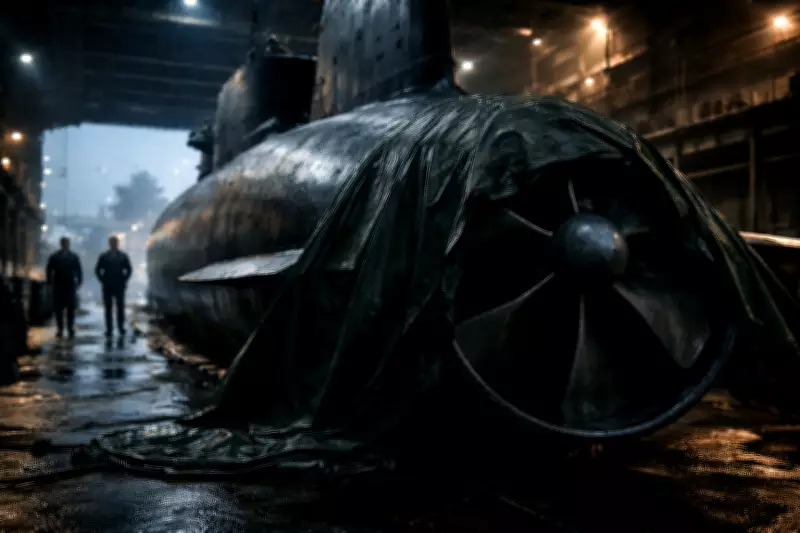
The Hidden Key to Naval Dominance: Submarine Propellers
In the shadowy realm of modern naval warfare, few components are as fiercely guarded as the submarine propeller. Often dismissed as a mere mechanical part, this "screw" is, in fact, the linchpin of a submarine's stealth, survivability, and combat prowess. Nations invest immense resources in concealing its design, as even the slightest leak can erode an entire fleet's operational edge, turning a strategic advantage into a vulnerability overnight.
Stealth Begins with Silence: The Acoustic Imperative
The foremost reason for this secrecy is acoustic stealth. Submarines thrive on remaining undetected, and noise is their Achilles' heel. The propeller is a primary source of underwater sound, primarily due to cavitation—the formation and collapse of tiny bubbles as blades slice through water at high speeds. When cavitation occurs, it emits distinctive noise signatures that enemy sonar systems can detect from vast distances. Advanced navies pour billions into designing propellers that minimize or delay cavitation, enabling submarines to glide faster while staying acoustically invisible. Subtle variations in blade curvature, spacing, or edge design can dramatically alter noise levels, which is why these blueprints are treated as top-tier classified intelligence.
Acoustic Signature: A Submarine's Unique Fingerprint
Every submarine boasts a unique acoustic signature, akin to a human fingerprint, encompassing propeller noise, engine vibrations, and hull dynamics. Among these, the propeller plays a dominant role. Navies maintain extensive underwater databases of these signatures; once an adversary records and analyzes a propeller's noise pattern, they can identify not just the submarine class but sometimes the specific vessel. This makes secrecy paramount—if a rival nation deciphers your submarines' acoustic profile, they can track them with precision, nullifying the stealth that serves as their primary defense.

Lessons from History: The Cold War Wake-Up Call
The criticality of propeller secrecy was starkly highlighted during the Cold War. In a legendary intelligence coup, the Central Intelligence Agency and the US Navy recovered parts of a Soviet submarine's propeller. This allowed American analysts to dissect Soviet quieting technologies and refine anti-submarine warfare tactics, demonstrating how a single component could unveil a nation's naval capabilities. Since then, global navies have tightened security around submarine designs, especially propulsion systems, treating them as crown jewels of national defense.
Beyond Appearance: The Complexity of Modern Designs
Today's submarine propellers are engineering marvels far beyond traditional marine screws. Some feature skewed blade designs, with blades swept back to reduce pressure fluctuations, while others employ pump-jet propulsion systems that encase the propeller in a duct to slash noise and boost efficiency. Navies like the United States and Royal Navy are believed to use advanced pump-jet systems on their latest submarines, drastically lowering acoustic signatures. The exact geometry, materials, and manufacturing processes behind these innovations are closely guarded secrets, with high-resolution images often classified or deliberately obscured to prevent espionage.
Manufacturing Precision: The Silent Art
Secrecy extends to manufacturing techniques, where producing a low-noise propeller demands extreme precision—microscopic imperfections can generate detectable noise. Specialized alloys, advanced casting methods, and ultra-fine polishing are employed to ensure smooth operation. These processes are as valuable as the design itself; if adversaries gain insights, they can replicate or counter them, eroding a technological edge built over decades and billions of dollars.

Counter-Detection and Warfare Implications
Understanding an enemy's propeller design also aids in developing superior detection systems. Sonar operators are trained to recognize specific acoustic patterns tied to propeller types, such as blade number, spacing, and rotation speed. With sufficient data, analysts can reverse-engineer aspects of the design and optimize sonar algorithms for easier detection. This dual impact on offensive and defensive capabilities underscores why propeller information is treated as strategically sensitive, directly influencing naval supremacy.
Strategic Deterrence: The Nuclear Submarine Factor
The stakes escalate with nuclear-powered submarines, particularly those carrying ballistic missiles, which form the backbone of a country's second-strike capability. If these vessels are detected due to identifiable propeller noise, their survivability is compromised, weakening the credibility of nuclear deterrence. For expanding fleets like the Indian Navy, maintaining acoustic secrecy is essential for regional strategic stability, ensuring these silent sentinels remain undetectable guardians.
The Broader Stealth Ecosystem
While the propeller is pivotal, it is part of a larger stealth ecosystem including hull design, vibration isolation, and machinery quieting. Yet, as one of the most exposed and acoustically significant components, it receives unparalleled protection. Satellite images or dockyard photos often blur or conceal propeller sections, with dummy covers used in ports to thwart prying eyes.
A Small Component with Outsized Impact
In essence, the secrecy surrounding submarine propellers transcends the component itself, symbolizing stealth, survivability, and strategic advantage. In underwater warfare, where detection dictates victory or defeat, even the minutest acoustic detail can have monumental consequences. By safeguarding propeller designs, nations protect not just engineering secrets but the effectiveness of their entire submarine force, ensuring they remain silent, lethal, and unseen in the depths.





