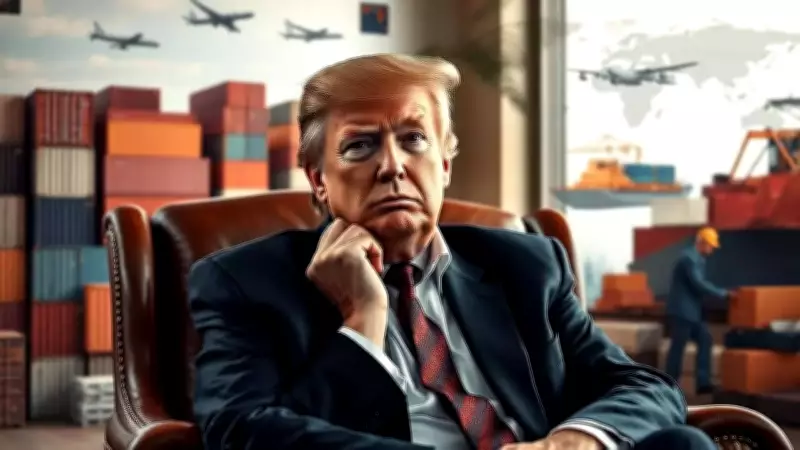
US Supreme Court Delivers Major Blow to Trump's Tariff Agenda
The Supreme Court of the United States has issued a rare and significant reprimand against President Donald Trump, ruling that his use of emergency economic powers to levy tariffs exceeded legal authority. In a decision announced on Friday, the apex court declared these reciprocal tariffs illegal, dealing a direct setback to one of Trump's favorite economic policies. The President himself has labeled the ruling a 'disgrace,' highlighting the intense political and economic stakes involved.
Immediate Impact: Lower Tariff Burden and Revenue Loss
With certain levies imposed under the International Emergency Economic Powers Act (IEEPA) now deemed unlawful, analysts project a decline in the overall US tariff rate, at least in the near term. According to reports from AFP and research by The Budget Lab at Yale University, eliminating the IEEPA-based tariffs would reduce the average effective tariff rate to 9.1 percent. While this remains the highest level since 1946, excluding 2025, it is a significant drop from the 16.9 percent rate that would have persisted if the emergency tariffs had stayed in place.
Economists, including Heather Long of Navy Federal Credit Union, suggest that the ruling forces a recalibration of trade policy, likely leading to reduced tariff levels and a more structured approach for future duties. Oliver Allen of Pantheon Macroeconomics notes that tariffs have negatively impacted Trump's approval ratings, with voter dissatisfaction over high prices becoming a sensitive issue ahead of the November midterm elections.

The decision is also expected to dent federal revenues. Estimates indicate that tariffs enacted under IEEPA generated between $130 billion and $140 billion by the end of 2025. ING analysts Carsten Brzeski and Julian Geib point out that the issue of potential reimbursements remains unresolved and will be handled by lower courts in the coming months. Refunds are not automatic; companies must pursue legal action, with over 1,000 entities already engaged in litigation. If the government is required to return collected duties, it could face additional fiscal strain.
Reduced Presidential Flexibility and Legal Ramifications
A key concern arising from the ruling is that President Trump may lose some flexibility to deploy tariffs on national security grounds or as bargaining tools in trade negotiations—a worry previously highlighted by US Treasury Secretary Scott Bessent. However, Bessent has argued that the administration still retains the ability to use tariffs as a revenue source.
Erica York, vice president of federal tax policy at the Tax Foundation, stated that invalidating tariffs under emergency authority limits the president's capacity to impose sweeping duties at will. Meanwhile, Wendy Cutler of the Asia Society Policy Institute suggested that US trading partners are unlikely to abandon recent tariff arrangements, fearing it could weaken their position in dealings with the White House.
Alternative Legal Routes for Reimposing Tariffs
Despite this setback, President Trump has other legal mechanisms available to reinstate trade barriers, and analysts anticipate he may pursue them. Section 122 of the Trade Act of 1974 allows the president to respond to balance-of-payments concerns with temporary import duties of up to 15 percent. Additionally, Section 338 of the Tariff Act of 1930 authorizes tariffs as high as 50 percent on nations engaged in discriminatory trade conduct.
Another established tool is Section 232 of the Trade Expansion Act of 1962, which has been used repeatedly for sector-specific tariffs unaffected by Friday's decision. Similarly, Section 301 of the Trade Act of 1974—employed during Trump's first term to target Chinese imports—remains an option, though it requires a formal investigation process. Earlier this year, Trump also mentioned to The New York Times the possibility of restructuring tariffs as licensing fees.
This ruling marks a pivotal moment in US trade policy, challenging presidential authority and setting the stage for ongoing legal and economic debates as the Trump administration explores alternative paths to maintain its protectionist agenda.