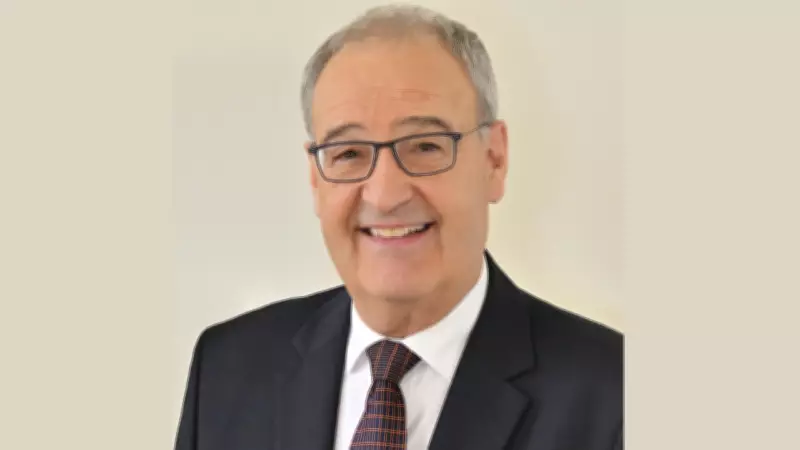
Swiss President Advocates for Multi-Layered AI Governance Framework
In a comprehensive interview, Swiss President Guy Parmelin has articulated Switzerland's vision for regulating artificial intelligence (AI), emphasizing that a single regulatory instrument is insufficient. Drawing a parallel to the historical regulation of engines over the past two centuries, Parmelin argued that AI requires a diverse governance framework to address its multifaceted development and application.
Building a Comprehensive AI Governance Structure
Parmelin stated that similar to engines, AI cannot be effectively regulated by one tool alone. Instead, he proposed a framework comprising various instruments to cover different aspects of AI. Switzerland is actively contributing to this effort by participating in the development of technical standards and both binding and non-binding legal instruments.
Key initiatives include supporting UNESCO recommendations, the Global Partnership on AI (GPAI), and the Council of Europe's framework convention on AI. The latter, involving 55 countries worldwide, represents the first binding international treaty on AI. Beyond legal measures, Parmelin stressed the importance of societal and cultural norms to guide AI usage in specific contexts, ensuring ethical and responsible implementation.

Switzerland's Role in International Diplomacy and Trade
As Switzerland chairs the Organization for Security and Co-operation in Europe (OSCE) for the third time this year, Parmelin highlighted its commitment to promoting peace in Ukraine based on international law and the Helsinki Principles. Federal Councillor Ignazio Cassis, as OSCE Chairman-in-Office, recently visited Kyiv and Moscow to offer dialogue and explore OSCE's potential contributions to a negotiated settlement.
Regarding trade, Parmelin noted that free trade agreements, such as the Trade and Economic Partnership Agreement (TEPA) with India, provide crucial cushions during turbulent times. These agreements enable Swiss exporters to access new markets, diversify, and strengthen Switzerland's economic standing, job creation, and value generation.
Addressing Global Trade and Migration Challenges
In response to concerns about the World Trade Organization (WTO) facing institutional paralysis, Parmelin pointed out that approximately 74% of global trade still occurs on Most-Favored-Nation (MFN) terms, underscoring the WTO's ongoing relevance. Switzerland continues to champion multilateralism and supports WTO reform to maintain rules-based trade, with members showing strong willingness to engage in meaningful reforms ahead of the 14th WTO Ministerial Conference.
Parmelin described the current international order as undergoing a deep transformation, marked by pressures on democracy, rising tariffs, and geopolitical rivalries. He emphasized Switzerland's interest in deepening relations with democratic partners like India, which advocate for international law and a rules-based order.
On migration, Parmelin acknowledged it as a global phenomenon driven by economic, social, and security factors. While fair and regular migration can foster sustainable development and economic growth, unsafe and irregular migration pose risks, particularly for vulnerable groups. Switzerland adopts a partnership approach with countries of origin, transit, and destination to address challenges and leverage migration's benefits for economies and people.
This interview underscores Switzerland's proactive stance on global issues, from AI governance to international diplomacy, reflecting its commitment to collaborative and principled solutions in an evolving world landscape.