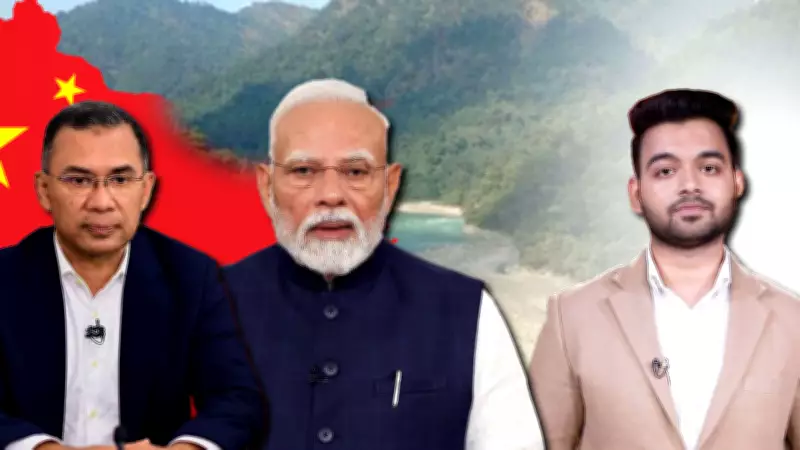
The 2026 West Bengal assembly elections could emerge as a pivotal moment for the long-pending Teesta water-sharing agreement between India and Bangladesh. A victory for the Bharatiya Janata Party in the state is widely seen as a potential catalyst for New Delhi to push forward the deal, which has been stalled for years due to political deadlock and regional opposition.
Geopolitical Dimensions Beyond Water Sharing
The Teesta issue is no longer confined to water allocation. The growing influence of China in Bangladesh has introduced a significant geopolitical dimension. Reports indicate Chinese involvement in a Teesta river project near the strategically vital Siliguri Corridor, which connects India's northeastern states to the rest of the country. This development has heightened security concerns in New Delhi.
Security Concerns and Regional Influence
With regional influence at stake, the Teesta deal is now intertwined with broader security dynamics in South Asia. The Siliguri Corridor, often referred to as the 'Chicken's Neck,' is a narrow stretch of land that is crucial for India's strategic interests. Any Chinese foothold in the region could pose challenges to India's territorial integrity and influence in Bangladesh.

Can India move swiftly to finalize the water-sharing pact while countering China's growing presence? The outcome of the Bengal election may determine the pace and direction of negotiations. A BJP-led government in West Bengal could align with the central government's priorities, potentially breaking the longstanding impasse.
Historical Context of the Teesta Deal
The Teesta water-sharing agreement has been a contentious issue between India and Bangladesh for decades. The treaty, which aims to equitably distribute the waters of the Teesta River, has faced opposition from West Bengal's ruling parties, who fear that the deal would deprive the state of its rightful share of water. The previous Trinamool Congress government under Mamata Banerjee had consistently blocked the agreement, citing concerns for farmers in northern Bengal.
However, a change in the state's political landscape could alter this dynamic. The BJP has historically supported the deal, viewing it as a means to strengthen bilateral ties with Bangladesh and counter Chinese influence in the region.
The China Factor
China's involvement in Bangladesh's infrastructure projects, including the Teesta River Comprehensive Management and Restoration Project, has raised alarms in India. The project, which includes dredging and bank protection, is seen as a strategic move by Beijing to increase its footprint in South Asia. The Siliguri Corridor's proximity to the project makes it a sensitive issue for India's national security.
Analysts suggest that the Teesta deal is no longer just about water; it is a test of India's ability to maintain its influence in its neighborhood amid growing competition from China. A swift resolution of the agreement could help India regain strategic ground in Bangladesh.
Potential Outcomes and Implications
If the BJP wins the Bengal election, it could pave the way for the central government to sign the Teesta deal with Bangladesh. This would not only address a long-standing bilateral issue but also serve as a countermeasure to China's growing influence. However, any agreement would require careful negotiation to ensure that West Bengal's water needs are met, avoiding domestic backlash.
On the other hand, if the Trinamool Congress retains power, the deadlock is likely to continue, potentially pushing Bangladesh closer to China for water and infrastructure cooperation. This scenario could further complicate India's strategic position in the region.
The stakes are high, and the world is watching how India navigates this complex interplay of domestic politics, bilateral relations, and geopolitical competition.