

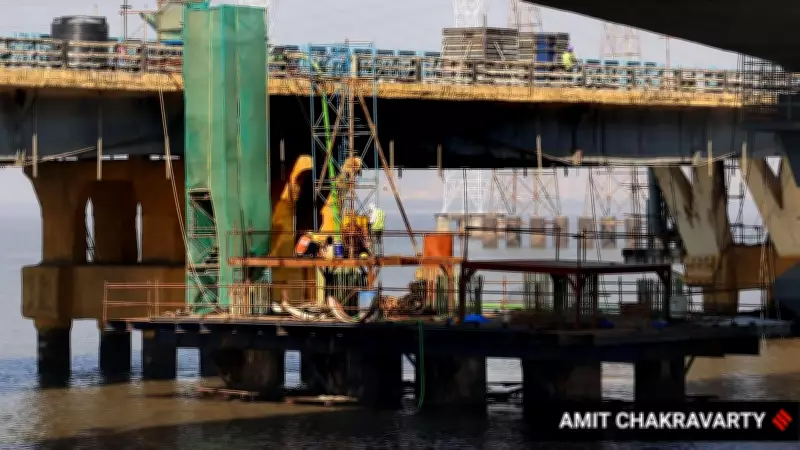
Thane Creek Bridge-III Inflicts Severe Livelihood Loss on Fishing Communities, TISS Report Finds
The construction of Thane Creek Bridge-III, a critical infrastructure project designed to enhance connectivity between Mumbai and Navi Mumbai, has resulted in devastating consequences for the traditional fishing communities along the ecologically sensitive Thane Creek. According to a comprehensive survey conducted by the Tata Institute of Social Sciences (TISS) and commissioned by the Bombay High Court, the bridge has led to a staggering 61.3% decline in average daily fish catch and a 53% reduction in average annual fishing income.
Alarming Decline in Fish Catch and Income
The TISS report, prepared over six months and covering 937 project-affected fishermen households in villages such as Ghansoli, Juhugaon, Kopar Khairne, Dive, and Vashigaon, highlights the severe economic impact. Prior to the bridge's construction, fishing households earned an average annual income of Rs 8.77 lakh, working approximately 243 days per year. Post-construction, this income plummeted to Rs 4.11 lakh, marking a 53% decrease. Similarly, the average daily fish catch dropped from 31 kg to just 12 kg, indicating a 61% fall.
The report identifies at least 25 types of fish that are no longer available for catch in the area, including species like Ravas, Surmai, Bombil, and various others, significantly disrupting the creek's biodiversity and the livelihoods dependent on it. This loss has directly contributed to the sharp decline in earnings, as noted in the 150-page document, which states, "The primary cause of this drop is the significant reduction in daily fish catch, which directly affected both daily and annual earnings."

Background and Legal Context
Thane Creek Bridge-III was built alongside existing bridges to alleviate traffic congestion on the busy corridor connecting Mumbai to Navi Mumbai. However, its location over the ecologically sensitive Thane Creek has raised concerns about its impact on traditional users, particularly fishing communities. In 2021, fisherfolk from creek-side villages approached the Bombay High Court, alleging that construction activities had disrupted traditional fishing routes and severely affected fish catch, leading to substantial livelihood losses.
While the court permitted the project to proceed, it emphasized the need to assess the impact on fishing communities. In May 2025, the High Court commissioned TISS to conduct an independent assessment of the extent of livelihood loss and recommend a compensation framework for affected fishermen. The resulting report, titled 'Compensation Framework and Recommendations on the Extent and Quantum of Livelihood loss sustained by project-affected fishermen due to the Thane Creek Bridge', details these findings and underscores the adverse effects on financial stability and economic well-being.
Impact Across Fishing Methods and Communities
The survey employed detailed questionnaires to assess various aspects, including household amenities, welfare entitlements, non-fisheries livelihood, fisheries-based activities, migration, household finance, perceived impact on fishing and navigation, and compensation needs. It revealed that fishermen using traditional methods such as Dol Net, Gill Net, Vana, and Hand Pockets all experienced substantial declines in income.
- Vana fishers saw their average annual income drop by 44%, from Rs 26.8 lakh to Rs 14.94 lakh.
- Dol Net fishers' income fell from Rs 16.6 lakh to Rs 7.83 lakh.
- Gill net pickers' earnings decreased from Rs 11.74 lakh to Rs 5.59 lakh.
- Hand pickers experienced a decline from Rs 6.9 lakh to Rs 3.24 lakh.
Despite no permanent loss of livelihood being reported, the reduction in fish catch availability has led to significant income hits. The report notes that while fishing has become less viable, income from non-fishing related activities increased slightly, with average annual income from such activities rising from Rs 75,642 to Rs 1.03 lakh. Additionally, the average number of working days per year increased marginally from 217 to 222 days.

Broader Implications and Future Considerations
The findings of the TISS report underscore the complex trade-offs between infrastructure development and environmental sustainability, particularly in ecologically sensitive areas like Thane Creek. The bridge, while enhancing regional connectivity, has inadvertently imposed heavy costs on local fishing communities, raising questions about compensation and mitigation measures.
The report calls for a robust compensation framework to address the livelihood losses sustained by project-affected fishermen, highlighting the need for policymakers to balance progress with the protection of traditional livelihoods. As Mumbai continues to expand its infrastructure, such assessments are crucial to ensure that development does not come at the expense of vulnerable communities.
This situation serves as a stark reminder of the importance of conducting thorough environmental and social impact assessments before undertaking large-scale projects, to safeguard both ecological integrity and human welfare.





