

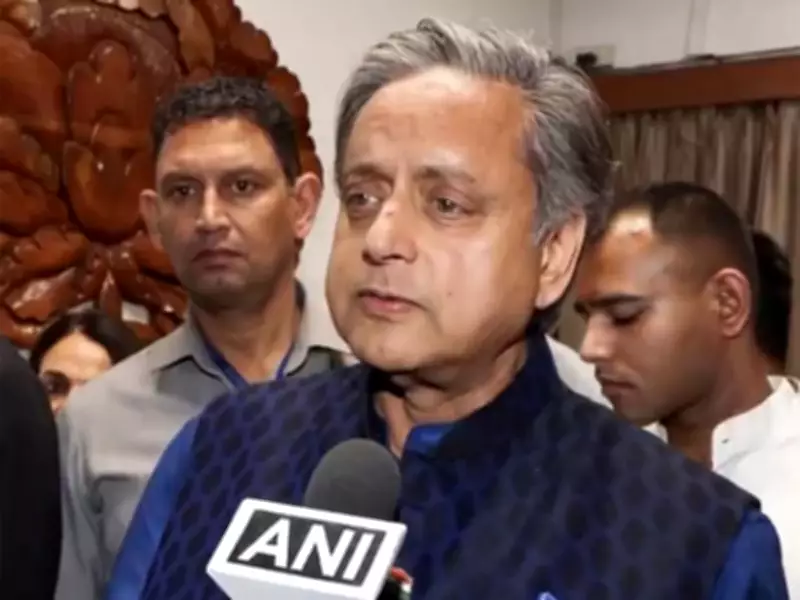
Shashi Tharoor Advocates for India's Diplomatic Leadership in West Asia Crisis
Congress leader and former union minister Shashi Tharoor has emphasized that India should take a proactive role in attempting to end the ongoing conflict in West Asia. Speaking on Thursday, Tharoor highlighted the strategic importance of the Gulf region, which serves as a major source of India's energy supplies, including liquefied petroleum gas (LPG) and liquefied natural gas (LNG).
Energy Security at Stake Amidst Regional Turmoil
Tharoor pointed out that approximately 60-80% of India's LPG and LNG imports transit through the Strait of Hormuz, making the country vulnerable to disruptions caused by the war. He warned that continued hostilities could lead to severe shortages, adversely affecting millions of Indians. "This kind of conflict is hurting people who have nothing to do with it," Tharoor stated, urging world leaders to take responsible steps towards de-escalation.
In his remarks to ANI, Tharoor elaborated: "I have publicly called for India to take a lead in trying to end this war. We have every right to speak as a country that has already been deeply affected and with a lot at stake in the region." He stressed that India's diplomatic efforts could help persuade conflicting parties to cease hostilities, thereby stabilizing global energy markets.

India's Diplomatic Engagements and Global Partnerships
Tharoor also commented on Prime Minister Narendra Modi's recent conversation with French President Emmanuel Macron, which focused on the West Asia situation. He noted that such high-level dialogues are crucial for reducing tensions. "If people of the stature of PM Modi and President Macron were to intervene with both sides of the conflict and try to get them to dial it down, it will be good for the region, for our country, for the world," he said.
The discussion between Modi and Macron underscored the urgent need for de-escalation and a return to dialogue and diplomacy. Both leaders reaffirmed their commitment to advancing peace and stability in the region, leveraging their upgraded global strategic partnership.
MEA Expresses Deep Concern Over Attacks on Energy Infrastructure
In response to recent attacks on energy installations in the Gulf, India's Ministry of External Affairs (MEA) spokesperson Randhir Jaiswal described the incidents as "deeply disturbing." He reiterated India's stance that targeting civilian infrastructure, including energy facilities, is unacceptable and must cease immediately.
Jaiswal explained: "Recent attacks against energy installations in different locations across this region are therefore deeply disturbing and only serve to further destabilise an already uncertain energy scenario for the whole world." He emphasized that such actions exacerbate global energy insecurity, impacting nations far beyond the conflict zone.
Specific Incidents Highlight Escalating Tensions
The conflict has seen direct attacks on key energy hubs:
- Qatar's Ras Laffan Industrial City, a major liquefaction facility, was hit by ballistic missiles from Iran, causing extensive damage.
- QatarEnergy confirmed that several of its LNG facilities were targeted in subsequent missile attacks, leading to sizable fires and further destruction.
- Israel had earlier struck Iran's South Pars Gas field, contributing to the volatility.
These incidents have driven energy prices higher, with no immediate resolution in sight, underscoring the urgent need for diplomatic intervention.
India's Strategic Response to Energy Supply Challenges
To mitigate risks, India is actively diversifying its energy supply sources. Jaiswal noted that the country is exploring options to purchase LPG from various global suppliers, including Russia, to ensure domestic fuel needs are met. "We're trying to buy LPG from everywhere, wherever it's available. So if Russia is available, we'll go there too," he stated, highlighting India's pragmatic approach to securing energy amidst geopolitical uncertainties.

He further added: "We have continuously emphasised the need to ensure unimpeded transit of goods and energy. These are priorities of a large part of the global community since the impact of the conflict is being felt globally." This strategy aims to buffer India from supply shocks while advocating for international cooperation to protect critical infrastructure.
In summary, Tharoor's call for Indian leadership in resolving the West Asia conflict aligns with broader national interests in energy security and regional stability. As attacks on energy infrastructure continue to threaten global supplies, India's diplomatic and strategic moves will be pivotal in navigating this complex crisis.





