

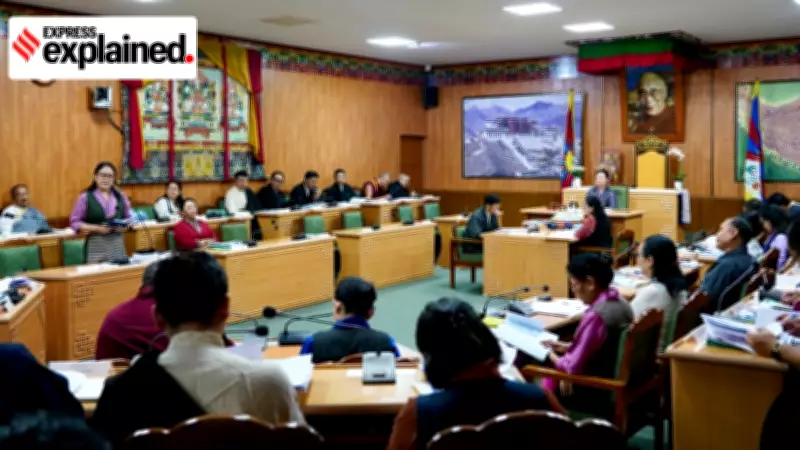
Global Tibetan Exile Community Votes in Historic Leadership Elections
As Tibetan communities living in exile across the world prepare for the crucial Central Tibetan Administration elections, this unique democratic process highlights a remarkable governance system operating without sovereign territory. The elections, scheduled in two phases on February 1 and April 26, 2026, will determine both the political leadership and legislative composition of the Tibetan government-in-exile.
Understanding the Central Tibetan Administration
The Central Tibetan Administration functions as the official government-in-exile for Tibetan people worldwide. Based in Dharamshala, Himachal Pradesh, this administration was formally democratized under the guidance of the Dalai Lama and operates independently from China, which governs the Tibetan Autonomous Region. The CTA maintains three distinct branches:
- Executive Branch: Headed by the Sikyong, the highest political leader
- Legislative Branch: The Tibetan Parliament-in-Exile with 45 members
- Judicial Branch: The Tibetan Supreme Justice Commission
The current elections will select both the Sikyong and members of the 18th Tibetan Parliament-in-Exile, with candidates requiring minimum ages of 35 and 25 years respectively.

Election Process and Voter Eligibility
The CTA follows a distinctive two-round election system that differs significantly from India's single-phase national elections. The preliminary stage, held on February 1, serves as a nomination and shortlisting process where voters can support any eligible Tibetan, regardless of formal candidacy declaration. This system encourages community-based leadership rather than party-driven politics, as the CTA operates without formal political parties.
Voting eligibility extends to any Tibetan in exile aged 18 or above who is registered with the CTA and maintains current Green Book contributions. Approximately 91,000 Tibetans across India, Nepal, Bhutan, Europe, North America, Australasia, and various Asian and African regions have registered for the 2026 elections.
Key Contenders and Parliamentary Structure
This election features prominent candidates including:
- Penpa Tsering: The incumbent Sikyong seeking re-election, emphasizing continuity and sustaining core missions
- Kelsang Dorjee Aukatsang (Kaydor): A former Dalai Lama representative advocating for stronger global advocacy and institutional resilience
The Tibetan Parliament-in-Exile's 45 seats reflect traditional and diasporic diversity through specific allocations:
- 30 seats divided equally among Tibet's three traditional provinces
- 10 seats distributed among five major religious traditions
- 5 seats representing Tibetan diaspora communities worldwide
Election Oversight and Significance
An independent constitutional body, the Central Tibetan Election Commission, oversees the entire electoral process. This commission establishes election schedules, voter eligibility rules, and enforces strict conduct codes prohibiting personal attacks, divisive rhetoric, and unauthorized use of symbolic imagery.
These elections represent a rare example of fully functional democracy without sovereign territory. Since the Dalai Lama's political authority transfer in 2011, elected officials have become primary decision-makers for global Tibetan communities. The process serves multiple crucial functions:
- Governance mechanism for diaspora communities
- Symbolic assertion of Tibetan political identity
- Platform for human rights advocacy and cultural preservation
- Reinforcement of CTA's legitimacy claims
Geopolitical Implications for India-China Relations
The CTA's headquarters in Dharamshala places India at the center of Tibetan exile politics. While India officially recognizes Tibet as part of China, it has historically permitted autonomous CTA functioning, maintaining careful diplomatic balance. China consistently labels the CTA as illegal and separatist, frequently criticizing countries—particularly India—for allowing Tibetan political activities.

Election periods often coincide with India-China border tensions, drawing increased Beijing attention to Tibetan political mobilization. Leadership changes within the CTA can subtly influence bilateral dynamics regarding refugee policies, international advocacy approaches, and preparations for the Dalai Lama's eventual succession.
For the Tibetan diaspora, voting represents both practical governance participation and profound identity assertion, especially given restricted political expression within Tibet under Chinese administration. The election outcomes will shape Tibetan leadership for the next five years, determining international representation strategies and internal community governance approaches.





