

Tibetan Diaspora Participates in Preliminary Elections Across 27 Nations
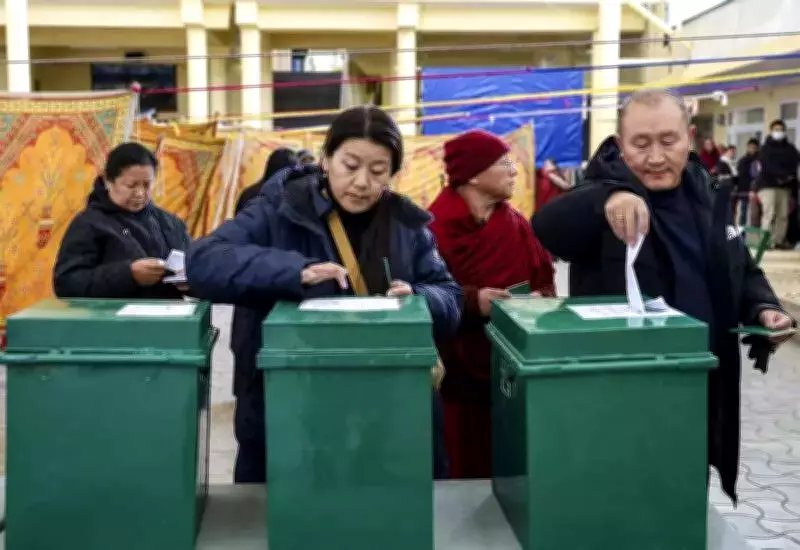
In a remarkable display of democratic engagement spanning continents, Tibetans residing across 27 different countries exercised their voting rights on Sunday in the preliminary phase of the 2026 Tibetan General Elections. This geographically diverse polling exercise represents one of the world's most widespread electoral processes, determining candidates for both the Sikyong (president) and members of the 18th Tibetan Parliament-in-Exile (TPiE).
Organizational Scale and Global Reach
The election commission established an extensive infrastructure to facilitate this global democratic exercise. Chief Election Commissioner Lobsang Yeshi revealed that authorities created 309 polling zones under the supervision of 87 regional election offices. To ensure free and fair polling, election officials deployed a substantial workforce of 1,737 election officers across multiple nations including India, Nepal, Bhutan, and various western and eastern countries.
With over 91,000 registered voters expected to participate, the election commission made special arrangements for those away from their settlements, establishing 31 additional polling zones. The voting process followed a carefully coordinated international schedule, with Tibetans in New Zealand casting the first ballots and those in the United States scheduled to be the last.

Voting Enthusiasm Despite Challenges
Despite unfavorable weather conditions, long queues of determined voters formed at polling stations, particularly at the McLeod Ganj location in Dharamshala, which serves as the seat of the Tibetan Parliament-in-Exile. The visible enthusiasm among voters reflected the significance Tibetans attach to this democratic process.
Tenzin Jigme, the Tibetan press officer at Dharamshala, confirmed that preliminary voting results will be officially announced on February 25. The election follows a two-phase process, with the preliminary round conducted on February 1 and the final elections scheduled for April 26.
Leadership Roles and Electoral System
The elections will shape both the executive and legislative leadership of the Central Tibetan Administration (CTA). The Sikyong, as the CTA's highest executive official, shoulders significant responsibilities including governance, international advocacy for Tibet, and welfare of the Tibetan diaspora. Meanwhile, the 45-member Tibetan Parliament-in-Exile performs crucial legislative functions, approving budgets and providing checks on executive power.
This electoral cycle features prominent contenders including incumbent Sikyong Penpa Tsering and Kelsang Dorjee Aukatsang, founder of the Asia Freedom Institute and former envoy of the Dalai Lama. The Tibetan electoral system operates without political parties, a structure specifically designed to foster community leadership rather than partisan politics.
Controversies and Electoral Integrity
The campaigning period preceding the elections was not without controversy. The Election Commission issued warnings to a Sikyong candidate regarding potentially violative comments and took decisive action against a prominent Tibetan doctor, revoking both voting rights and candidacy for breaches of the Charter of Tibetans in Exile and established electoral rules.
According to Chief Election Commissioner Lobsang Yeshi, the preliminary elections for Sikyong require a candidate to secure more than 60% of votes to be declared the winner outright. Among the five Sikyong candidates, incumbent Penpa Tsering appears particularly strong, having previously served as speaker of the Tibetan government-in-exile and representative of the Tibet office in North America before his election as Sikyong in 2021.
Democratic Significance and Community Engagement
Tibetan Parliament-in-Exile Speaker Sonam Tenphel emphasized the profound significance of these elections, stating to media that they represent the authentic voice of the Tibetan people. "Tibetan democracy, bestowed by His Holiness the Dalai Lama, has flourished in exile for 65 years and is now globally recognised as the voice of the Tibetan people," Tenphel remarked. "Today's Sikyong and Tibetan Parliament-in-Exile preliminary elections send a clear message: Tibet belongs to Tibetans."

Tsewang Dorji from the Tibet Policy Institute observed heightened enthusiasm among Tibetan voters during this electoral cycle. "Unlike the Sikyong election, there are many new faces who are also young and educated for the MPs," Dorji noted. "Also, this time, Tibetans actively participated in the election. Especially in Dharamshala, polling booths are very busy. I am happy that more Tibetans are participating and actively engaging in Tibetan electoral politics."
Held every five years, these elections represent a crucial mechanism for the Tibetan diaspora to shape their community's leadership and maintain their political identity despite geographical dispersion. The extensive participation across 27 nations demonstrates the resilience of Tibetan democratic traditions that have been maintained through six and a half decades of exile.





