

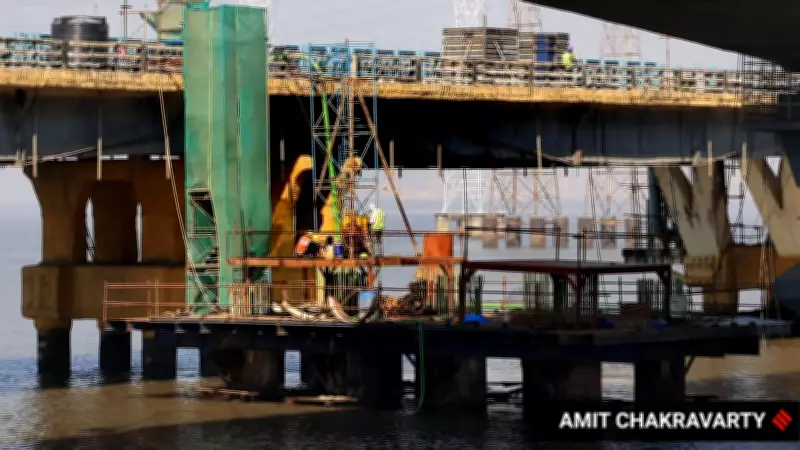
Court-Appointed Report Proposes Rs 141 Crore Relief for Thane Creek Fishing Communities
Over five years after the construction of Thane Creek Bridge-III began disrupting the livelihoods of fishing communities along the Mumbai–Navi Mumbai corridor, a landmark report commissioned by the Bombay High Court has recommended substantial compensation. The Tata Institute of Social Sciences (TISS), tasked with assessing the impact, has proposed a total outlay of Rs 141 crore to be disbursed by the Maharashtra State Road Development Corporation (MSRDC) to affected families.
Background and Legal Action
From a serene creek to a bustling travel corridor, Thane Creek has witnessed successive bridge constructions, with the third bridge—a set of two parallel six-lane structures alongside Thane Creek Bridge II—commencing in 2020. Fisher villages along the Navi Mumbai coast, having endured previous largescale projects, sought legal recourse through the Bombay High Court, demanding compensation for livelihood losses. Represented by the Mariyayi Machhimaar Sahakari Sanstha Maryadit, 944 families encompassing approximately 3,345 residents from Vashigaon, Ghansoli, Juhugaon, Kopar Khairane, and Dive filed claims.
Construction concluded in 2025, with affected fishermen receiving only Rs 1 lakh as interim compensation. In May 2025, the High Court appointed TISS to quantify the damages and recommend appropriate relief. The completed report, finalized in November, is now under review by stakeholders.

Compensation Structure and Recommendations
Building on methodologies used for projects like the Coastal Road and MTHL, the TISS report outlines a two-part compensation package. The first component addresses direct livelihood losses during the construction period from 2021 to 2025, while the second provides ongoing support for six years to help families adapt to persistent future losses.
For direct compensation, amounts vary based on fishing methods:
- Handpicking fishermen (collecting shellfish from shallow waters): Rs 7.07 lakh
- Vana method practitioners (using nets with bamboo structures): Rs 11.38 lakh
- Gill net fishermen: Rs 15.03 lakh
- Dol net fishermen (using large, fixed nets in shallow waters): Rs 15.61 lakh
Recognizing that income declines will continue, the report includes a security component for certain categories. It projects a 17% annual decline in fishing income, noting that handpicking and gill net fishermen risk falling below the minimum living wage of Rs 2.4 lakh. Thus, additional support of Rs 6.94 lakh is recommended for handpicking fishermen until 2031, and Rs 1.72 lakh for gill net fishermen over three years ending in 2031. This secondary aid does not apply to Dol net and Vana fishermen.
Community Response and Ecological Concerns
Despite the proposed relief, affected fishermen have expressed dissatisfaction, labeling the amounts as a "band aid" solution. Harish Sutar, 62, a fisherman from Vashigaon and president of the claimants' cooperative, highlighted the dire situation: "Rs 15 lakh may tide us for a while, but what after?" He reported an over 80% decline in fish catch due to disrupted tidal flows, siltation, and pollution from sewage and garbage, exacerbated by bridge construction.
Sutar recounted historical changes, noting how earlier infrastructure like the Sion-Panvel Highway initially promised connectivity but ultimately impoverished communities. "We have survived six years of construction waiting for a response from the Bombay High Court. For those of us who are old, what option for livelihood remains?" he lamented.
Non-Monetary Recommendations and Future Steps
The TISS report also advocates for non-monetary measures to support long-term recovery. These include building fishing-related infrastructure in villages, implementing insurance schemes, and establishing skill development centers to equip fishermen and their children for alternative livelihoods. To restore creek ecology, it suggests sludge removal, regulated waste disposal, and promotion of sustainable fishing practices.

Anilkumar Gaikwad, managing director of MSRDC, has not yet responded to inquiries regarding the report's recommendations. As stakeholders deliberate, the focus remains on balancing infrastructure development with social and environmental justice for vulnerable communities.





