

Ravi Beas Water Tribunal Directs Punjab Government to File Incident Report After Farmers' Protest
The Ravi and Beas Water Tribunal (RBWT) has issued a directive to the Punjab government, demanding a comprehensive report on an incident that occurred on February 6. On that day, a delegation from the tribunal was obstructed by farm protesters during a scheduled site inspection. The tribunal, which is responsible for adjudicating the distribution of surplus waters from the Ravi and Beas rivers between Punjab and neighboring states, had planned visits to sites in both Punjab and Haryana.
Site Visit Cancelled Amid Farmer Suspicions Over SYL Canal Project
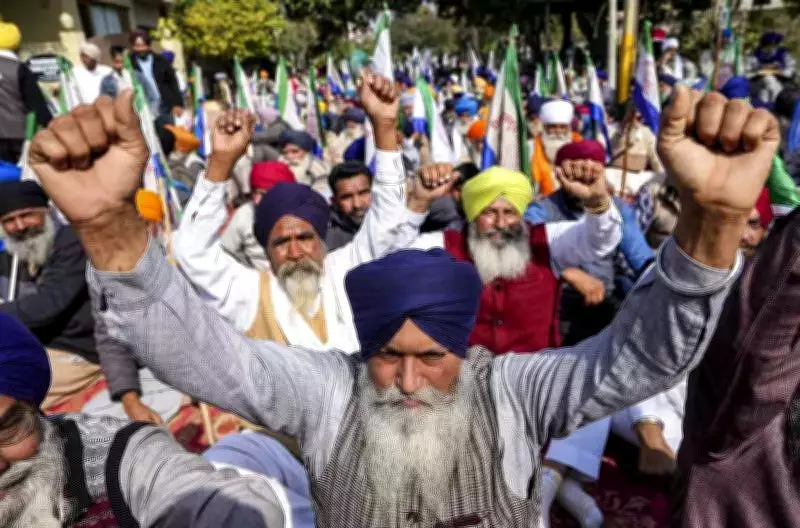
However, the delegation was forced to cancel its visit to the Punjab site following protests by farmers and farm unions. The protesters suspected that the tribunal's inspection was a preliminary step toward reviving the controversial Satluj-Yamuna Link (SYL) canal project. In an order passed from the Canal Rest House in Ropar, the tribunal instructed Krishan Kumar, Principal Secretary of the Department of Water Resources for Punjab, to submit a detailed account of the incident.
The order explicitly stated: "Krishan Kumar, principal secretary, department of water resources, state of Punjab, may, through a responsible officer, submit a report to the tribunal about today's incident and the complete circumstances under which the tribunal was not allowed to proceed for the site visit as per the pre-notified programme. Such report be submitted in two days. Copies of such report may also be furnished to the learned counsel for the respective state governments and the Union of India for filing their response within one week thereafter."

Official Correspondence and Actions Taken Following the Order
Enclosing a copy of this order, Kumar wrote to the Punjab Additional Chief Secretary (Home) on Sunday, requesting him to "kindly arrange/seek a report and send the same to this office so as to submit it before the tribunal." Copies of this correspondence were marked to the Punjab Chief Secretary, Director General of Police, Ropar Deputy Inspector General, and for necessary action to the Ropar Deputy Commissioner and Senior Superintendent of Police.
The February 6 order was issued by RBWT Chairman Justice Vineet Saran along with members Justice Suman Shyam and Justice P Naveen Rao. It detailed that the tribunal members were conducting the visits accompanied by officials and advocates from the respective state governments and the Central government. The schedule included visits to various sites from February 6 to 8 in Haryana and one site in Punjab, specifically the Lohand Khud escape site.
Sequence of Events Leading to the Cancellation
The tribunal noted that on February 6, the chairman and members were in Chandigarh when, around 2 PM, Kumar informed them of "some disturbance" on the route to the Punjab site. "Since there was nothing in writing communicated to the tribunal, the members, advocates and officials proceeded about 2.30 PM for the site visit as per the programme," the order read.
Upon reaching the Ropar traffic junction, SSP Maninder Singh and DC Aditya Dachalwar informed the tribunal members about an agitation and road blockade by Punjab farmers who were opposing the visit. "We were advised not to proceed for the site inspection. Accordingly, we took a U-turn and stopped at Canal Rest House, Ropar. Till 5.30 PM (when this order was dictated), the SSP and DC informed the members of the tribunal that there was no clearance for proceeding towards the site as the farmers were still sitting on a ‘dharna' on the way," the order further explained.
Background and Significance of the Ravi Beas Water Tribunal
The RBWT, also known as the Eradi Tribunal, is an adjudicatory body established by the Union government in 1986 under the Inter-State River Water Disputes Act, 1956. Its primary purpose is to resolve the long-standing water-sharing dispute among Punjab, Haryana, and Rajasthan. Initially led by Justice V Balakrishna Eradi, the tribunal receives yearly extensions from the Union Ministry of Jal Shakti. The current deadline for its final report is August 5, and its findings hold significant implications for the SYL canal dispute, which has been a contentious issue for decades.

This incident underscores the ongoing tensions surrounding water distribution in the region, with farmers' protests highlighting deep-seated concerns over potential impacts on agricultural water access. The tribunal's demand for a report emphasizes the legal and procedural challenges in addressing inter-state water conflicts, particularly when public demonstrations interfere with official duties.





