

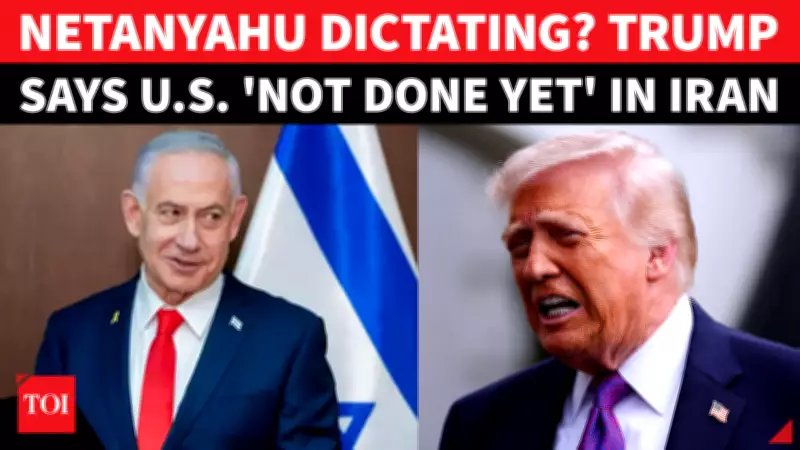
Trump's Startling Admission on Israel's Role in U.S. Iran Policy
In a significant development, U.S. President Donald Trump has made remarks that suggest a major shift in American foreign policy regarding the Middle East. During a press briefing, Trump addressed the recent Iranian attacks on oil tankers in the strategically vital Strait of Hormuz, sparking widespread attention and analysis.
Trump's Comments on Iran and the Strait of Hormuz
President Trump confidently told reporters that 'you will see great safety and it is going to be very quickly.' This statement came amidst escalating tensions in the region, where Iran has been accused of targeting commercial vessels. Trump's words implied a swift resolution to the security threats, though he did not elaborate on specific measures.
Furthermore, Trump boasted about the collaborative efforts between the U.S. and Israeli militaries, claiming they have decimated Iran in recent operations. This bold assertion highlights the close military alliance between the two nations and their joint actions against Iranian interests.

Implications of Trump's U-Turn on Middle East War
Perhaps most notably, Trump suggested that the war with Iran may conclude 'soon' because there is 'practically nothing left' for the United States military to bomb. This comment marks a potential U-turn from previous U.S. stances, indicating a de-escalation or nearing end to hostilities. It raises questions about the current state of Iran's military capabilities and the effectiveness of U.S.-led campaigns.
More importantly, Trump's admission that Israel is dictating U.S. policy on Iran represents a significant departure from traditional diplomatic rhetoric. Historically, U.S. administrations have maintained a stance of independent decision-making, but this revelation points to a deeper influence from Israeli strategies in shaping American actions in the region.
Analysis of the Broader Context
The Strait of Hormuz is a critical chokepoint for global oil shipments, and any conflict there has far-reaching economic implications. Trump's focus on this area underscores the high stakes involved. His remarks come at a time when the Middle East is grappling with ongoing conflicts, and his statements could signal a new phase in U.S. foreign policy.
Experts are likely to scrutinize this development for its impact on international relations, particularly between the U.S., Israel, and Iran. The admission of Israeli influence may alter perceptions of U.S. autonomy in the region and could affect future diplomatic engagements.
In summary, President Trump's comments have unveiled a complex dynamic in the Middle East war, with implications for policy, security, and global stability. As the situation evolves, further details are expected to emerge, shedding light on the true extent of this strategic shift.






