The longstanding diplomatic tussle between the United States and Denmark over Greenland has flared up once again. Former US President Donald Trump has reignited tensions by appointing a 'special envoy' with the stated goal of integrating the vast Arctic island into the United States, a move met with immediate and firm condemnation from Copenhagen and Nuuk.
The Appointment and the Agenda
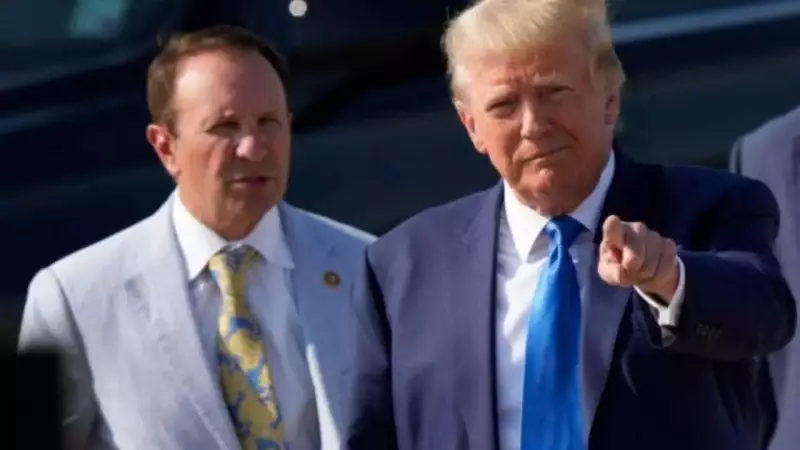
On Sunday, December 21, 2025, Donald Trump announced the appointment of Louisiana Governor Jeff Landry as his special envoy to Greenland. In his announcement, Trump framed the move in terms of global security, stating, "Jeff understands how essential Greenland is to our national security, and will strongly advance our country’s interests for the safety, security, and survival of our allies, and indeed, the world."
Landry's response was more direct about the underlying objective. In a post on X responding to Trump, he wrote, "It's an honour to serve you in this volunteer position to make Greenland a part of the US." This explicit statement of intent has become the core of the current controversy.

Firm Rejection from Denmark and Greenland
The reaction from Danish and Greenlandic leadership was swift and unified. Danish Prime Minister Mette Frederiksen and Greenlandic Premier Jens-Frederik Nielsen issued a powerful joint statement rejecting the American overture.
They declared, "We have said it before. Now, we say it again. National borders and the sovereignty of states are rooted in international law. They are fundamental principles. You cannot annex another country. Not even with an argument about international security." They emphatically added, "Greenland belongs to the Greenlanders, and the US shall not take over Greenland. We expect respect for our joint territorial integrity."
Echoing this sentiment, Danish Foreign Minister Lars Lokke Rasmussen stated that the kingdom of Denmark cannot accept any undermining of its sovereignty, which encompasses Denmark, the Faroe Islands, and Greenland. In a significant diplomatic step, Denmark announced on Monday that it would summon the US ambassador over the appointment.
This stance aligns with public opinion in Greenland. A January opinion poll indicated that while a majority of the island's roughly 57,000 residents support independence from Denmark, they do not wish to become part of the United States.
Why Greenland Matters: Geopolitics and Resources
The dispute centres on Greenland's immense strategic value. As a semi-autonomous territory of Denmark, it possesses:
- A mineral-rich topography containing rare earth elements critical for modern technology.
- A strategic location in the Arctic, situated between North America and Europe.
- Its position on the shortest missile path between Russia and the United States.
With climate change melting Arctic ice, new shipping routes are opening, and global powers are competing for access and influence in the region. The United States already maintains a significant military presence through the Pituffik military base (formerly Thule Air Base), a key part of its missile defence system, and opened a consulate in Nuuk in June 2020.
A Timeline of Escalating Tensions
Trump's latest move is part of a pattern of interest in Greenland that has repeatedly strained relations:

- August 2019: Trump publicly floated the idea of purchasing Greenland and cancelled a state visit to Denmark after its refusal.
- December 22, 2024: On Truth Social, Trump claimed Greenland was vital for US security.
- January 7, 2025: Trump threatened tariffs on Denmark and did not rule out the use of force in a press conference.
- January 15, 2025: A fiery phone call occurred between Trump and PM Frederiksen over the issue.
- March 2025: Visits by US officials to Greenland drew criticism from local authorities.
- March 29, 2025: Trump insisted, "We'll get Greenland 100%," in an interview with NBC.
- December 21, 2025: Jeff Landry was appointed as special envoy with the integration goal.
The appointment of a special envoy marks a significant escalation, moving from rhetoric to a structured, albeit unofficial, diplomatic effort. It sets the stage for a protracted diplomatic confrontation centred on the principles of sovereignty, international law, and the future of the Arctic.