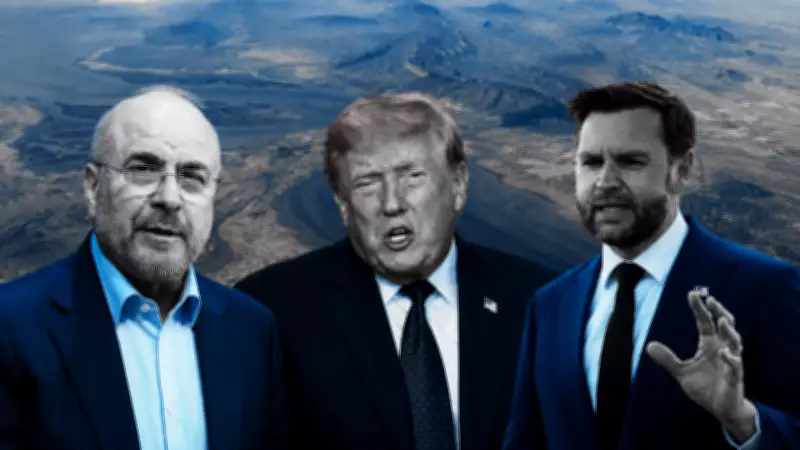
US President Donald Trump on Tuesday sought to contain a growing political backlash over his emerging deal with Iran, pledging to hold a detailed press conference after Friday's formal signing ceremony and read the memorandum of understanding "word for word" to counter accusations that he had conceded too much in exchange for a headline-grabbing diplomatic win on his birthday.
The unusual promise came as critics across the ideological spectrum savaged him for a deal that the White House has promoted as a landmark achievement ending months of conflict with Tehran, but which, in reality, represents only a dodgy opening phase of a far more complicated diplomatic process.
Details of the Memorandum of Understanding
The MoU, signed electronically this week and due to be formalised in Switzerland on Friday, is being described by US officials as the framework for a 60-day ceasefire and negotiation period. The most contentious issues — Iran's nuclear programme, the scope and timing of sanctions relief, the fate of frozen Iranian assets, and regional security arrangements — remain unresolved and will be the subject of subsequent talks.

Yet even before the ink has dried, supporters and detractors alike have rushed to portray the MoU as either a masterstroke of statesmanship or a historic capitulation. For Trump, who has long prided himself on his dealmaking prowess, the agreement offers an opportunity to claim credit for ending a war without committing American troops to another prolonged Middle East conflict. But critics, especially within conservative and pro-Israel circles, have accused him of prioritising a political victory — and the symbolism of securing peace on his 80th birthday — over long-term strategic considerations.
Internal MAGA Divide
Prominent Trump ally Mark Levin has emerged as one of the agreement's fiercest critics, warning that any arrangement that leaves Iran's ballistic missile capabilities intact while easing economic pressure risks emboldening Tehran and its regional proxies. Levin has also expressed scepticism that Iran-backed groups such as Hezbollah would honour any commitments made in the agreement, pointing to continued tensions along Israel's northern border. Conservative activist Laura Loomer has likewise assailed the deal, joining a chorus of critics who argue that Trump is "giving away the store."
The backlash has triggered an extraordinary "circular firing squad" within the broader MAGA movement, exposing a long-simmering divide between America First restraint advocates and traditional hawks. On one side stand Levin and like-minded conservatives who argue that maximum pressure on Iran and unwavering support for Israel must remain non-negotiable pillars of Republican foreign policy. On the other hand are influential figures such as Tucker Carlson, Megyn Kelly, Jack Posobiec and Candace Owens, who contend that critics of the agreement are dragging the US into another endless Middle Eastern war. Carlson, in particular, has amplified anti-interventionist voices arguing that diplomacy — however imperfect — is preferable to a conflict that could consume American resources for years.
White House Under Pressure
The administration has sought to reassure sceptics by emphasising that the MoU is not a final settlement, but headlines announcing “Trump Makes Iran Great Again,” fuelled by claims from Iranian state media that Washington has been worsted, have put the White House in a tough spot. Leaks in the media revealing that the US will allow Iran to immediately begin selling oil and fuel under the deal to end the war, offering Tehran an early financial incentive to wind down the conflict, have further embarrassed the White House.
According to the WSJ, the provision for waivers of sanctions on oil sales takes effect immediately upon signing the agreement this week and also covers necessary services, including banking, transportation and insurance needed to facilitate the sales. United Against Nuclear Iran, a nonprofit, told the paper that an Iranian supertanker carrying crude oil had left Chabahar, crossed the US blockade and was sailing out of the Gulf of Oman on Tuesday with its location tracker active, marking the first such instance since the beginning of the US blockade in April.

Israel's Discomfort
Complicating matters further is Israel's increasingly public discomfort with aspects of the emerging framework. Prime Minister Benjamin Netanyahu has declared that Israel will maintain its military presence in southern Lebanon "for as long as necessary," signalling that Jerusalem does not consider itself bound by provisions that could restrict operations against Hezbollah. That stance threatens to undermine one of the central premises underpinning the broader diplomatic effort: that regional flashpoints can be sufficiently contained to permit meaningful negotiations.
Trump himself has appeared increasingly frustrated with Netanyahu's handling of the Lebanon front and has used some harsh language, including copulatory expletives, to express his anger. But Netanyahu is not backing down, even as a parallel information war has erupted online, with unverified claims circulating about the scale of prospective economic incentives being discussed as part of a future settlement. Allegations involving reconstruction funds to the tune of $300 billion, access to frozen assets and broader economic packages have fueled suspicions that Tehran extracted enormous concessions from Washington.
The administration has not confirmed many of the figures being cited by critics and has repeatedly denied reports suggesting that it agreed to sweeping benefits without corresponding Iranian obligations. The White House now faces the difficult task of persuading multiple audiences simultaneously: an American public weary of foreign wars, Republican voters divided over interventionism, nervous regional allies, and an Iranian leadership seeking tangible economic gains.
For now, the deal exists in an uncertain middle ground — too preliminary to declare a historic breakthrough, yet significant enough to reshape political debates in Washington, Jerusalem and Tehran. As Trump prepares to unveil the agreement in unprecedented detail, one reality is already unmistakable: the fiercest battle over the US-Iran understanding may no longer be between America and Iran, but within the president's own political coalition, and with Israel.