

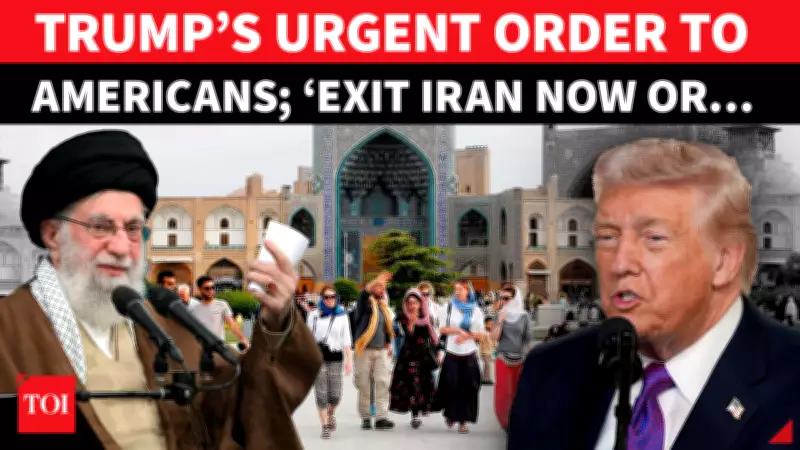
Trump Administration Issues Urgent Evacuation Order for Americans in Iran
In a dramatic escalation of Middle East tensions, the United States has issued an emergency directive urging all American citizens to leave Iran without delay. The stark warning comes from the U.S. Virtual Embassy in Iran, which cited rapidly deteriorating security conditions, including widespread unrest, severe flight disruptions, and extensive internet blackouts across the country.
Regional Instability and Military Buildup Intensify Fears
The evacuation alert coincides with critical U.S.-Iran nuclear negotiations currently underway in Oman. Simultaneously, President Donald Trump has confirmed a significant naval buildup near Iranian waters, raising alarms about potential military action. Regional missile defense systems are being hastily deployed, while Iran has vowed to retaliate forcefully against any attack, creating a volatile standoff that experts fear could erupt into open conflict at any moment.
The U.S. Virtual Embassy's advisory was unequivocal: "Leave Iran now." This directive highlights the grave risks Americans face amid what officials describe as growing regional instability. The combination of political unrest, transportation chaos, and communication blackouts has created an environment where the safety of foreign nationals cannot be guaranteed.

Diplomatic Talks Proceed Amid Military Preparations
Despite the ominous military movements and evacuation orders, diplomatic channels remain active. The nuclear talks in Oman represent a crucial effort to de-escalate tensions through dialogue. However, the parallel military preparations suggest Washington is preparing for multiple scenarios, from diplomatic breakthrough to armed confrontation.
Iran's leadership has responded defiantly to the U.S. posture, with senior officials warning that any aggression will be met with immediate and overwhelming retaliation. The Islamic Revolutionary Guard Corps (IRGC) has publicly stated that Iran is "fully prepared" for war, specifically mentioning threats to U.S. bases in the region.
The situation represents one of the most dangerous flashpoints in recent Middle East history, with the potential for miscalculation or accidental escalation that could trigger broader regional conflict. Security analysts note that the combination of evacuation orders, naval buildups, and heated rhetoric typically precedes significant military action.
As Americans scramble to arrange departure from Iran, the international community watches anxiously, hoping diplomatic efforts can prevail over military confrontation. The coming days will determine whether this crisis can be resolved through negotiation or whether the region will descend into another devastating conflict.






