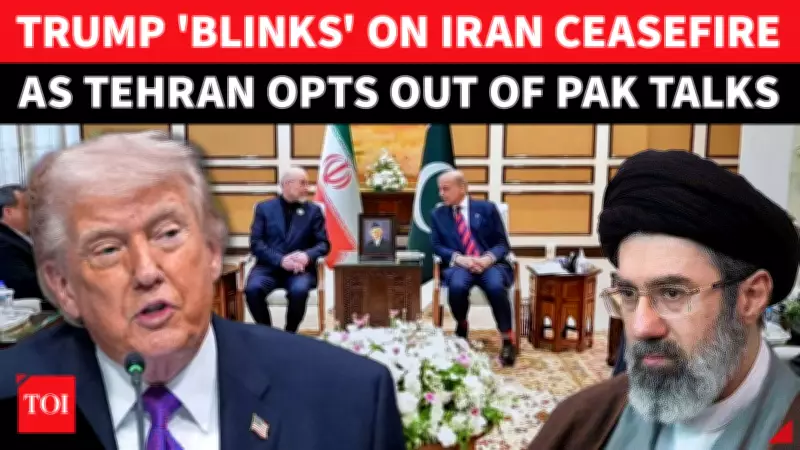
Trump Announces Ceasefire Extension with Iran Following Pakistan's Diplomatic Intervention
In a significant diplomatic development, former U.S. President Donald Trump has declared a temporary extension of the ceasefire with Iran, effectively putting on hold what many analysts feared could escalate into a broader regional conflict. This decision comes after urgent diplomatic efforts from Pakistan's top leadership, who reportedly pressed Washington to avoid immediate military action.
Pakistan's Critical Role in De-escalation
According to Trump's statement on his Truth Social platform, the ceasefire extension was directly influenced by Pakistan's diplomatic outreach. Both Pakistani Prime Minister Shehbaz Sharif and Army Chief General Asim Munir are said to have made urgent appeals to the United States, urging restraint and advocating for continued dialogue rather than military confrontation.
The Pakistani leadership's intervention appears to have created a crucial window for diplomatic maneuvering at a time when tensions between Washington and Tehran were reaching a critical point. This development highlights Pakistan's continued role as a regional mediator in Middle Eastern affairs, despite its own complex geopolitical challenges.

Iran's Internal Divisions and Negotiation Timeline
Trump cited Iran's internal political divisions as a key factor in his decision to extend the ceasefire. According to his statement, the Iranian government is currently grappling with significant internal disagreements that have prevented them from presenting a unified position in negotiations with the United States.
The temporary ceasefire extension provides additional time for Iran to resolve its internal differences and formulate a coherent proposal for future talks. This acknowledgment of Iran's domestic political challenges represents a nuanced understanding of the complex dynamics at play in Tehran's decision-making processes.
U.S. Military Posture and Contingency Planning
Despite the ceasefire extension, Trump emphasized that U.S. forces will maintain their blockade on Iran while remaining prepared for potential military action should diplomatic efforts ultimately fail. This dual approach reflects the delicate balance the United States is attempting to strike between diplomatic engagement and military readiness.
The announcement suggests that while the immediate threat of military escalation has been temporarily averted, the underlying tensions between the two nations remain unresolved. The U.S. military posture in the region continues to serve as both a deterrent and a potential instrument of pressure as negotiations proceed.
Regional and Global Implications
This development has significant implications for Middle Eastern stability and global geopolitics:
- The ceasefire extension provides breathing room for diplomatic channels to operate more effectively
- Pakistan's successful mediation demonstrates its continued relevance in regional conflict resolution
- The acknowledgment of Iran's internal divisions may influence how other nations approach negotiations with Tehran
- The temporary nature of the extension maintains pressure on all parties to work toward a more permanent solution
As the situation continues to evolve, international observers will be closely monitoring whether this diplomatic opening leads to substantive progress in U.S.-Iran relations or merely postpones inevitable confrontation. The coming weeks will be critical in determining whether this temporary ceasefire can be transformed into a more lasting diplomatic breakthrough.