

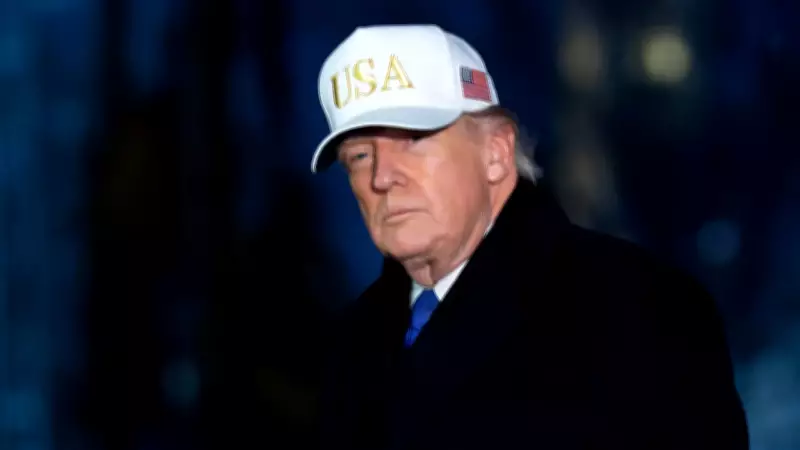
Trump Expresses Hope for Iran Deal While Issuing Military Warning
US President Donald Trump stated on Sunday that he remains "hopeful" Iran will "make a deal" with Washington, but cautioned that if diplomatic efforts collapse, it would reveal whether Iranian Supreme Leader Ayatollah Ali Khamenei's prediction of a "regional war" holds merit. Speaking to journalists at his Mar-a-Lago estate in Florida, Trump emphasized his preference for a peaceful resolution while underscoring US military readiness in the region.
Trump's Diplomatic Preference and Military Posturing
During his remarks, Trump highlighted the deployment of formidable US naval assets near Iran, noting, "We have the biggest, most powerful ships in the world over there, very close, and in a couple of days, hopefully, we'll make a deal." He added a stark warning: "If we don't make a deal, then we'll find out whether or not he was right." This statement reflects the administration's dual approach of pursuing diplomacy while maintaining robust military capabilities as leverage.
Khamenei's Firm Response and Regional War Warning
Hours before Trump's comments, Ayatollah Khamenei issued a series of statements on social media platform X, directly addressing US threats. He asserted, "The Americans should know if they start a war, this time it will be a regional war," dismissing US intimidation tactics involving warships or aircraft as ineffective against the Iranian nation. Khamenei clarified Iran's defensive stance, stating, "We are not the initiators of war. We do not seek to oppress anyone. We do not seek to attack any country. However, anyone who seeks to attack or cause harm will face a decisive blow from the Iranian nation."

Historical Context and Accusations of US Ambitions
The Iranian leader accused the United States of attempting to dominate Iran due to its strategic resources and geographic advantages. Khamenei explained, "What is the issue between the United States and Iran? The issue can be summed up in two words: The United States wants to devour Iran; the Iranian nation and the Islamic Republic prevent this." He pointed to Iran's abundant oil, gas, minerals, and pivotal location as key attractions for US interests, alleging that Washington seeks to regain control lost decades ago.
Khamenei referenced past US influence in Iran, remarking, "For more than 30 years, the Americans were present in Iran. Iran's resources, oil, politics, and security were in their hands. Everything was in their hands. Now that their grip has been broken, they're trying to find a way back. The Iranian nation stands firm, preventing it." This historical perspective underscores the deep-seated tensions fueling the current standoff.
Escalating Tensions and Military Movements
Amidst these exchanges, a "massive Armada" led by the USS Abraham Lincoln has been reported heading toward Iran, signaling heightened military preparedness. The warnings follow Trump's earlier threats in response to Tehran's crackdown on widespread protests that began in December over economic hardships and evolved into broader anti-government demonstrations. Khamenei has characterized these protests as "riots" orchestrated by the United States and Israel, further complicating diplomatic prospects.
The escalating rhetoric and military posturing between Washington and Tehran highlight the fragile nature of US-Iran relations, with both leaders articulating firm positions while leaving room for negotiation. As global observers monitor developments, the potential for either a breakthrough deal or a dangerous confrontation remains uncertain, with implications extending far beyond the immediate region.






