

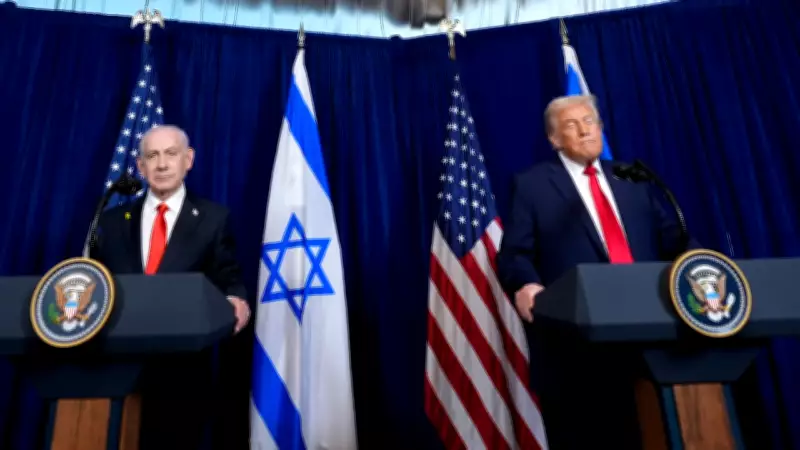
Trump Confirms Israel's Attack on Iran's Major Gas Field, Issues Stark Warning
In a significant late-night revelation, former US President Donald Trump stated that Israel was responsible for striking Iran's South Pars gas field, explicitly clearing both the United States and Qatar of any involvement in the military action.
Social Media Disclosure Details Israeli Operation
Through a social media post, Trump explained that Israel targeted a section of the massive South Pars facility "out of anger" over Middle East developments. He emphasized that Washington had no prior knowledge of the attack and that Qatar was "in no way" connected to the operation.
"Israel, out of anger for what has taken place in the Middle East, has violently lashed out at a major facility known as South Pars Gas Field in Iran," Trump wrote. "The United States knew nothing about this particular attack, and the country of Qatar was in no way, shape, or form, involved with it."

Iran's Response and Trump's Retaliation Warning
Trump claimed Iran responded without complete information, launching what he described as an unjustified strike on Qatar's liquefied natural gas infrastructure. This prompted a clear warning from the former president about potential US military action.
"No more attacks will be made by Israel pertaining to this extremely important and valuable South Pars Field unless Iran unwisely decides to attack Qatar," Trump stated. "In which instance the United States of America, with or without the help or consent of Israel, will massively blow up the entirety of the South Pars Gas Field."
While expressing reluctance to authorize such large-scale destruction due to long-term consequences, Trump made clear his readiness to act decisively if Qatar's LNG assets face further attacks.
Escalating Regional Conflict and Energy Market Impact
The strikes on energy infrastructure have intensified the broader conflict, with Israel targeting the world's largest natural gas reserve at South Pars, prompting immediate retaliation from Tehran.
Iran condemned the attack, warning of "uncontrollable consequences," and responded with missile strikes on energy facilities across the Gulf region:
- Qatar reported Iranian missiles hitting its LNG sites, causing major fires and extensive damage
- The United Arab Emirates saw attacks on key facilities including the Habshan gas plant and Bab field
- Qatar ordered Iranian embassy officials to leave within 24 hours following the strikes
The widening attacks have increased pressure on Gulf states including Qatar, UAE, Saudi Arabia, Kuwait, and Bahrain, which have focused on defensive measures despite repeated strikes on their energy assets and infrastructure.
Global Energy Market Disruption
Global energy markets have reacted sharply to the escalating conflict:
- Oil prices have surged approximately 50% since hostilities began
- Disruptions in the Strait of Hormuz have intensified supply concerns
- Iran has restricted passage through the critical shipping route
- Qatar's production halt and infrastructure damage could delay its return to global markets
Ongoing Military Exchanges
Meanwhile, Israel has continued targeting senior Iranian leadership, including reported strikes against intelligence minister Esmail Khatib and other security figures. Iran has retaliated with missile barrages on Israel, including attacks causing casualties in the occupied West Bank.
The situation remains volatile as diplomatic channels strain under the weight of military actions and energy infrastructure attacks that threaten regional stability and global economic security.






