

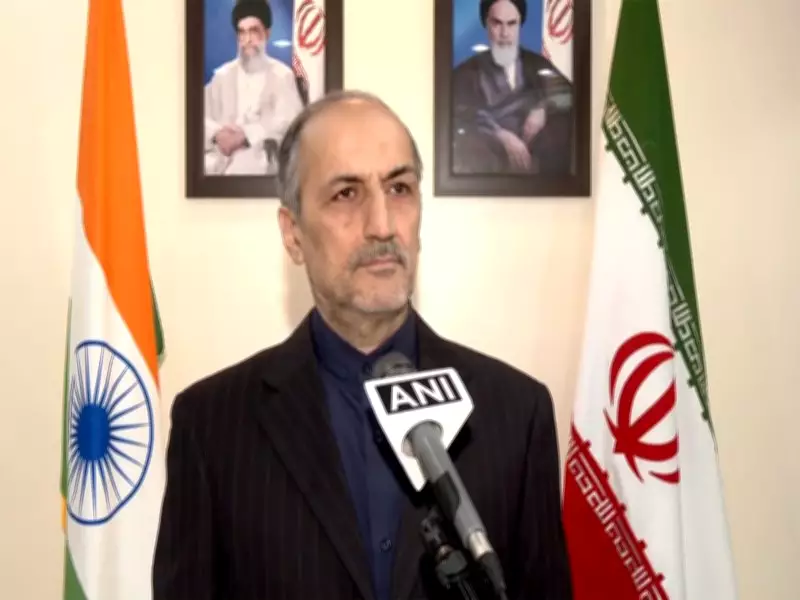
Iran's Consul General in Mumbai Demands Global Accountability for Aggressors
In a recent statement, Iran's Consul General in Mumbai, Saeid Reza Mosayeb Motlagh, has issued a strong appeal to the international community, urging all nations to take decisive action against aggressors. Speaking to ANI, Motlagh emphasized the need for dialogue with parties that initiate conflicts and called for measures to compel them to cease such actions worldwide.
Call for Adherence to International Norms
Motlagh stressed that countries should actively engage in discussions with war-initiating parties, ensuring they comply with the Charter of the United Nations and international law. "This issue is not limited to Iran. Throughout history, it has been witnessed repeatedly... In the past, they have destroyed whichever country they chose, using harsh measures," he remarked. He highlighted that today, Iran stands resolutely in opposition, and thus, all countries must hold aggressors accountable to prevent unilateral actions against any nation.
Self-Defense and Economic Impacts
When questioned about Iran's role in the global economic crisis stemming from the West Asia conflict, Motlagh asserted that Iran has acted solely in self-defense. "Those who attacked us are responsible, and we have acted solely in self-defence. Despite our warnings and full awareness of the wartime conditions, they still chose to attack us. They should have considered the consequences of war," he stated. He pointed out that as a major oil-producing country, sanctions on Iran significantly affect global markets, reflecting a long-standing pattern of hostility that has escalated into armed confrontation.

Strait of Hormuz and Diplomatic Stance
Addressing concerns about Iran's threats to close the Strait of Hormuz, Motlagh clarified that such measures are only applied to hostile countries. "The war they have imposed on us has affected our very existence. It is an existential war, requiring us to mobilise all our capabilities in response. However, out of consideration for people around the world, for example, for the people of India, we have not closed the Strait," he explained. He noted that the passage remains restricted to hostile entities due to the dangerous wartime situation.
On the surge in global oil prices, Motlagh expressed Iran's readiness for negotiations but insisted on necessary conditions being met. "We are ready for negotiations, but the necessary conditions must be fulfilled. Otherwise, in a few months, they will attack us again and subject us to the same challenges," he warned. He reiterated Iran's commitment to dialogue-based solutions and diplomacy, accusing adversaries of lacking commitment to peaceful discussions.
International Context and Responses
Meanwhile, US President Donald Trump commented on the situation, stating that Iran has agreed not to possess nuclear weapons. He offered Iran an opportunity to end threats to America and its allies, warning that failure to comply would lead to increased safety measures. Trump also claimed that the US has annihilated Iran's defense industrial base and Navy, underscoring the tense international dynamics.
Motlagh concluded by emphasizing that Iran seeks diplomatic resolutions but holds aggressors accountable for the crises and pressures imposed. The ongoing conflict highlights broader issues of global security and economic stability, with Iran positioning itself as a nation defending its sovereignty against external threats.






