Trump Officially Launches 'Board of Peace' at Davos Summit
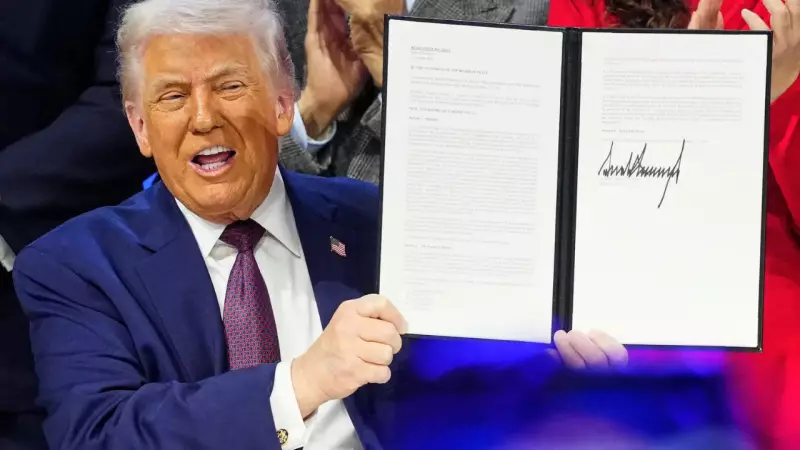
US President Donald Trump signed the charter for his ambitious "Board of Peace" initiative on Thursday in Davos, formally launching the body alongside other founding members on the sidelines of the World Economic Forum. The signing ceremony marked a significant step in Trump's vision to create an international organization dedicated to resolving conflicts worldwide.
White House Announces Official Launch
White House Press Secretary Karoline Leavitt declared at the ceremony, "Congratulations President Trump, the charter is now in full force, and the Board of Peace is now an official international organisation." This statement underscores the administration's commitment to establishing the board as a legitimate global entity.
Evolution and Mandate of the Board
The board, chaired by Trump himself, was initially conceived as a limited group to oversee the Gaza ceasefire but has since expanded into a broader platform. According to the Trump administration, it could now act as a global conflict mediator, tackling disputes beyond its original scope.

First proposed by Trump in September as part of his Gaza ceasefire plan, the Board of Peace's mandate has grown to address conflicts worldwide. Trump will serve as its inaugural chairman, with the body tasked with promoting peace and resolving international disputes.
Executive Powers and Membership Structure
A draft charter reviewed by Reuters outlines extensive executive powers for the chairman, including:
- Veto authority over board decisions
- The ability to remove members from the organization
- Oversight of the board's operations and initiatives
Countries can serve three-year terms on the board, but those contributing $1 billion each secure permanent membership. This financial requirement has sparked discussions about the board's accessibility and influence.
Founding Executive Board Members
The founding executive board includes prominent figures such as:
- US Secretary of State Marco Rubio
- Special envoy Steve Witkoff
- Former UK prime minister Tony Blair
- Trump's son-in-law Jared Kushner
Diplomats have expressed concerns that this initiative could complicate the work of the United Nations, potentially creating parallel structures for international conflict resolution.
Participating and Non-Participating Nations
Approximately 35 countries have committed to the Board of Peace so far, out of roughly 50 to 60 invitations. Participants include:
- Argentina, Armenia, Azerbaijan, Bahrain, Belarus
- Egypt, Hungary, Indonesia, Israel, Jordan
- Kazakhstan, Kosovo, Morocco, Pakistan, Paraguay
- Qatar, Saudi Arabia, Turkey, the UAE, Uzbekistan, Vietnam
Notably, Armenia and Azerbaijan, which reached a US-brokered peace deal last year, are among the signatories. Belarus's participation has drawn attention due to its strained ties with Washington and support for Russia's war in Ukraine, indicating a potential thaw in US-Belarus relations.
However, some traditional US allies have declined to join, citing various concerns:
- France, the UK, Norway, Sweden, and Slovenia expressed worries over the board's mandate and its possible impact on the UN-led order
- Italy raised constitutional issues regarding participation
- Germany, Japan, India, China, Russia, and the EU executive arm remain noncommittal, awaiting further details
The launch of the Board of Peace represents a significant development in international diplomacy, with its success likely to depend on broader global participation and alignment with existing multilateral frameworks.