

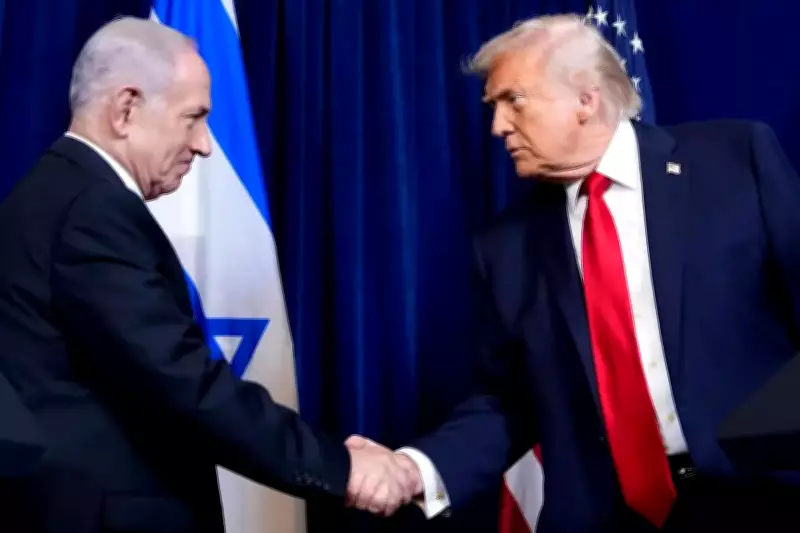
Trump-Netanyahu Phone Call Weighed Critical Intelligence Window Before Iran Strike
Less than 48 hours before the commencement of the US-Israeli military strike on Iran, United States President Donald Trump and Israeli Prime Minister Benjamin Netanyahu engaged in a pivotal phone conversation. The discussion centered on evaluating a rare and fleeting intelligence opportunity involving Iran's top leadership, including Supreme Leader Ayatollah Ali Khamenei. This high-stakes deliberation ultimately pushed both leaders toward a decision that has since significantly disrupted the global energy sector and constricted its supply chains.
Intelligence Briefings Revealed Vulnerable Leadership Meeting
According to sources cited by Reuters, both Trump and Netanyahu had received intelligence briefings earlier in the week indicating that Ayatollah Ali Khamenei and his key lieutenants were scheduled to convene at his compound in Tehran. This gathering presented a vulnerable target for what is known as a "decapitation strike" – a tactic frequently employed by Israel but traditionally less common for the United States, aimed at eliminating a country's top leadership.
However, new intelligence emerged suggesting the meeting had been rescheduled to Saturday morning from its original Saturday evening timing, as reported by three individuals briefed on the call. This adjustment created a narrowing window of opportunity that intensified the urgency of the decision-making process.

Netanyahu's Historic Argument for Action
Prime Minister Netanyahu, who had advocated for decisive action against Iran for decades, presented a compelling case during the conversation. He argued that this might represent the optimal chance to eliminate Khamenei and retaliate against previous Iranian assassination attempts targeting Trump. These alleged plots included a 2024 murder-for-hire scheme, orchestrated by Iran when Trump was a presidential candidate, which the US Justice Department has linked to a Pakistani national recruiting operatives on American soil as retaliation for the killing of IRGC commander Qassem Soleimani.
By the time of this critical phone call, President Trump had already given preliminary approval for a US military operation against Iran. However, he had not yet finalized the timing or specific conditions for Washington's involvement, according to the sources who spoke anonymously due to the sensitive nature of the discussions.
Military Buildup and Narrowing Decision Window
In the weeks leading up to this decision, the United States military had been steadily augmenting its presence across the Middle Eastern region. This strategic buildup led many within the administration to conclude that military action was inevitable, with the primary question being one of precise timing. Notably, an earlier potential strike window had been abandoned just days prior due to adverse weather conditions.
While the exact extent of Netanyahu's influence on Trump's final decision remains unclear, the three sources view this conversation as the Israeli leader's final persuasive push. They indicate that the combination of this call and the intelligence pointing to a rapidly closing window to target Iran's leadership crucially contributed to Trump's decision to authorize Operation Epic Fury on February 27.
Strategic Framing and Immediate Aftermath
Netanyahu framed the moment as historically significant, suggesting Trump had a unique opportunity to help remove an Iranian leadership long condemned by Western nations and many Iranians. He further posited that such a decisive move could potentially spark internal unrest within Iran, with citizens possibly taking to the streets to challenge the theocratic system that has governed since 1979 and been a persistent source of regional and global instability.
The operation proceeded with remarkable speed. The initial bombs struck in the early hours of Saturday, February 28. By that evening, President Trump publicly announced the death of Ayatollah Khamenei.

Official Responses and Denials
In response to Reuters' inquiries, White House spokeswoman Anna Kelly did not directly address the specifics of the Trump-Netanyahu call. However, she stated the operation's objectives were to "destroy the Iranian regime's ballistic missile and production capacity, annihilate the Iranian regime's Navy, end their ability to arm proxies, and guarantee that Iran can never obtain a nuclear weapon."
There was no immediate comment from Netanyahu's office or Iran's UN representative regarding requests for clarification. At a subsequent news conference, Netanyahu dismissed as "fake news" any claims that Israel had manipulated the United States into conflict with Iran, rhetorically questioning whether anyone could truly dictate actions to President Trump. Trump himself has publicly asserted that the decision to strike was solely his own.





