

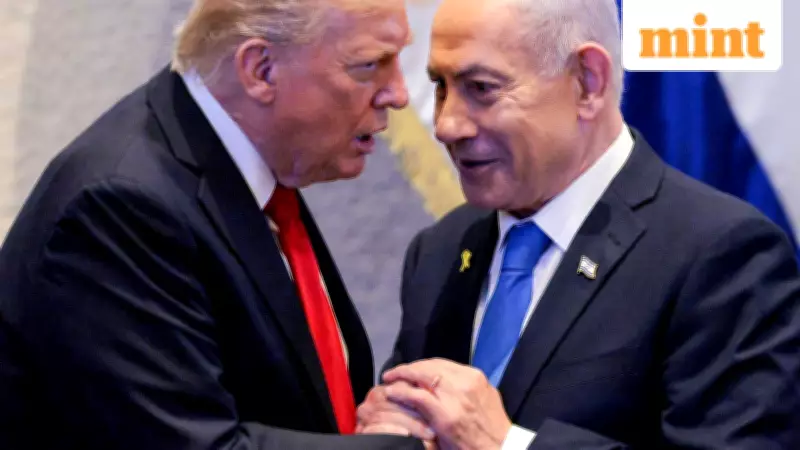
Trump and Netanyahu Set for High-Stakes Washington Summit Amid Escalating Iran Tensions
US President Donald Trump is scheduled to host Israeli Prime Minister Benjamin Netanyahu in Washington on Wednesday, local time, according to an AFP report. This critical meeting unfolds against a backdrop of intensifying regional tensions, particularly concerning Iran's military ambitions and nuclear activities.
Netanyahu to Advocate for Tougher Iran Stance
During their discussions, Prime Minister Netanyahu is expected to strongly urge President Trump to adopt a more stringent position regarding Iran's ballistic missile program in the forthcoming rounds of diplomatic negotiations. An official statement from Netanyahu's office indicates he will emphasize Israel's profound security concerns, which center on Iran's expanding missile arsenal and its ongoing nuclear program.
The Israeli leader firmly believes that any future negotiations with Tehran must explicitly include binding limitations on ballistic missile development and a complete cessation of support for Iranian-aligned militant groups across the region. This upcoming meeting marks the sixth face-to-face engagement between the two allied leaders since President Trump assumed office in January 2025.

Iran Issues Stern Warning Over Netanyahu's Visit
In response to the announced Trump-Netanyahu summit, Iran's Foreign Ministry spokesperson issued a sharp warning during a weekly press briefing. The spokesperson characterized Netanyahu's visit as having a "destructive" influence on diplomatic efforts, asserting it would be "detrimental to the region."
The Iranian official stated that while America is their direct negotiating counterpart, it is incumbent upon Washington to act independently from external pressures and influences that sabotage peace. "The Zionist regime has repeatedly, as a saboteur, shown that it opposes any diplomatic process in our region that leads to peace," the spokesperson added, as reported by the Times of Israel.
Context of Recent US-Iran Diplomacy and Military Buildup
This high-level Israel-US meeting occurs just days after officials from Washington and Tehran convened for talks in Muscat, Oman, on February 6th. Those discussions were part of a bid to revive diplomacy amidst a significant US military buildup in West Asia. This deployment was a direct response to Iran's violent crackdown on nationwide anti-government protests that began in December 2025 and persisted into January.
Following the Oman talks, President Trump described the discussions as "very good" and confirmed that additional rounds were planned. However, he maintained pressure on Tehran, warning that failure to reach a satisfactory deal on its nuclear program would result in "very steep" consequences.
Iran has consistently refused to expand negotiation topics beyond its nuclear program, despite reports that Washington seeks to include Tehran's ballistic missile activities and its backing of regional militant proxies.
Escalating Threats and Recent Hostilities
The diplomatic efforts are shadowed by recent escalatory rhetoric and military posturing. In recent weeks, President Trump threatened military action against Iran if a deal is not secured. The US has deployed thousands of additional troops, an aircraft carrier strike group, other warships, and fighter jets to the region.
Iran has vowed a forceful response to any US attack, threatening to target American military assets in West Asia and Israel. This tense standoff follows months after a US strike in June 2025 targeted Iranian nuclear facilities. That operation coincided with an Israeli "preemptive strike" on similar sites. While President Trump claimed the strikes dealt a major blow to Iran's nuclear infrastructure, Iranian authorities have consistently denied these assertions.
The upcoming Trump-Netanyahu meeting is therefore poised to be a pivotal moment, potentially shaping the next phase of US policy toward Iran and influencing the fragile security dynamics of the entire West Asia region.






