

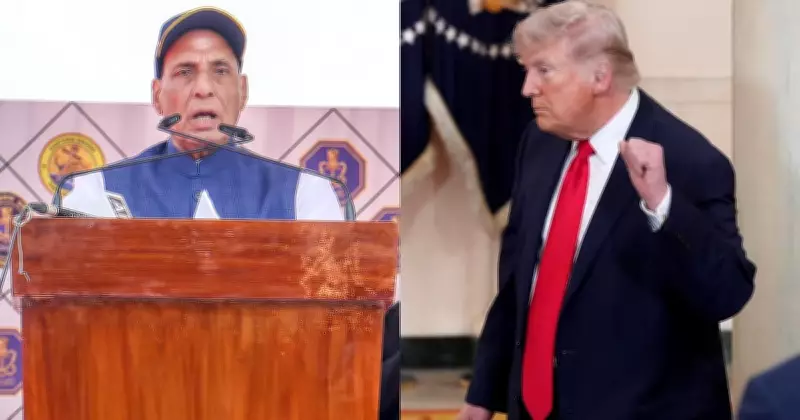
Trump Asserts US Capability to Open Strait of Hormuz, Rajnath Singh Stresses Indian Navy's Security Role
In a significant development on April 3, 2026, former US President Donald Trump made a bold statement regarding the Strait of Hormuz, a crucial global chokepoint for oil shipments. Trump claimed that the United States possesses the capability to easily open the strategic waterway, which has long been a flashpoint in international geopolitics due to its importance for energy exports from the Middle East.
Rajnath Singh Highlights Indian Navy's Critical Mission
Simultaneously, Indian Defence Minister Rajnath Singh underscored the paramount importance of securing critical sea lanes, with a specific focus on the Indian Navy's enhanced responsibilities. Singh emphasized that India is committed to safeguarding maritime routes that are vital for global trade and energy security, reflecting the nation's growing strategic role in the Indo-Pacific region.
The remarks from both leaders come amid escalating tensions in key maritime corridors, where security threats and geopolitical rivalries pose risks to international commerce. The Strait of Hormuz, in particular, sees about one-fifth of the world's oil pass through it, making its stability a matter of global concern.

Implications for Global Security and Trade
Trump's assertion about US military prowess in the Strait of Hormuz could signal a more assertive American posture in the Middle East, potentially impacting diplomatic relations and regional stability. Meanwhile, Rajnath Singh's focus on the Indian Navy aligns with India's broader efforts to bolster its maritime capabilities and ensure safe passage for vessels in adjacent waters.
Experts note that such statements highlight the interconnected nature of global security, where actions in one region can have far-reaching consequences. The Indian Navy's role in patrolling and protecting sea lanes is seen as crucial not only for India's economic interests but also for maintaining international order.
As these developments unfold, stakeholders worldwide are closely monitoring the situation, aware that any disruption in these critical waterways could lead to significant economic and geopolitical repercussions. The emphasis on naval security by both US and Indian leaders underscores the ongoing importance of maritime dominance in contemporary global affairs.






