

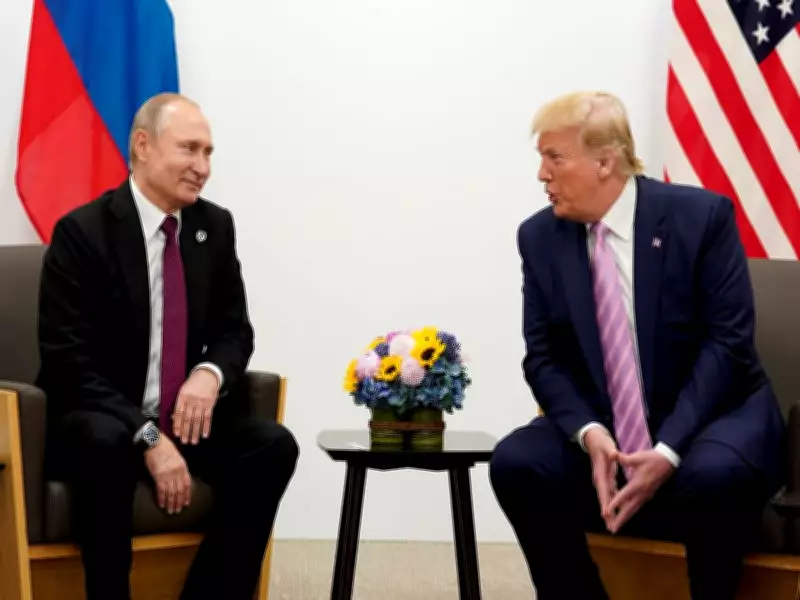
Trump Dismisses Putin's Proposal on Nuclear Arms Limits
In a significant development in international diplomacy, former United States President Donald Trump has publicly rejected a proposal from Russian President Vladimir Putin regarding the continuation of nuclear arms limitations. The proposal, which suggested maintaining existing restrictions after the expiration of the New START treaty, was met with a firm rebuttal from Trump, who emphasized the need for a new and modernized agreement to address contemporary security challenges.
Background on the New START Treaty
The New Strategic Arms Reduction Treaty (New START), signed in 2010, is a bilateral agreement between the United States and Russia that limits the number of deployed strategic nuclear warheads and delivery systems. It is set to expire in 2026, and its future has been a topic of intense debate among policymakers and experts worldwide. The treaty has been credited with promoting strategic stability and transparency between the two nuclear superpowers, but critics argue it does not adequately cover new technologies and emerging threats.
Putin's Proposal and Trump's Response
According to recent reports, President Putin had floated the idea of extending the current nuclear limits under New START beyond its expiry date, possibly as a stopgap measure to prevent a lapse in arms control. However, Trump, known for his "America First" foreign policy stance, swiftly dismissed this approach. In a statement, he called for a comprehensive new treaty that would be modernized to reflect advancements in nuclear technology, such as hypersonic weapons and cyber capabilities, which are not addressed in the existing framework.

Trump argued that the old treaty is outdated and fails to account for the evolving global security landscape. He stressed that any future agreement must be more robust and enforceable, with provisions to verify compliance and address non-traditional threats. This stance aligns with his previous criticisms of international agreements during his presidency, where he often pushed for renegotiations to secure better terms for the United States.
Implications for Global Security
The rejection of Putin's proposal by Trump could have far-reaching consequences for nuclear arms control and international relations. Experts warn that without a new treaty or an extension of New START, there might be a dangerous gap in nuclear limitations, potentially leading to an arms race or increased tensions between the US and Russia. This development comes at a time when global conflicts and geopolitical rivalries are on the rise, making nuclear diplomacy more critical than ever.
Moreover, Trump's call for a modernized treaty highlights the growing importance of incorporating new technologies into arms control regimes. As nations develop advanced weapon systems, traditional treaties like New START may become less effective, necessitating innovative approaches to maintain stability and prevent proliferation.
Reactions and Future Prospects
Reactions to Trump's stance have been mixed. Some analysts support his push for modernization, arguing that it is essential to keep pace with technological changes. Others, however, caution that rejecting Putin's proposal outright could undermine diplomatic efforts and lead to instability. The Biden administration, which has expressed support for extending New START, may face challenges in navigating this complex issue, especially with Trump's influential voice in the political arena.
Looking ahead, the future of nuclear arms control between the US and Russia remains uncertain. Key factors will include:
- The willingness of both nations to engage in negotiations for a new treaty.
- The ability to address modern threats like cyber warfare and space-based weapons.
- Political dynamics in the US, particularly with the upcoming elections.
In conclusion, Trump's rejection of Putin's proposal marks a pivotal moment in nuclear diplomacy, emphasizing the need for updated and comprehensive arms control measures. As the world watches closely, the outcome of this debate will significantly impact global security and the prevention of nuclear conflict.






