

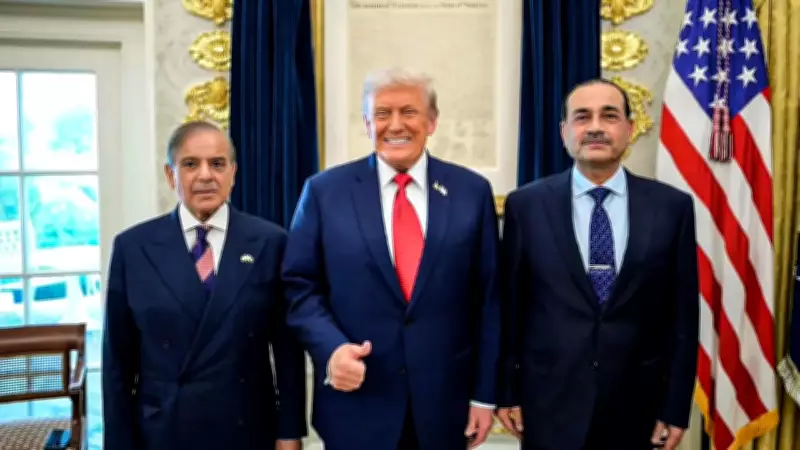
US President Donald Trump announced that Washington agreed to a ceasefire with Iran as a "favour" to Pakistan. Speaking to reporters aboard Air Force One while returning from China, Trump said the US accepted the truce at Pakistan's request and has no plans, for now, to resume bombing Iran.
"We did the ceasefire as a request from another nation. I would have really benefited from it, but we did it as a favour to Pakistan. They are terrific people, the Field Marshal and the Prime Minister," Trump remarked.
The statement arrives at a delicate moment for Pakistan, which has sought to position itself as a regional mediator in the US-Iran crisis. However, its neutrality has been questioned following reports and satellite imagery suggesting Iranian military aircraft landed at Pakistani air bases during the conflict's peak.

These reports sparked speculation that Pakistan might have quietly provided logistical refuge to Iranian assets, even as it publicly portrayed itself as a neutral facilitator of talks. This pattern aligns with criticisms often leveled against Pakistan's foreign policy: attempting to play multiple sides simultaneously, only to face credibility issues when ground realities suggest otherwise.
The US-Israel conflict with Iran began on February 28 and was paused on April 8 under a ceasefire reportedly facilitated by Pakistan. On April 11-12, US Vice President JD Vance led a delegation to Islamabad for direct talks with Iranian officials, marking an unusual diplomatic opening.
Trump also reiterated that the US would not permit Iran to acquire nuclear weapons, stating that Tehran is under pressure to surrender its enriched uranium stockpile in exchange for sanctions relief. He further noted that Chinese President Xi Jinping supported keeping the Strait of Hormuz open, underscoring how the crisis has drawn in all major regional and global powers.






