

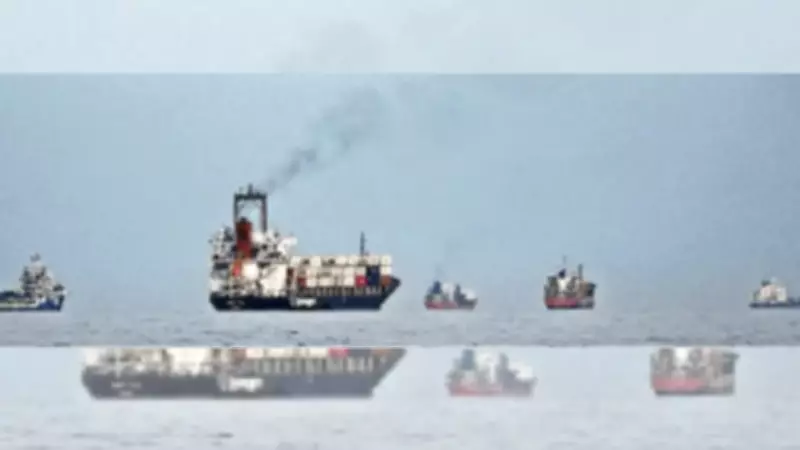
Trump Pressures Allies to Secure Strait of Hormuz as Iran-Israel War Escalates
US President Donald Trump, who initially relied on his instincts and bypassed diplomatic channels to authorize strikes on Iran in coordination with Israel, is now urgently rallying global allies to manage the escalating economic and geopolitical crisis. With the Strait of Hormuz effectively blocked by Iran, cutting off a fifth of the world's oil supply, Trump is pushing for a multinational coalition to reopen this vital shipping lane, but faces widespread hesitation from key partners.
Trump's Call for Warships Meets Global Resistance
At a White House briefing on Monday, Trump revealed he has asked approximately half a dozen countries, including Japan, China, South Korea, and several European nations, to deploy warships to the Strait of Hormuz. He emphasized that these nations, whose economies depend heavily on Middle Eastern oil, should take the lead, arguing that the United States has less need due to its domestic energy resources. "We strongly encourage other nations whose economies depend on the strait far more than ours... we want them to come and help us with the strait," Trump stated.
However, responses have been lukewarm at best. China has remained noncommittal, France indicated it might escort ships only when "circumstances permit," and Britain is unlikely to send a warship. Germany's Chancellor Friedrich Merz explicitly rejected military involvement, stating, "NATO is a defensive alliance, not an interventionist one," and stressed that only a political solution can ensure lasting stability in the region.

Trump's Diplomatic Pressure and NATO Tensions
This push mirrors Trump's previous foreign policy tactics, such as pressuring NATO members to increase defense spending and using tariffs to extract concessions from trade partners. In a recent interview with the Financial Times, Trump warned that NATO faces a "very bad" future if allies fail to assist in securing the strait, drawing parallels to US support for Ukraine against Russia. He specified a need for minesweepers and forces to neutralize threats along the Iranian coast.
Trump's frustration was palpable as he questioned the reliability of international alliances. "I've always felt that was a weakness of NATO," he said. "We were going to protect them, but I always said when in need, they won't protect us." Yet, in a contradictory statement, he later asserted that the US, as the world's strongest nation, does not need external help, highlighting the complex dynamics of his approach.
Global Reactions and Economic Implications
The reluctance from allies underscores the broader geopolitical divide. German Defense Minister Boris Pistorius bluntly remarked, "This is not our war, we have not started it," questioning the utility of European naval support. Other nations have echoed this sentiment:
- Japan: Prime Minister Sanae Takaichi stated there are no plans to dispatch naval vessels, though she will discuss the issue with Trump in Washington this week.
- Australia: Transport Minister Catherine King said Australia has not received a formal request and will not send ships.
- South Korea: The presidential office is reviewing the request, but any deployment requires parliamentary approval.
- European Union: Foreign ministers are meeting to discuss bolstering naval missions in West Asia, but expansion to the Strait of Hormuz is not expected.
Trump has also linked the issue to his upcoming trip to China, suggesting he might delay the visit if Beijing does not commit to helping secure the strait, given its reliance on Middle Eastern oil. However, Treasury Secretary Scott Bessent downplayed this, stating any postponement would be due to logistics, not disputes over the strait, and urged investors not to overreact.
Regional Threats and Military Plans
Amid the diplomatic maneuvering, Iran's Revolutionary Guards have threatened to target US companies across the region, warning employees to leave immediately. Israeli military spokesperson Lieutenant Colonel Nadav Shoshani confirmed that Israel has detailed operational plans for the next three weeks in Iran, aimed at degrading the regime's security capabilities to prevent future threats.

As oil prices soar and violence rattles West Asia, Trump's campaign to form a coalition faces significant hurdles, with many allies prioritizing political solutions over military intervention. The situation remains fluid, with potential implications for global trade and security.





