

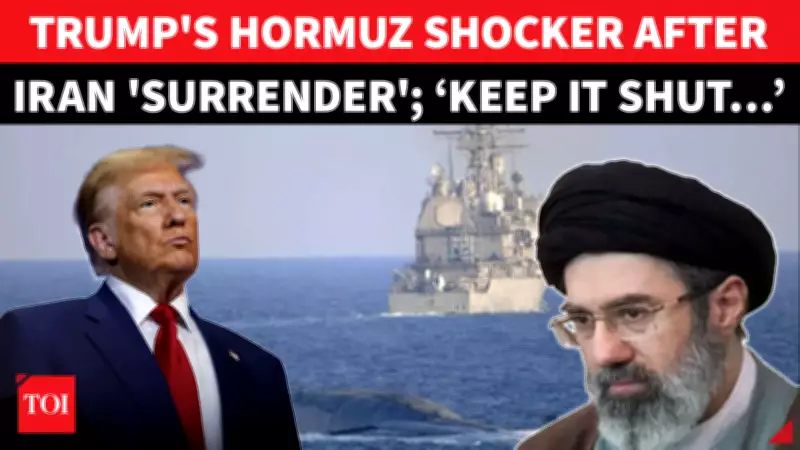
Trump Doubles Down on Hormuz Control After Ceasefire, Dismisses Iran's Tax Moves
In a dramatic escalation of geopolitical tensions, U.S. President Donald Trump has reaffirmed his commitment to a naval blockade of Iranian ports, targeting the Strait of Hormuz, a critical maritime choke point. This move comes even as Iran has publicly declared the waterway open to commercial shipping, amid ongoing ceasefire negotiations between Washington and Tehran.
Strategic Maritime Chokepoint Becomes Flashpoint
The Persian Gulf, home to the world's most strategic shipping lanes, has transformed into a volatile arena of power struggles. Trump's insistence on maintaining control over the Strait of Hormuz underscores the high stakes involved, with global oil supplies and regional stability hanging in the balance. Iran's counter-declaration of openness aims to challenge U.S. dominance, setting the stage for a potential confrontation.
Trump's Naval Blockade and Iran's Defiance
President Trump has intensified the naval blockade, reportedly costing an estimated $500 million daily in operational expenses, as part of a broader strategy to pressure Iran. In response, Iranian authorities have scoffed at what they term a "tax strategy" by the U.S., accusing Trump of economic warfare. The blockade has already seen incidents, such as an Iranian ship reportedly slipping through American defenses and docking at an Iranian port, highlighting the unpredictable nature of the situation.

Global Reactions and Diplomatic Urgency
International powers are urging caution, with Russia calling for a diplomatic path ahead of planned talks in Pakistan. China has issued warnings, drawing a red line in the Middle East and labeling Trump's actions as "jungle rule unacceptable." Meanwhile, reports suggest Trump is planning a surprise attack if negotiations fail again, with the USS Gerald R. Ford deployed to the region, raising fears of an all-out war.
Broader Implications and Regional Instability
The tensions extend beyond the Gulf, affecting global trade and security. As ceasefire talks teeter, the risk of miscalculation looms large, with potential spillover into conflicts in Lebanon and Ukraine. The situation remains fluid, with world leaders closely monitoring developments, hoping to avert a broader crisis in an already turbulent region.






