

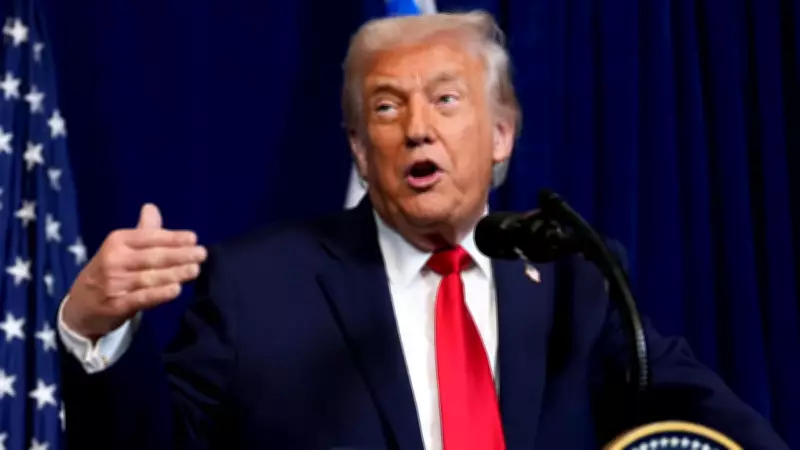
Trump Authorizes Tariffs Against Nations Engaging in Trade with Iran
In a significant move impacting global trade dynamics, US President Donald Trump has formally signed an executive order that empowers his administration to impose additional tariffs on countries that continue to conduct business with Iran. The order was executed on Friday, even as President Trump characterized the ongoing diplomatic discussions between the United States and Iran as "very good" and expressed optimism about reaching a potential agreement.
Executive Order Details and Tariff Provisions
The newly signed executive order does not mandate a fixed tariff rate but explicitly cites 25% as a primary example of the duties that could be levied. It specifies that these measures may be applied to goods imported into the United States from any nation that "directly or indirectly purchases, imports, or otherwise acquires any goods or services from Iran." This broad language indicates a comprehensive approach to enforcing economic pressure on Tehran through its international trade partners.
While speaking to reporters aboard Air Force One on Friday evening, President Trump did not directly comment on the executive order. However, he reiterated his administration's fundamental stance regarding Iran's nuclear ambitions, asserting that there should be "no nuclear weapons" for Tehran. This statement was corroborated by reports from the BBC, highlighting the administration's consistent focus on non-proliferation.

Diplomatic Context and Trump's Optimistic Tone
The tariff warning emerged concurrently with President Trump's positive assessment of diplomatic engagement with Iran following indirect talks held in Oman. He remarked, "We, likewise, had very good talks on Iran. Iran looks like it wants to make a deal very badly. We have to see what that deal is. But I think Iran looks like they want to make a deal very badly." This dual strategy of combining economic threats with diplomatic overtures underscores a complex approach to foreign policy.
President Trump also issued a stern warning regarding the consequences should negotiations ultimately fail. He stated, "We have a big armada, and we have a big fleet heading in that direction, gonna be there pretty soon. So we'll see how that works out." He further indicated that additional talks are scheduled for early next week, emphasizing, "They want to make a deal, Iran, as they should want to make a deal. They know the consequences if they don't. They don't make a deal, the consequences are very steep."
US Delegation and Follow-Up Discussions
According to CNN, the United States delegation participating in the Oman talks included several high-profile figures:
- Presidential envoy Steve Witkoff
- Trump's son-in-law Jared Kushner
- US Central Command Commander Admiral Brad Cooper
Following these discussions, both the United States and Iran agreed to hold follow-up consultations after engaging with their respective capitals. This outcome has been cautiously interpreted as a positive development by officials on both sides, suggesting a potential pathway toward de-escalation.
Background and Previous Threats
President Trump had previously threatened tariffs on countries conducting business with Iran. In a January 12 post on Truth Social, he declared, "Effective immediately, any country doing business with the Islamic Republic of Iran will pay a tariff of 25% on any and all business being done with the United States of America." At that time, no specific implementation details were provided, leaving the international community uncertain about the practical implications.
The White House has clarified that the latest executive order reaffirms the "ongoing national emergency with respect to Iran" and noted that the president retains the authority to modify these measures if circumstances evolve. An official statement elaborated, "The President is holding Iran accountable for its pursuit of nuclear capabilities, support for terrorism, ballistic missile development, and regional destabilization that endanger American security, allies, and interests."

Historical Context and Regional Tensions
Relations between the United States and Iran have remained profoundly strained for many years, primarily due to disagreements over Tehran's nuclear program, its expanding regional influence, and the imposition of extensive sanctions. This period has been marked by periodic escalations interspersed with intermittent diplomatic efforts aimed at resolving conflicts. As of now, there has been no immediate response from Iranian authorities regarding the latest tariff warning, leaving the international community to monitor developments closely.





