

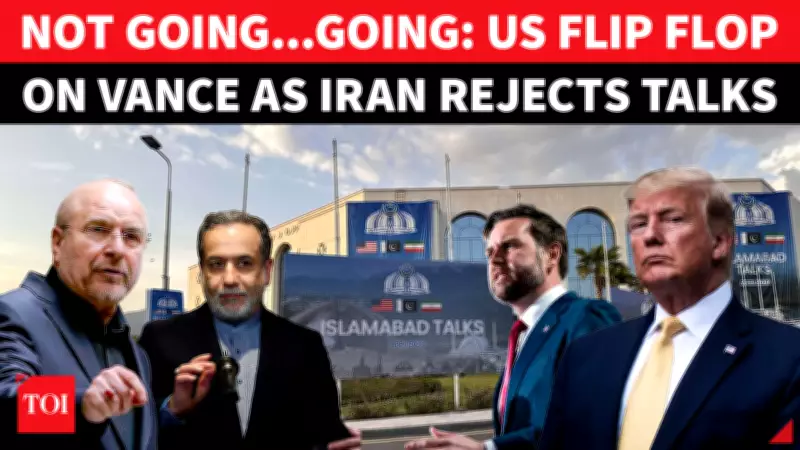
Trump Administration's Dramatic Policy Reversal on Pakistan Visit
In a stunning development that has injected fresh uncertainty into an already volatile geopolitical landscape, the United States government executed a dramatic policy reversal regarding diplomatic efforts with Iran. President Donald Trump initially ruled out a planned visit by JD Vance to Pakistan for crucial talks with Iranian representatives, only for the White House to confirm his participation mere hours later.
Iran's Firm Rejection of Further Dialogue
This diplomatic flip-flop from Washington comes at a particularly sensitive moment, as tensions between the United States and Iran continue to intensify, especially in the strategically vital Strait of Hormuz. However, the more significant setback emerged from Tehran, which has outright rejected any possibility of a second round of ceasefire talks.
Iranian officials have pointedly blamed what they describe as "US inconsistency and coercive tactics" for their decision. Tehran has made it clear that there is no trust remaining for meaningful dialogue with American representatives, creating a substantial obstacle to diplomatic progress.

Escalating Maritime Tensions and Global Concerns
The situation is further complicated by increasing maritime confrontations in the Gulf region, which have prompted nervous reactions across global oil markets. As diplomatic channels appear increasingly fragile, a concerning gap is emerging between Washington's stated desire for talks and Tehran's actual willingness to engage.
This growing disconnect between diplomatic intent and geopolitical reality reflects a deeper crisis in international diplomacy. With conflicting signals emanating from both capitals and regional tensions continuing to rise, the situation is becoming progressively harder to manage effectively.
Broader Implications for Regional Stability
The high-stakes standoff raises serious concerns about what might come next in this escalating confrontation. The combination of diplomatic reversals, rejected negotiation opportunities, and heightened military posturing creates a perfect storm of uncertainty that could have far-reaching consequences for regional stability and global energy security.
Observers note that the rapid sequence of events—from the initial cancellation to the subsequent confirmation of Vance's Pakistan visit, coupled with Iran's firm rejection of further talks—demonstrates the fragile nature of current diplomatic efforts. The situation continues to evolve rapidly, with all parties carefully monitoring developments in the strategically critical Strait of Hormuz region.






