

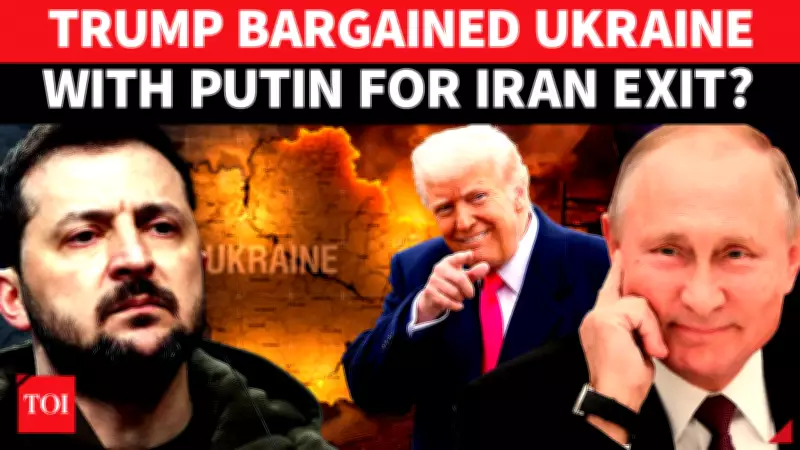
Trump's Alleged Ukraine-Iran Bargain: JD Vance Drops Explosive Hint
In a stunning revelation that has sent shockwaves through international diplomatic circles, US Vice President JD Vance has hinted at a potential secret bargain between former President Donald Trump and Russian leader Vladimir Putin. The bombshell suggestion involves trading leverage in Ukraine for an exit from the Iran war, raising profound questions about America's foreign policy priorities and geopolitical maneuvering.
The Turning Point USA Bombshell
Speaking at a Turning Point USA event in Georgia, Vice President Vance made remarks that have ignited intense speculation. He described the cessation of military aid to Ukraine as one of the Trump administration's "proudest achievements," a statement that immediately raised eyebrows among foreign policy analysts and international observers.
The context of this declaration is particularly significant given the current geopolitical landscape. The United States has paused military assistance and intelligence sharing with Kyiv, creating uncertainty about the future of American support for Ukraine's defense against Russian aggression. This development occurs against the backdrop of ongoing tensions in the Middle East, where the Trump administration has been seeking an exit strategy from the protracted Iran conflict.

The Alleged Quid Pro Quo
The central question emerging from Vance's remarks is whether Moscow might be assisting Trump in extracting the United States from the Iran war in exchange for reduced American pressure on Ukraine. This potential arrangement suggests a complex geopolitical trade-off that could reshape alliances and conflict dynamics across two critical regions simultaneously.
Analysts are examining several key aspects of this possible bargain:
- The timing of reduced US support for Ukraine coincides with increased diplomatic efforts regarding Iran
- Russia's strategic interest in weakening Western support for Kyiv
- Trump's longstanding desire to disengage from Middle Eastern conflicts
- The potential for back-channel negotiations between Washington and Moscow
Broader Geopolitical Implications
If such a bargain exists, it represents a significant shift in American foreign policy that prioritizes disengagement from one conflict at the potential cost of another ally's security. The implications extend far beyond bilateral relations, potentially affecting:
- European security architecture and NATO cohesion
- Global energy markets and Middle Eastern stability
- International norms regarding territorial integrity and sovereignty
- The credibility of American security guarantees worldwide
The Vance revelation comes amid a series of related developments, including heightened tensions between Trump and Pope Leo regarding the Iran conflict, failed diplomatic talks in Pakistan, and escalating military posturing in the Strait of Hormuz. These interconnected events suggest a complex web of geopolitical maneuvering that may involve multiple parties and competing interests.
Unanswered Questions and Future Developments
While Vance's remarks provide only a hint rather than definitive confirmation, they have opened a critical line of inquiry about the Trump administration's foreign policy calculus. Key questions remain unanswered:
- What specific mechanisms would facilitate such a geopolitical trade?
- How would this affect Ukraine's defensive capabilities against ongoing Russian aggression?
- What assurances, if any, would Iran provide in exchange for reduced American military pressure?
- How would European allies respond to such a fundamental shift in American policy?
The international community will be watching closely for further developments, as the potential ramifications of such a bargain could reshape global power dynamics for years to come. The intersection of Eastern European security and Middle Eastern stability has rarely been so prominently linked in American foreign policy discussions, making this developing story one of potentially historic significance.






