Trump Advocates for Modern Nuclear Treaty Following New START Expiration
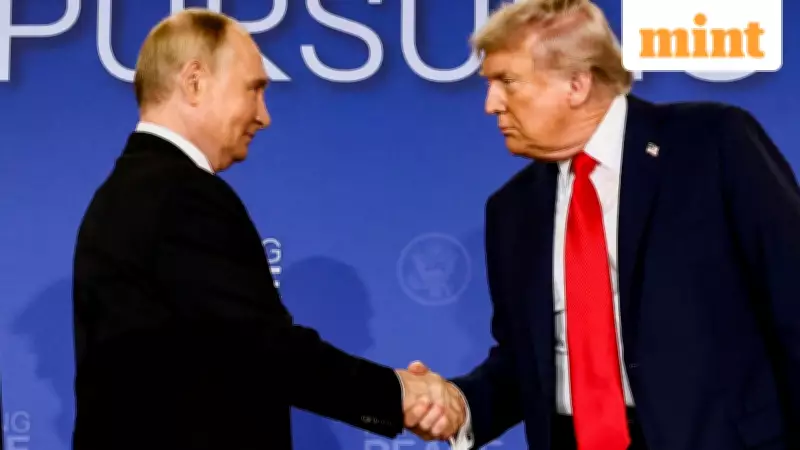
Former US President Donald Trump has publicly called for the creation of a new and improved nuclear treaty, following the expiration of the New START agreement with Russia. In a statement made on Thursday, Trump criticized the previous pact, which was originally signed by former President Barack Obama and later extended by former President Joe Biden.
"The agreement was badly negotiated and is being grossly violated," Trump declared on his Truth Social platform. He emphasized the need for American nuclear experts to "work on a new, improved, and modernized Treaty that can last long into the future."
Push for China's Inclusion in Future Arms Control
The Trump administration has consistently argued that any meaningful nuclear arms control in the 21st century must include China, given its rapidly expanding arsenal. US Secretary of State Marco Rubio reiterated this position on Wednesday, noting Trump's firm stance on the matter.

"In order to have true arms control in the 21st century, it's impossible to do something that doesn't include China because of their vast and rapidly growing stockpile," Rubio stated, echoing Trump's long-held view.
However, China has publicly resisted such proposals. During his first term, Trump attempted unsuccessfully to negotiate a three-way nuclear agreement involving China. Beijing maintains that its nuclear forces are not comparable to those of the US and Russia.
"China's nuclear forces are not at all on the same scale as those of the U.S. and Russia, and thus China will not participate in nuclear disarmament negotiations at the current stage," Foreign Ministry spokesperson Lin Jian said on Thursday.
Lin expressed regret over the expiration of New START and urged the US to resume nuclear dialogue with Russia promptly. He also responded positively to Moscow's suggestion that both nations continue observing the treaty's core limits temporarily.
China's Expanding Nuclear Arsenal
According to the Stockholm International Peace Research Institute, China's nuclear arsenal has been expanding more rapidly than any other nation, adding approximately 100 new warheads annually since 2023. The institute estimates that China now possesses at least 600 nuclear warheads.
This number remains significantly lower than the 800-warhead limit that was set for both Russia and the United States under the New START treaty. Despite this growth, China continues to resist formal limits on its nuclear capabilities while advocating for renewed US-Russia negotiations.
Russia's Reaction to Treaty Expiration
Russian President Vladimir Putin discussed the treaty's expiration with Chinese leader Xi Jinping on Wednesday, highlighting the US failure to respond to his proposal for extending the limits. Kremlin adviser Yuri Ushakov noted that Russia "will act in a balanced and responsible manner based on thorough analysis of the security situation."
Kremlin spokesman Dmitry Peskov stated that Moscow views the treaty's expiration "negatively" and expressed regret. He assured that Russia will maintain its "responsible, thorough approach to stability when it comes to nuclear weapons," while being guided primarily by national interests.
Peskov added that Russia respects Beijing's position and has consistently argued that any broader nuclear agreement should also include the arsenals of NATO members France and the United Kingdom.
Understanding the New START Treaty
The New Strategic Arms Reduction Treaty (New START) was signed in 2010 by then-President Barack Obama and former Russian President Dmitry Medvedev. The agreement established crucial limits:
- No more than 1,550 nuclear warheads per country
- No more than 700 deployed missiles and bombers
- Extensive on-site inspections to ensure compliance
Originally set to expire in 2021, the treaty was extended for an additional five years. However, inspections were suspended in 2020 due to the COVID-19 pandemic and never resumed.

In February 2023, Putin halted Moscow's participation in the treaty, citing concerns over US inspections of Russian nuclear sites amid the conflict in Ukraine. Despite this suspension, the Kremlin emphasized it would continue honoring the caps on its nuclear arsenal.
Last September, Putin offered to maintain New START's limits for one more year to allow time for negotiations on a successor agreement, warning that letting the treaty expire could destabilize global security and encourage nuclear proliferation.
New START represented the last in a series of arms control agreements between the US and Russia that began with SALT I in 1972, all designed to curb the nuclear arsenals of the world's two largest nuclear powers.