

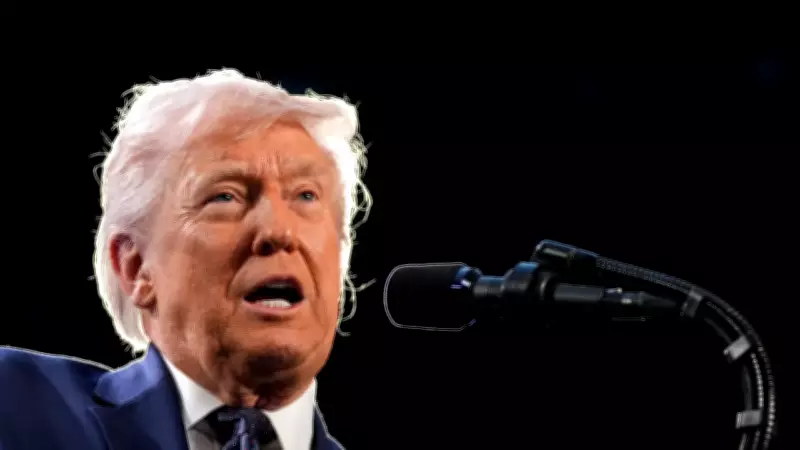
Trump Calls for International Naval Support in Strait of Hormuz
US President Donald Trump announced on Sunday, US local time, that he has demanded approximately seven countries send warships to assist in keeping the Strait of Hormuz open. This move comes amid an ongoing conflict with Iran, which has disrupted one of the world's most critical oil shipping routes.
Global Coalition for Maritime Security
Trump's statement aligns with reports that he plans to announce a global coalition to escort commercial vessels through the strait. Roughly 20% of global oil exports typically pass through this narrow waterway, making it a focal point in the current geopolitical tensions.
He did not specify the countries involved, but noted they are nations heavily reliant on Middle Eastern oil. "We're talking to countries about policing the straits, because they are the ones — you know, we don't get oil, very little, 1%. China, as an example, gets about 90% of its oil from the Hormuz Strait. It'd be nice to have other countries policing with us. And we'll help, and we'll work with them," Trump told reporters aboard Air Force One.

Trump's Justification and Demands
Emphasizing the need for international cooperation, Trump added, "I’m demanding that these countries come in and protect their own territory, because it is their own territory." So far, no nation has made firm commitments, as global oil prices continue to rise due to the instability.
He further commented on the response from allies, stating, "I think we're getting a good response... We're always there for NATO. We're helping them with Ukraine... It doesn't affect us, but we've helped them. It'd be interesting to see which country wouldn't help us with a very small endeavour, which is just keeping the Strait open."
Assessment of Iran's Military Capabilities
Trump reiterated that the US has largely defeated Iran in the conflict but acknowledged Tehran might have "a little bit of fight back." He detailed the extent of US operations, saying, "As far as I'm concerned, we've essentially defeated Iran. I guess they can have a little bit of fight back. But not much... We have taken out their air forces, air defence... They have no air defence whatsoever. We have taken out their leadership... Militarily, it's been amazing. We have attacked Kharg Island... They wanted to negotiate badly... I don't think they are ready... I think they will be ready in some time. But we do it very well..."
He emphasized the scale of US military superiority, noting, "My comparison is small because Iran has very little firepower left. Their missiles are down to a low number. They're shooting very few of them... Because we've decimated their manufacturing capability. Likewise, the drones are way down. They're down to about 20% of what they had... as of yesterday, we're starting to hit the places where they manufacture the drones. We think we know where they are. It's a very strong military operation, just as it was in Venezuela. We have the strongest military anywhere in the world by far, not even a contest. And I think people understand that, and we will finish the job."
Iran's Response and Regional Dynamics
Iran’s foreign minister, Abbas Araghchi, earlier told CBS that Tehran has been approached by several countries seeking safe passage for their vessels. He stated that allowing such passage is a matter for Iran’s military, adding, "A group of vessels from 'different countries' had been allowed to pass," without providing further details.
Araghchi also dismissed the possibility of negotiations with the US to end the war, noting that Israel and the US initiated the fighting with coordinated attacks on February 28 during indirect talks on Iran's nuclear program. He mentioned that Tehran has "no plan to recover" the enriched uranium destroyed in US and Israeli attacks last year.
Impact on Global Oil Markets and US Economy
The disruption caused by Iran in the Strait of Hormuz has exerted significant pressure on global oil markets. Prices have surpassed $100 per barrel since US operations began two weeks ago, with US gas prices rising by more than 70 cents per gallon. Iran has restricted passage using sea mines and small vessels, while US administration officials have indicated that the US Navy will support commercial vessels navigating the strait.

Republicans in Congress have urged the White House to act swiftly to prevent a short-term economic shock at the start of an election year. Despite these pressures, Trump and some party members have resisted calls to end the war quickly, aiming to avoid longer-lasting supply issues that could exacerbate economic challenges.





