

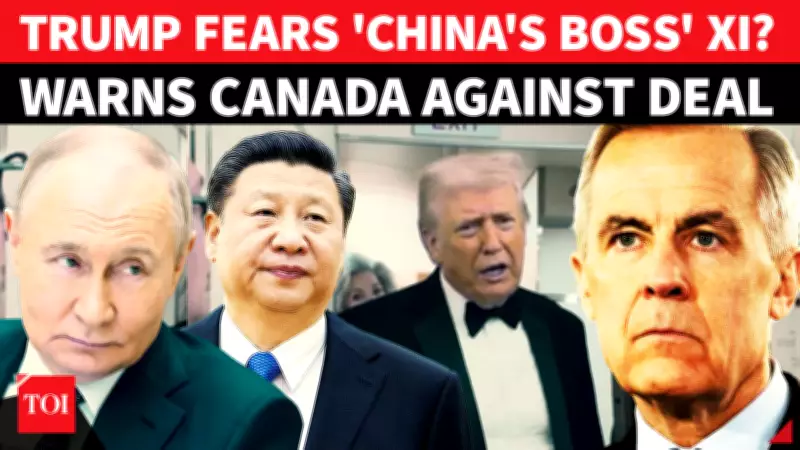
In a dramatic move that has sent shockwaves through international energy markets and diplomatic circles, U.S. President Donald Trump has issued a stark warning to Canada while proposing a significant shift in global oil trade dynamics. Speaking to reporters aboard Air Force One, Trump threatened a "very substantial" response if Ottawa proceeds with a trade agreement with China, a statement that has immediately strained North American relations and highlighted growing U.S.-China tensions.
A Bold Warning to Canada
Trump's comments targeted Canada directly, with the President asserting that any deal between Ottawa and Beijing would face severe consequences from the United States. This warning underscores the Trump administration's aggressive stance on trade and its efforts to counter China's economic influence, particularly in North America. Analysts suggest this could lead to renewed trade disputes or tariffs, impacting the long-standing economic partnership between the U.S. and Canada.
Energy Geopolitics in Focus
Simultaneously, Trump unveiled a surprising proposal for global oil markets, claiming that India will begin purchasing Venezuelan oil instead of Iranian or Russian crude. He extended an invitation to China to adopt a similar strategy, urging a pivot away from Russian energy sources. This move is seen as part of a broader U.S. strategy to isolate Russia and Iran while bolstering Venezuela's oil industry, despite ongoing political and economic crises in the South American nation.

The implications of such a shift are profound, potentially reshaping energy alliances and altering global supply chains. By encouraging major economies like India and China to ditch Russian crude for Venezuelan oil, Trump aims to reduce Moscow's economic leverage and support U.S. interests in the Western Hemisphere.
Global Reactions and Market Impact
Trump's statements have rattled global energy markets, with oil prices experiencing volatility as traders assess the potential for new trade flows and geopolitical realignments. The warning to Canada has also raised concerns about the stability of North American trade relations, which have been a cornerstone of regional economic growth.
Experts note that this bold strategy could escalate tensions with major world powers, including China and Russia, while testing the resilience of international energy partnerships. The move highlights the Trump administration's willingness to use economic and diplomatic tools to advance its geopolitical objectives, even at the risk of provoking conflicts with allies and adversaries alike.
Looking Ahead
As the situation develops, observers are closely watching for responses from Canada, China, India, and other key players in the global energy landscape. Trump's dual focus on trade and oil geopolitics signals a concerted effort to assert U.S. influence on multiple fronts, with potential long-term consequences for international relations and market stability.
This development underscores the interconnected nature of modern geopolitics, where trade agreements and energy policies are increasingly used as instruments of statecraft. The coming weeks will likely see further clarifications and reactions, shaping the trajectory of these high-stakes diplomatic and economic maneuvers.






