

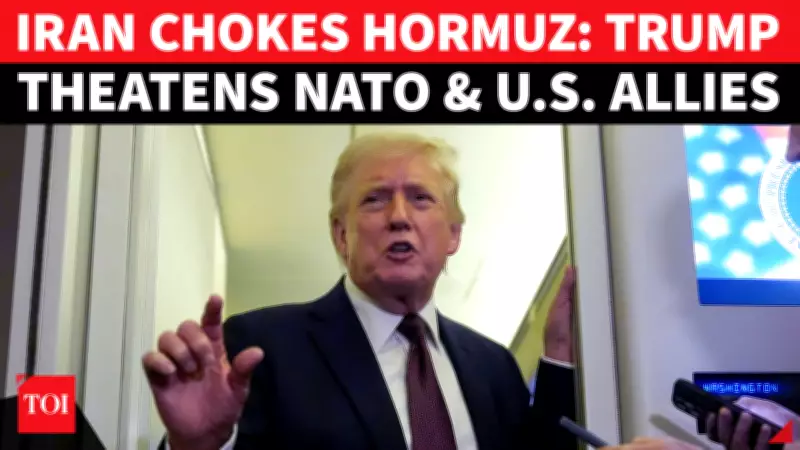
Trump Issues Dire Warning to NATO Over Strait of Hormuz Crisis
U.S. President Donald Trump has delivered a stark and urgent warning to NATO allies, declaring that the alliance faces a "very bad future" if it does not actively participate in securing and reopening the Strait of Hormuz. This critical chokepoint, through which approximately 20% of the world's oil passes, has become a focal point of escalating tensions in the Middle East.
Appeal to China for Joint Responsibility
In a significant geopolitical move, President Trump also directly appealed to China, urging Beijing to take responsibility in resolving the crisis. He emphasized that China, as one of the world's largest energy consumers, relies heavily on the uninterrupted flow of oil shipments through the strait. "Beijing cannot afford to stand idle while its energy lifeline is threatened," a senior administration official was quoted as saying, highlighting the global stakes involved.
Background of the Strait of Hormuz Closure
The Strait of Hormuz, located between the Persian Gulf and the Gulf of Oman, is a narrow waterway that serves as a vital artery for global oil trade. Recent developments, including Iranian declarations and military posturing, have led to its effective closure, disrupting international shipping and triggering fears of a major oil supply crisis. Key points include:

- Iran has declared the Persian Gulf off-limits to American ships, escalating tensions.
- High-tech drone attacks by Iran have targeted U.S. bases in the region.
- Threats to oil infrastructure, such as Kharg Island, have been signaled by the U.S.
Global Implications and NATO's Role
Trump's warning underscores the broader geopolitical ramifications of the strait's closure. NATO, traditionally focused on European and North Atlantic security, is now being called upon to address a crisis in the Middle East that could destabilize global energy markets. Analysts suggest that a prolonged closure could lead to:
- A sharp spike in global oil prices, affecting economies worldwide.
- Increased military confrontations in the region, risking broader conflict.
- Strain on international alliances, particularly between the U.S. and its European partners.
The situation remains fluid, with ongoing incidents such as drone attacks in Dubai and missile warnings in the UAE adding to the volatility. As Trump presses for a coordinated international response, the world watches closely to see if NATO and China will heed his call to prevent what he describes as a "very bad" outcome for global stability.






