Trump's Sudden Warning to NATO Allies Over Hormuz Mission Stuns European Leaders
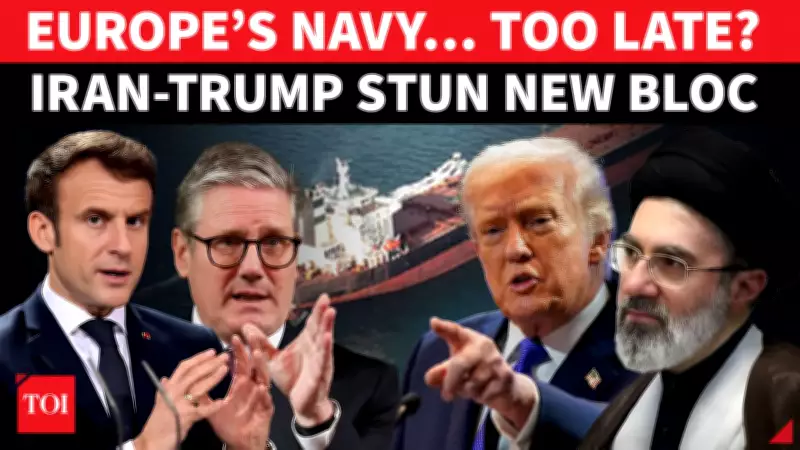
In a dramatic development that has sent shockwaves through diplomatic circles, US President Donald Trump issued a stark warning to NATO allies to "STAY AWAY" from the Strait of Hormuz, directly countering a freshly announced multinational naval mission led by European powers. This move has been widely interpreted as a significant humiliation for UK Prime Minister Keir Starmer and French President Emmanuel Macron, who had just unveiled their initiative.
European Announcement Meets Immediate American Rebuke
The geopolitical standoff intensified on Friday when Prime Minister Starmer and President Macron, after co-chairing a major conference in Paris attended by representatives from 49 nations, declared plans for a coalition naval force. The stated objective of this mission is to safeguard vital global trade routes through the strategic Strait of Hormuz, a chokepoint for approximately one-fifth of the world's seaborne oil.
"We just had a very productive meeting, bringing together 49 countries around a very simple message and proposition that the world needs the Strait of Hormuz fully open," Starmer stated emphatically. He elaborated that keeping the waterway secure is essential to "keep prices down for our people and stop the global economic damage." However, in a crucial caveat that now seems prescient, Starmer stressed the mission would only be deployed "when conditions allow."

Trump's Unambiguous Directive Creates Diplomatic Crisis
Almost simultaneously with the European announcement, President Trump delivered his blunt directive, effectively undermining the Franco-British leadership on the issue. His public warning to NATO allies represents a profound policy divergence and has caught European capitals completely off guard, raising serious questions about Western unity in addressing Middle Eastern security challenges.
Analysts suggest this public split exposes deep fissures within the Atlantic alliance regarding how to manage tensions in the Persian Gulf region. The timing of Trump's statement, coming immediately after the Paris conference, is viewed as a deliberate move to assert American primacy and marginalize European diplomatic initiatives.
Strategic Implications and Global Reaction
The Strait of Hormuz has been a flashpoint for international tensions, with its closure or disruption posing catastrophic risks to the global economy. The European-led mission was conceived as a multilateral response to ensure freedom of navigation and deter potential threats to commercial shipping.
President Trump's intervention, however, has thrown these plans into disarray, forcing a hurried reassessment in London, Paris, and other European capitals. The public nature of the disagreement inflicts significant reputational damage on Starmer and Macron, who positioned themselves as leaders of a broad international coalition, only to be publicly contradicted by the American president.
This incident underscores the volatile nature of current international diplomacy and the challenges of coordinating a coherent Western strategy. The coming days will be critical as officials scramble to clarify positions, with the reopening of the waterway adding further complexity to an already tense geopolitical standoff.