

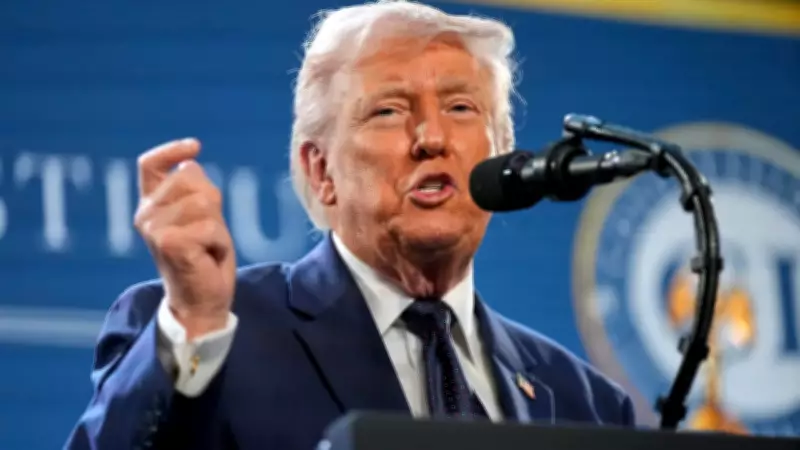
Trump Announces Historic US Oil Refinery Deal with India's Reliance Industries
In a bold move that blends energy ambition with geopolitical strategy, former President Donald Trump has unveiled plans for the United States to construct its first new oil refinery in nearly 50 years. The project, backed by India's Reliance Industries, is being touted as a "historic $300 billion deal" aimed at restoring American energy dominance.
A Strategic Partnership in Texas
The proposed refinery, to be located at the Port of Brownsville in Texas, is designed to process American shale crude and export refined fuels such as gasoline, diesel, and jet fuel. This initiative addresses a critical structural issue in the US energy system: while the nation produces vast quantities of light shale oil, many existing refineries are outdated and built to handle heavier imported crude.
More striking than the refinery itself is the choice of partner. Reliance Industries, controlled by billionaire Mukesh Ambani, is not just any foreign investor. It operates the world's largest refining complex in Jamnagar, Gujarat, and has earned a reputation for technical sophistication in the global oil business.

The Reliance Blueprint: From Jamnagar to Texas
To understand why Reliance is the ideal partner for this Texas venture, one must look back to the late 1990s. Against all odds, Reliance built the Jamnagar refinery, a massive 1.24 million-barrel-per-day facility that transformed India from a fuel-deficit nation into a global export hub. Its Nelson Complexity Index of 21.1—the highest in the world—allows it to process heavy, sour crude oils from countries like Venezuela and Iran into premium fuels meeting strict environmental standards.
This technical prowess, coupled with Mukesh Ambani's legendary execution speed, has made Reliance a refining powerhouse. In Brownsville, the US is not merely receiving capital; it is adopting the "Reliance Blueprint" to solve its own energy mismatches. In return, Reliance and India gain a strategic foothold in the US market, effectively creating a "Jamnagar West."
Geopolitical and Diplomatic Underpinnings
The deal emerges at a time of heightened global tensions, particularly in the Middle East. For years, Washington has pressured New Delhi to reduce purchases of discounted Russian oil, but India has maintained its multi-alignment doctrine. With recent conflicts threatening the Strait of Hormuz—a vital chokepoint for 20% of global oil—the US now seeks India's cooperation to stabilize prices.
In a classic diplomatic twist, Washington has relaxed pressure on Russian oil waivers in exchange for Reliance's massive investment. This move not only shields India and Reliance from potential future US tariffs but also provides Trump with a tangible energy sector victory to promote ahead of the upcoming mid-term elections.
The Role of Dynastic Diplomacy
Behind the scenes, this alliance has been nurtured through years of personal connections. It began with Ivanka Trump's 2017 visit to Hyderabad, where she first met Mukesh Ambani. By 2024, the Trump and Ambani families had deepened ties, with Ivanka and Jared Kushner attending the Ambani pre-wedding celebrations in Jamnagar. Further bonding occurred during Donald Trump Jr.'s 2025 visit to the Ambanis' animal conservation project in Gujarat.
Key figures like US Ambassador to New Delhi Sergio Gor, a Trump confidante, have also played pivotal roles. During a recent India-US T20 cricket match, Gor and Ambani were reportedly discussing more than sports, navigating the volatile oil politics of a world on edge.
Moderating the Hyperbole
While Trump's announcement is filled with superlatives, industry analysts offer a more tempered view. A top-tier refinery typically costs between $15 billion and $25 billion, suggesting that the $300 billion figure likely includes the cumulative value over a 20-year offtake agreement. Nonetheless, the deal represents a significant step in US-India relations and global energy dynamics.
As fires rage in the Middle East, this partnership offers a rare convergence of energy economics, billionaire diplomacy, and geopolitical strategy, potentially reshaping oil trade flows for decades to come.






