

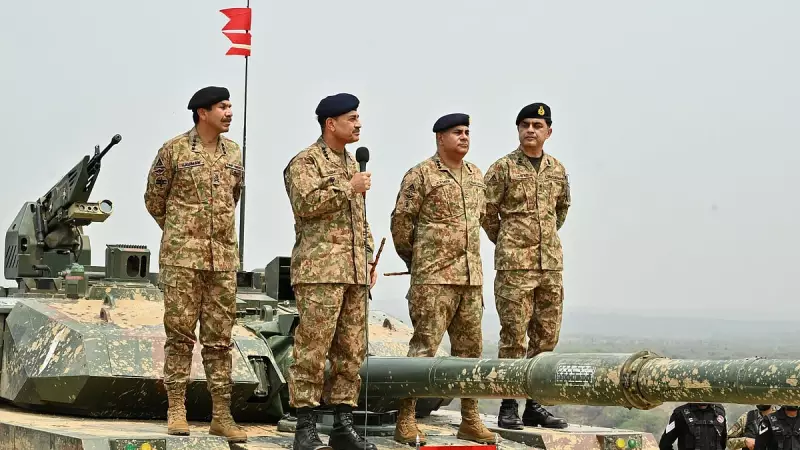
A new diplomatic proposal from former US President Donald Trump has placed Pakistan's military leadership, particularly Army Chief General Asim Munir, in a challenging position. The plan, which envisions a significant role for Muslim-majority nations in post-war Gaza, forces Islamabad to navigate complex geopolitical waters.
The Core of Trump's Gaza Proposal
Reported by Reuters on 17 December 2025, the 20-point plan presented by Donald Trump addresses the future of the Gaza Strip. The territory has been devastated by over two years of intense Israeli military action. A central pillar of this strategy calls for the deployment of a security and reconstruction force drawn from Muslim nations.
This multinational force would be tasked with overseeing a transitional period. Its primary objectives would be to maintain stability, facilitate large-scale reconstruction efforts, and shepherd economic recovery in the war-torn Palestinian enclave. The plan explicitly seeks to move beyond the immediate conflict towards a structured rebuilding phase.

Pakistan's Delicate Position
For Pakistan, a nation with deep historical and religious ties to the Palestinian cause, the proposal creates an immediate dilemma. Any potential involvement, even in a peacekeeping or reconstruction role, would require careful consideration of several critical factors.
General Asim Munir, as the Chief of Army Staff, would be at the forefront of any decision regarding troop contribution. The military would have to weigh its capacity and international commitments. Furthermore, Pakistan's domestic political landscape, where public sentiment strongly favours Palestine, would heavily influence the government's response.
The nation must also consider its delicate relationships with key Arab states, the broader Muslim world, and its complex history with the United States. Aligning too closely with a plan perceived as American-led could attract criticism, while refusing to participate might be seen as abandoning the Palestinian people in their hour of need.
Broader Implications and the Path Forward
The success of such a plan hinges on acceptance from multiple stakeholders, including Israel, Palestinian authorities, and the proposed contributing nations. For Pakistan, the decision is not merely logistical but profoundly strategic and symbolic.
Analysts suggest that General Munir and the Pakistani government will likely adopt a wait-and-see approach, gauging regional consensus before making any commitment. The country may push for clarifications regarding the force's mandate, command structure, and duration of deployment. Ensuring the mission has a clear humanitarian and reconstruction focus, rather than a purely security-oriented one, could make it more palatable to the Pakistani public and leadership.
Ultimately, Trump's Gaza plan underscores the ongoing international search for a viable solution to the conflict. It also highlights the difficult choices facing traditional supporters of Palestine like Pakistan, as they balance principle with pragmatic diplomacy in a highly volatile region.






