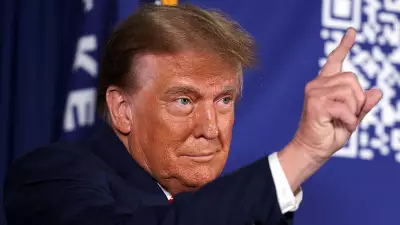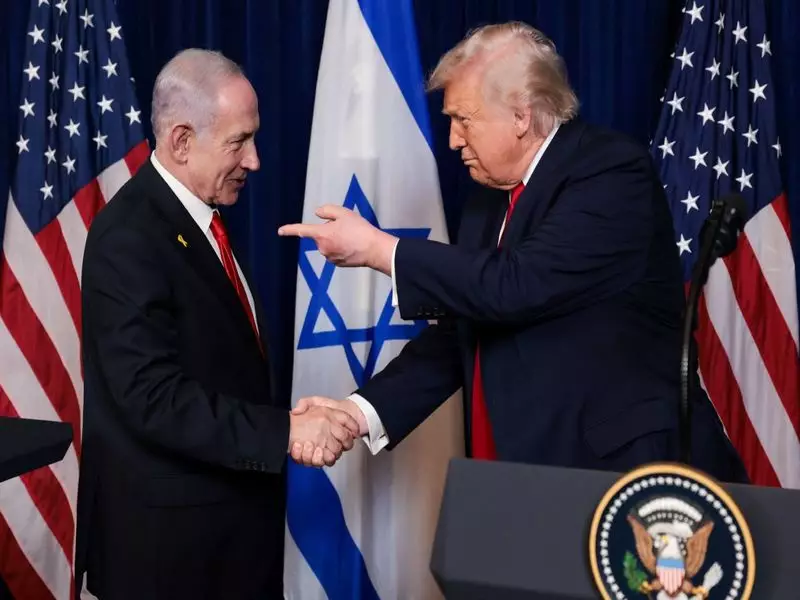
In a surprising statement that has sparked immediate controversy and denial, former US President Donald Trump declared that a pardon for Israeli Prime Minister Benjamin Netanyahu is "on its way." This claim was met with a swift and firm rebuttal from the office of Israeli President Isaac Herzog, creating a notable diplomatic discrepancy.
The Contradictory Claims
During a recent interaction, Donald Trump made the bold assertion regarding his political ally, Benjamin Netanyahu. Trump suggested that a formal act of clemency for the Israeli leader was in the pipeline. However, this declaration was almost instantly contradicted by officials in Jerusalem.
The office of Israeli President Isaac Herzog issued a clear denial, stating unequivocally that no such pardon process for Prime Minister Netanyahu is underway or has been requested. This public contradiction between the claim of a former American president and the sitting Israeli president's office highlights a significant and unusual rift in diplomatic communications.

Context and Legal Implications
The backdrop to this incident is the ongoing legal challenges facing Prime Minister Netanyahu. He is currently on trial in Israel on serious corruption charges, which he vehemently denies. The possibility of a pardon is a deeply sensitive political and legal issue within Israel.
It is crucial to understand the separation of powers in Israel: while the president holds the constitutional authority to grant pardons, this power is typically exercised based on recommendations from the justice system or other official channels, not on the statements of foreign leaders. The president's office emphasized this standard procedure in its denial, indirectly underscoring the inaccuracy of Trump's claim.
Reactions and Diplomatic Fallout
The immediate and public denial from President Herzog's office signals a desire to distance the Israeli presidency from what it perceives as an unfounded and potentially interfering statement. This episode risks creating unnecessary diplomatic friction and has put Netanyahu in an awkward position, caught between a supportive foreign figure and his own country's institutional protocols.
Analysts suggest that Trump's comment, whether based on misinformation or intended as political posturing, complicates the already delicate situation surrounding Netanyahu's trial. It introduces an external element into a deeply internal Israeli judicial and political matter. The swift correction from Jerusalem serves as a reminder that, despite close alliances, national institutions operate independently.
The core facts remain clear: Donald Trump stated a Netanyahu pardon is imminent, and the Israeli President's office has officially and categorically denied this claim. This incident adds another layer of complexity to the long-standing but often complicated relationship between the two allied nations, especially concerning their domestic political and legal affairs.