

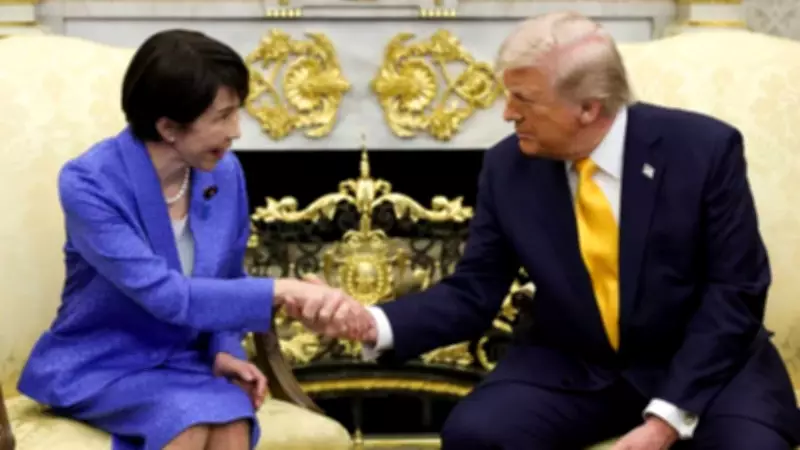
Trump's Pearl Harbor Reference During Japanese PM Meeting Raises Eyebrows
US President Donald Trump made a remark about the Pearl Harbor attack during a meeting with Japan's Prime Minister Sanae Takaichi at the White House, drawing significant attention due to the sensitive historical context of the reference. The comment came as the two leaders discussed bilateral relations and regional security issues.
The Controversial Exchange
During the meeting, reporters asked President Trump why the United States hadn't informed its allies before launching military strikes against Iranian missile sites near the Strait of Hormuz. The President responded with what officials described as a joke, saying: "We didn't tell anybody about it because we wanted a surprise. Who knows better about surprise than Japan? Why didn't you tell me about Pearl Harbor, OK?"
The remark referenced the December 7, 1941 attack when Imperial Japanese forces launched a surprise air assault on the US naval base at Pearl Harbor in Hawaii. This historical event remains deeply significant in both American and Japanese collective memory.

Historical Context of Pearl Harbor
The Attack on Pearl Harbor represented a pivotal moment in World War II history. More than 350 Japanese aircraft struck in two waves, targeting American battleships, airfields, and military installations during an assault lasting approximately 90 minutes.
- Casualties: 2,403 Americans killed and 1,178 injured
- Material Damage: Eight battleships destroyed or damaged, nearly 200 aircraft hit
- Consequences: The United States entered World War II the following day
This historical backdrop makes any reference to Pearl Harbor particularly delicate in diplomatic settings involving Japanese and American officials.
Official Response and Meeting Focus
The White House has not issued any separate statement regarding President Trump's comment. Officials present at the meeting characterized the remark as an offhand joke rather than part of formal discussions. The meeting itself focused primarily on strengthening ties between the United States and Japan, two nations that have developed a close alliance despite their World War II history.
Key discussion topics included:
- Defense cooperation and security arrangements
- Trade relations and economic partnerships
- Regional security concerns in the Indo-Pacific
- Coordinated approaches to challenges involving China and North Korea
US-Japan Relations: From Conflict to Cooperation
Despite the historical tensions symbolized by Pearl Harbor, the United States and Japan have built one of the world's strongest bilateral relationships over the past seven decades. The two countries cooperate extensively on economic matters, defense initiatives, and regional security frameworks.
Leaders from both nations have consistently acknowledged their complicated history while emphasizing forward-looking cooperation. Japan remains a crucial partner for the United States in maintaining stability in the Asia-Pacific region and addressing shared security concerns.
The diplomatic sensitivity surrounding Pearl Harbor references highlights how historical events continue to shape contemporary international relations, even as former adversaries transform into close allies through sustained diplomatic engagement and mutual strategic interests.






