

Trump's Pearl Harbour Quip Stuns Japanese PM During Tense White House Meeting
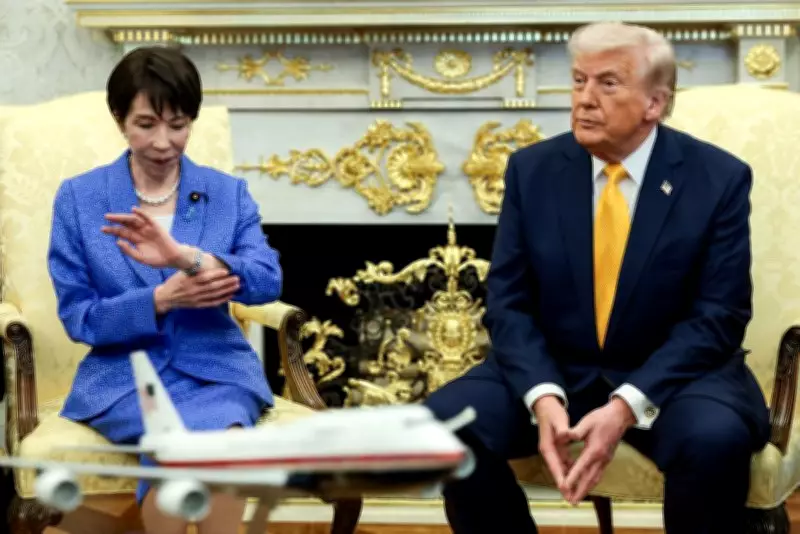
In a high-stakes diplomatic encounter at the White House, US President Donald Trump made a jarring reference to Japan's 1941 attack on Pearl Harbour, leaving Japanese Prime Minister Sanae Takaichi momentarily speechless. The incident occurred during a public appearance in the Oval Office on March 19, 2026, as the leaders faced intense questioning about Japan's role in the ongoing Iran war and efforts to secure the Strait of Hormuz.
Awkward Exchange Over Surprise Attacks
As reporters pressed Trump on why the United States did not notify allies like Japan ahead of its military strikes on Iran, the president defended the element of surprise. "We didn't tell anybody about it because we wanted surprise. Who knows better about surprise than Japan? Why didn't you tell me about Pearl Harbour, OK?" Trump quipped. Observers noted that Takaichi's slight smile vanished immediately, replaced by a raised eyebrow and a tense expression, highlighting the discomfort in the room.
Reaffirming the Alliance Amidst Geopolitical Strains
Prime Minister Takaichi had arrived in Washington seeking to solidify Japan's alliance with the United States, particularly as Trump has publicly criticized allies for not swiftly joining his call to protect the Strait of Hormuz, a vital waterway for global oil and gas transport. Through an interpreter, Takaichi appealed to Trump's desire to be seen as a peacemaker, stating, "Even against that backdrop, I firmly believe that it is only you, Donald, who can achieve peace across the world." She emphasized Japan's opposition to Iran's nuclear program and acknowledged the severe security environment in the Middle East.

Warm Words Mask Underlying Tensions
Despite the awkward moment, both leaders exchanged compliments, with Trump praising Takaichi as a "popular, powerful woman" and hosting a dinner in her honor later that evening. Takaichi reciprocated by referring to them as "best buddies" and declaring in English, "Japan is back." However, the underlying tensions were palpable, especially as Takaichi was seen checking her watch during the roughly 30-minute public session, indicating the pressure of the discussions.
Strategic Discussions on Iran and the Strait of Hormuz
The meeting focused heavily on Japan's potential support for the US in the Iran war. Trump highlighted that much of Japan's oil relies on the Strait of Hormuz, urging Tokyo to "step up to the plate." He referenced US military spending and troop presence in Japan as reasons for enhanced cooperation. In response, Takaichi provided a detailed explanation of the legal constraints under Japan's post-World War II constitution, which bans the use of force except for self-defence, limiting its military involvement to activities like minesweeping or anti-piracy missions.
Signing of a Major Nuclear Reactor Deal
Amidst the geopolitical talks, the leaders signed a significant $40 billion nuclear reactor deal, involving US-based GE Vernova Inc. and Japan-based Hitachi Ltd. This agreement aims to build advanced small modular reactors in Tennessee and Alabama, with goals to stabilize electricity prices and expand power generation in the United States. The deal underscores the economic dimensions of the US-Japan partnership, even as security issues dominate the agenda.
High Stakes and Regional Implications
Analysts noted the meeting carried high stakes for both nations. Kurt Campbell, former US Deputy Secretary of State, suggested that Takaichi needed to position Japan as a partner in the Middle East to gain leverage on other issues, such as concerns about Taiwan. As a hard-line conservative and protege of former leader Shinzo Abe, Takaichi's support for Taiwan has heightened tensions with China, adding complexity to the Indo-Pacific security landscape. Her visit, originally intended to focus on trade and security in the region, was overshadowed by the urgent demands of the Iran conflict.

Broader International Context
Earlier on the same day, Japan joined five European countries in issuing a joint statement demanding that Iran cease attacks blocking commercial shipping in the Strait of Hormuz. The nations expressed readiness to contribute to "appropriate efforts" to ensure safe passage, though specific actions remain unclear. This collective stance reflects the global concern over the strait's security, even as individual allies navigate their diplomatic and military commitments.
In summary, the White House meeting between Trump and Takaichi revealed both the strengths and strains in the US-Japan alliance, marked by a controversial historical reference, strategic negotiations on Iran, and a landmark economic agreement. As geopolitical challenges mount, the partnership continues to evolve under the weight of shared interests and divergent constraints.





