

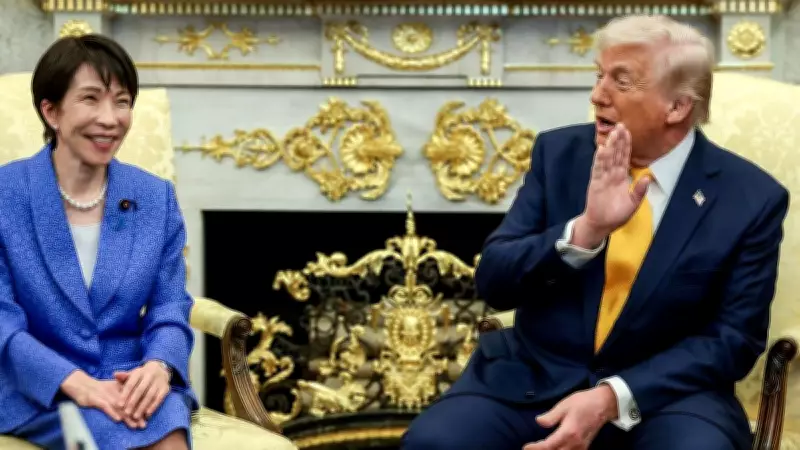
Trump's Fiery Exchange with Japanese Reporter Over Iran Strike Notification
In a recent social media post that has quickly gone viral, former U.S. President Donald Trump engaged in a sharp and controversial exchange with a Japanese reporter. The interaction, shared on March 19, 2026, by the account @TrumpDailyPosts, highlights Trump's characteristic blunt style and has sparked widespread debate about diplomatic communication and historical references.
The Confrontation Over Iran Strike Notification
The incident began when a Japanese reporter questioned Trump about his decision to strike Iran without prior notification to Japan. Specifically, the reporter asked, "Why didn't you tell us before you struck Iran?" Trump's response was immediate and pointed, retorting with, "Why didn't you tell us about Pearl Harbor?" This reference to the 1941 attack on Pearl Harbor, which led to the United States' entry into World War II, has drawn significant attention for its historical weight and diplomatic implications.
Analysts note that this exchange underscores ongoing tensions in international relations, particularly regarding transparency in military actions. Trump's use of a historical event to counter a contemporary question is seen by some as a strategic deflection, while others criticize it as an inappropriate analogy that could strain U.S.-Japan relations. The viral nature of the post, accompanied by a video clip, has amplified discussions on social media platforms, with many users debating the appropriateness of such comparisons in modern diplomacy.

Praise for Japanese Prime Minister's English Skills
In a separate but related social media post from the same day, shared by @RapidResponse47, Trump was shown commending Japanese Prime Minister Sanae Takaichi for her English proficiency. During the interaction, Trump remarked, "Do you understand this? Very good, I'll tell you! It's so nice that we don't have to sit through [the translation]... The next time you come, I'll have your language passed." This comment, while seemingly complimentary, has also sparked mixed reactions.
Observers point out that Trump's praise highlights the importance of language skills in international diplomacy, potentially easing communication barriers. However, some critics argue that the remark could be perceived as patronizing, given the context of the earlier exchange about Pearl Harbor. The juxtaposition of these two incidents—one confrontational and the other complimentary—paints a complex picture of Trump's diplomatic approach, blending sharp retorts with moments of apparent camaraderie.
Broader Implications and Reactions
The dual posts have ignited a flurry of reactions from political commentators, historians, and the general public. Key points of discussion include:
- Historical Analogies in Diplomacy: Trump's reference to Pearl Harbor raises questions about the use of historical events in modern political discourse. Experts warn that such comparisons can oversimplify complex issues and risk offending allies.
- Communication Styles: The exchange underscores Trump's preference for direct, often provocative communication, which contrasts with more traditional diplomatic norms. This style has been a hallmark of his political career, influencing global perceptions of U.S. foreign policy.
- U.S.-Japan Relations: While the praise for PM Takaichi's English might aim to foster goodwill, the Pearl Harbor retort could strain bilateral ties. Japan remains a key ally in the Asia-Pacific region, and such exchanges are closely monitored for their impact on strategic partnerships.
- Social Media's Role: The rapid dissemination of these posts on platforms like Twitter (now X) highlights how social media shapes political narratives. Viral moments can amplify minor incidents into major diplomatic talking points, affecting public opinion and policy discussions.
As these discussions unfold, the incidents serve as a reminder of the volatile nature of international diplomacy in the digital age. Trump's comments, whether intended as savage comebacks or casual praises, continue to resonate, reflecting broader trends in political communication and global relations.






