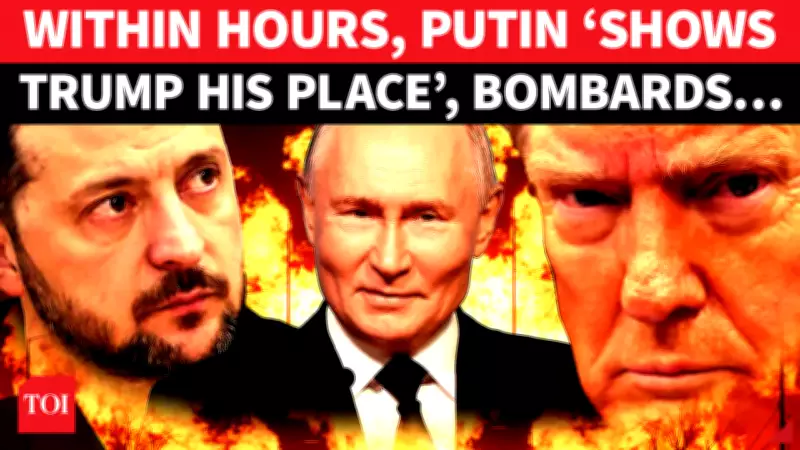
Trump's Ukraine 'Pause' Claim Sparks Diplomatic Uncertainty Amid Winter Crisis
A recent statement from former U.S. President Donald Trump has introduced a new layer of complexity into the ongoing conflict in Ukraine, raising questions about the veracity and implications of diplomatic communications in wartime. According to Trump, Russian President Vladimir Putin has agreed to implement a one-week pause in military attacks targeting major Ukrainian cities. This purported halt in hostilities is framed as a response to the severe winter conditions currently gripping the region, which have exacerbated humanitarian concerns.
Kyiv's Cautious Optimism Contrasts with Moscow's Ambiguous Silence
The Ukrainian government, led by President Volodymyr Zelensky, has responded to Trump's claim with a measured sense of hope, albeit tempered by caution. Officials in Kyiv have emphasized that any temporary cessation of Russian strikes would be critically important for the civilian population. Such a pause could provide a much-needed window for repairing essential infrastructure, particularly power grids that have been heavily damaged by previous energy-targeted assaults. This potential respite is viewed as vital not only for immediate survival but also for maintaining basic services during the harsh winter months.
However, the Russian government has maintained a notably ambiguous stance on the matter. Moscow has neither officially confirmed nor outright denied the existence of any agreement for a temporary ceasefire. This silence is particularly significant given the context of the conflict, where past attempts at establishing ceasefires have frequently collapsed or been violated shortly after their announcement. The lack of a clear confirmation from Russian authorities adds a layer of uncertainty to Trump's assertion, leaving international observers and stakeholders to speculate on the true state of negotiations.

Historical Context and the Fragility of Wartime Promises
The current situation must be understood against the backdrop of previous failed ceasefire efforts and the ongoing intensity of Russian military operations. Energy infrastructure strikes by Russian forces have been a persistent feature of the conflict, causing widespread disruption and suffering among Ukrainian civilians. These attacks have often preceded or followed periods of diplomatic maneuvering, underscoring the challenges of achieving lasting peace through temporary pauses.
In this environment, Trump's claim raises important questions about the reliability of verbal agreements and the potential for miscommunication or misinterpretation in high-stakes international diplomacy. The war in Ukraine has repeatedly demonstrated that promises made in the heat of conflict can be fragile and subject to rapid change. As such, the international community is closely monitoring developments, aware that words in this context can sometimes prove as volatile as the weapons being used on the battlefield.
The broader implications of this episode extend beyond the immediate humanitarian concerns. It highlights the intricate dynamics of wartime diplomacy, where public statements by influential figures like Trump can shape perceptions and influence the strategic calculations of all parties involved. Whether this purported pause materializes into a tangible reduction in violence or remains another unfulfilled promise will depend on the actions and commitments of the key players in the coming days.