

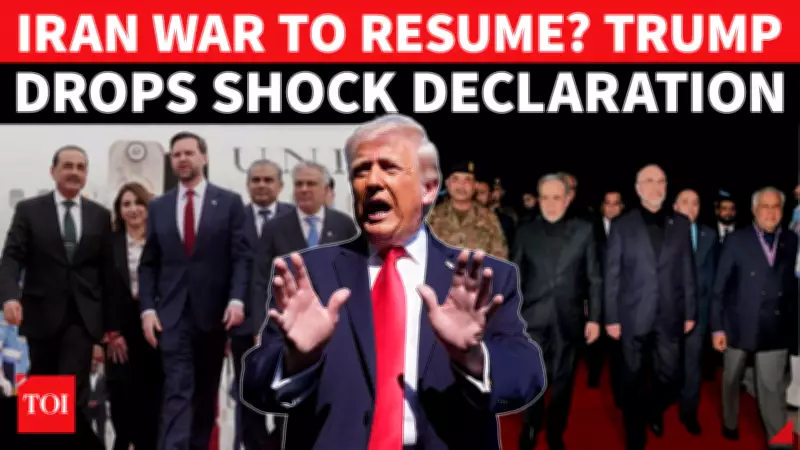
Trump Issues Stark War Warning as Iran Talks Collapse in Islamabad
In a dramatic development that has sent shockwaves through international diplomatic circles, former U.S. President Donald Trump has made provocative remarks suggesting the potential resumption of hostilities with Iran. His declaration comes amid the complete breakdown of high-stakes negotiations that were being conducted in Islamabad, Pakistan, where key diplomatic efforts to de-escalate regional tensions have now stalled indefinitely.
Failed Negotiations and Rising Tensions
The Islamabad talks, which involved multiple rounds of discussions between U.S. and Iranian representatives, were intended to address critical security concerns in the Middle East. However, negotiations reportedly collapsed over fundamental disagreements regarding the strategic Strait of Hormuz, a vital maritime chokepoint for global oil shipments. Diplomatic sources indicate that despite extensive efforts, both sides remained entrenched in their positions, creating an impasse that Trump's comments have now further complicated.
Trump's declaration, delivered in characteristically blunt language, included the ominous phrase "Even if there is..." which analysts interpret as a veiled threat of military action should diplomatic channels remain unproductive. This statement has amplified existing fears about the fragile state of U.S.-Iran relations and the potential for renewed conflict in a region already experiencing multiple flashpoints.

Regional Reactions and Escalating Dynamics
The timing of Trump's remarks coincides with several concerning developments across the Middle East. Israeli Prime Minister Benjamin Netanyahu has reportedly threatened to bomb Iran's nuclear facilities independently of U.S. actions, creating additional pressure on the diplomatic process. Meanwhile, Hezbollah forces have engaged in deadly clashes with Israeli Defense Forces, resulting in multiple casualties and further destabilizing the security landscape.
Iranian officials have responded to the failed talks by asserting their "upper hand" in negotiations and declaring readiness for "any scenario." This posture, combined with reports that China may be enhancing Iran's air defense capabilities, suggests Tehran is preparing for potential escalation rather than seeking compromise through diplomatic means.
Broader Implications for Global Security
The collapse of the Islamabad negotiations represents a significant setback for international efforts to maintain stability in the Middle East. With Trump re-entering the political conversation through his provocative statements, and regional actors like Israel taking increasingly independent actions, the prospects for peaceful resolution appear increasingly remote.
Security analysts warn that the current situation creates a dangerous environment where miscalculation could lead to broader conflict. The involvement of multiple state and non-state actors, combined with the strategic importance of the region's energy resources, means any escalation would have immediate global consequences affecting oil markets, international trade routes, and alliance structures that have maintained a precarious balance for years.
As diplomatic channels remain frozen and rhetoric intensifies, the international community faces mounting challenges in preventing a return to open hostilities between the United States and Iran, with the Islamabad talks now serving as a stark reminder of how quickly diplomatic progress can unravel when confronted with entrenched geopolitical positions and provocative political statements.






