

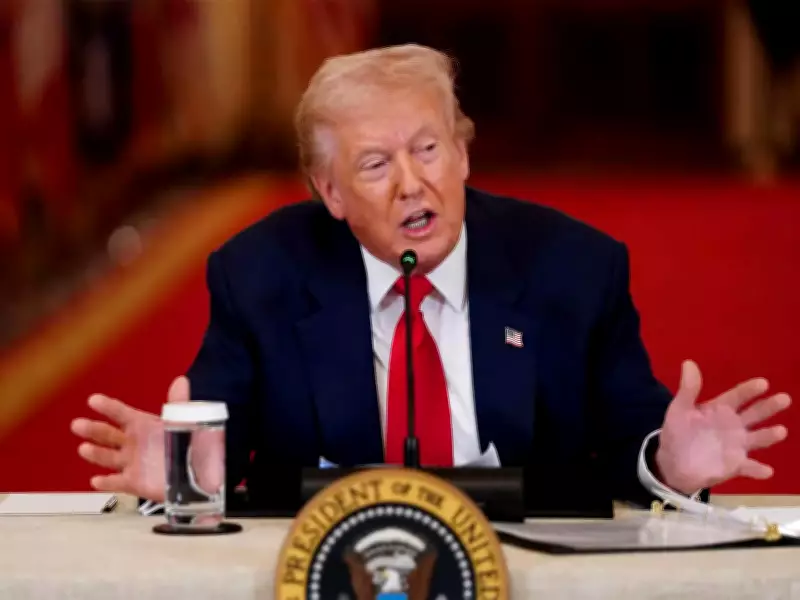
Trump's Warship Request for Strait of Hormuz Faces Allied Resistance
US President Donald Trump's urgent call for seven countries to send warships to help keep the Strait of Hormuz open has drawn a largely negative response from Washington's allies, putting his plans in serious jeopardy. The strait, a narrow passage between Iran and Oman, is one of the world's most critical energy chokepoints, with approximately 20% of global oil supply passing through it.
Trump's Public Appeal and Strategic Rationale
While he named China, Britain, France, Japan, and South Korea in a social media post on Saturday, urging them to help guard the waterway, the Republican did not identify the seven countries while speaking to reporters aboard Air Force One on Sunday. "I'm demanding that these countries come in and protect their own territory, because it is their own territory," Trump declared.
He elaborated on the strategic importance, noting, "We're talking to countries about policing the straits, because they are the ones — you know, we don't get oil, very little, 1%. China, for example, gets about 90% of its oil from the Strait of Hormuz. It would be nice to have other countries policing it with us. We'll help and work with them."

Background of the Crisis
The current situation stems from events on February 28, when the United States and Israel carried out joint strikes in Iran that killed its then-Supreme Leader, Ali Khamenei, triggering the ongoing conflict. In retaliation, Tehran has targeted both Israel and Gulf states hosting US military bases. Iran has effectively blocked the Strait of Hormuz, with its forces continuing attacks on the vital waterway as the war enters its third week.
Allied Responses: A Wave of Reluctance
The international community's reaction to Trump's request has been notably cautious, with several key allies expressing reservations or outright refusal.
- Japan: Prime Minister Sanae Takaichi said on Monday that Japan does not currently plan to dispatch naval vessels to escort ships in the Middle East. "We have not made any decisions whatsoever about dispatching escort ships. We are continuing to examine what Japan can do independently and what can be done within the legal framework," Takaichi told parliament. She is scheduled to meet Trump in Washington on Thursday.
- Australia: Catherine King, a minister in Prime Minister Anthony Albanese's government, told state broadcaster ABC that Australia would not send naval ships to assist in reopening the Strait of Hormuz. "We won't be sending a ship to the Strait of Hormuz. We know how incredibly important that is, but that's not something we're contributing to," King stated.
- South Korea: According to South Korea's presidential office, any decision would be made after discussions with Washington. "We will communicate closely with the US regarding this matter and decide after a careful review," it stated on Sunday.
- Britain: Prime Minister Keir Starmer has discussed the issue with Trump, a Downing Street spokesperson said, adding that Starmer also spoke with his Canadian counterpart, Mark Carney, and both have agreed to continue talks on Monday.
- France: While France has not responded publicly, President Emmanuel Macron has previously expressed willingness for the French navy to escort ships, but only if the conflict stabilises. Last week, Macron wrote on social media that he had spoken with his Iranian counterpart, Masoud Pezeshkian, and told him that Tehran must ensure freedom of navigation through the Strait of Hormuz and reopen it to shipping.
- China: China — not a US ally — has not publicly responded to remarks by Donald Trump but has previously called for a cessation of hostilities. Beijing is also the largest buyer of Iranian oil.
The collective hesitation from these nations underscores the diplomatic challenges facing Trump's initiative, as the war continues to disrupt global energy supplies and regional stability.






