

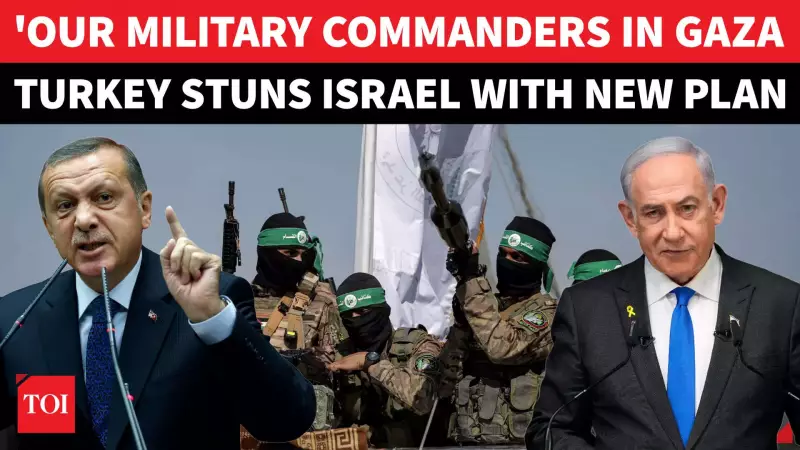
Turkey's top diplomat has pulled back the curtain on intense high-stakes negotiations concerning the future of Gaza, highlighting a pivotal global decision that is currently underway. Foreign Minister Hakan Fidan stated that a 'big discussion' is in progress regarding the deployment of a United Nations-approved international force intended for the Palestinian territory.
The Core Mission: Separation and Stabilization
Speaking at the prestigious Doha Forum 2025, Fidan provided crucial insights into the planned International Stabilization Force (ISF). He urged all parties involved to adopt a 'realistic and nuanced' approach to the complex situation. The minister clarified that the primary and immediate objective for the force must be to establish a buffer between Israelis and Palestinians along their shared border. This separation, he argued, is the essential first step to bring stability to the volatile region.
Fidan's remarks, made on December 7, 2025, underscore the significant challenges that remain before the force can become operational. He did not shy away from outlining the major unresolved questions that global mediators are currently grappling with.

Unresolved Questions and Major Obstacles
The Turkish Foreign Minister pointed to several critical issues that are still on the negotiating table. Key among them are the fundamental questions of the force's composition and its command structure. Determining which countries will contribute troops and, more importantly, who will have ultimate military command over the operation, are subjects of intense debate.
Furthermore, Fidan identified competing demands from the involved parties as a core obstacle to a swift agreement. He specifically noted Israel's persistent push for the complete disarmament of Gaza as a central and contentious point in the discussions. This condition remains a significant sticking point that complicates the formation and mandate of the proposed international force.
A Consequential Decision for Global Mediators
By framing the ISF deployment as one of the most consequential decisions currently before international mediators, Fidan elevated the issue to a matter of global strategic importance. His revelation indicates that behind closed doors, world powers are engaged in delicate diplomacy to shape the security future of Gaza. The outcome of this 'big discussion' will likely have far-reaching implications for the prospects of long-term peace and security in the Israeli-Palestinian conflict zone.
The path forward, as described by Turkey's foreign minister, is fraught with complexity. Balancing the urgent need for stabilization with the deeply rooted political and security demands of both sides will test the skill and resolve of the international community. The world now watches as mediators attempt to translate the UN approval for a force into a workable, effective, and accepted reality on the ground.






