

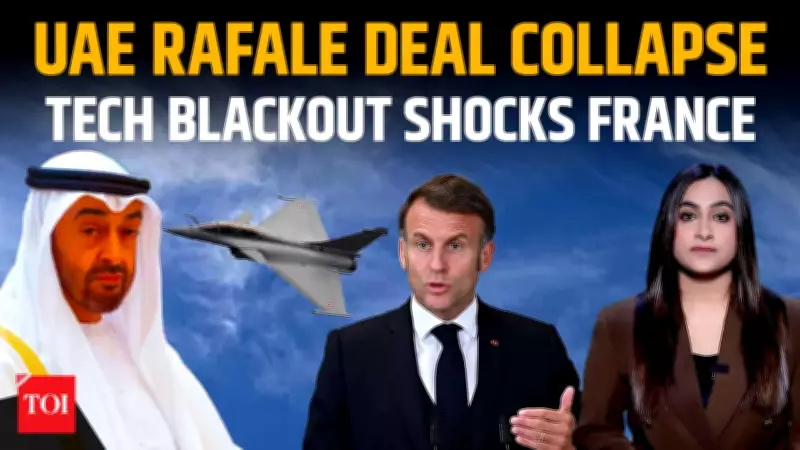
UAE Abandons Rafale F5 Funding Over Technology Access Dispute
A significant defense partnership has collapsed as the United Arab Emirates has officially withdrawn from financing France's next-generation Rafale F5 fighter jet program. This decision represents a substantial setback for French military ambitions and highlights growing tensions in global defense technology sharing agreements.
Why the Deal Unraveled: Technology Access at the Core
The negotiations between France and the UAE broke down primarily because Paris offered participation in the program without granting access to sensitive technology or involving Emirati companies in the development process. This condition proved unacceptable to Abu Dhabi, which had been expected to invest billions of dollars into the advanced fighter jet program.
The Rafale F5 represents a critical evolution of the Rafale platform developed by Dassault Aviation. This next-generation upgrade includes cutting-edge systems that position it as a cornerstone of France's future combat strategy. Key enhancements featured in the F5 variant include:

- The advanced Thales RBE2 XG radar system
- Significantly enhanced electronic warfare capabilities
- Integration with drone escorts for networked combat operations
- Improved stealth characteristics and sensor fusion
Financial and Strategic Implications
With the UAE's withdrawal, France now faces the considerable burden of fully financing the Rafale F5 project independently. This comes at a challenging time when military spending pressures are mounting across Europe, forcing difficult budgetary decisions for defense ministries.
Despite this setback in the F5 program, the UAE remains a significant Rafale customer. The Gulf nation has previously ordered 80 Rafale aircraft to replace its aging Mirage fleet, indicating that while the F5 partnership has collapsed, broader defense relations between the two countries continue.
Broader Trends in Global Defense Partnerships
This development underscores a growing trend in international defense agreements where strategic autonomy and industrial participation are becoming decisive factors. Nations are increasingly demanding not just finished military hardware but also technology transfer and local industrial involvement in multi-billion-dollar defense programs.
The UAE's decision reflects a broader shift among emerging military powers who seek to develop their own defense industrial capabilities rather than remaining dependent on foreign suppliers. This approach aligns with the UAE's Vision 2030 goals of diversifying its economy and building indigenous technological expertise.
France now faces strategic decisions about how to proceed with the Rafale F5 program. Options include seeking alternative international partners, scaling back the program's ambitions, or reallocating defense budgets to cover the funding gap left by the UAE's withdrawal.
This development serves as a case study in how technology access disputes are reshaping global defense partnerships, with implications for future collaborations between Western defense manufacturers and emerging military powers seeking greater technological sovereignty.






