UK and France Forge Major £650 Million Pact to Tackle Channel Migrant Crisis
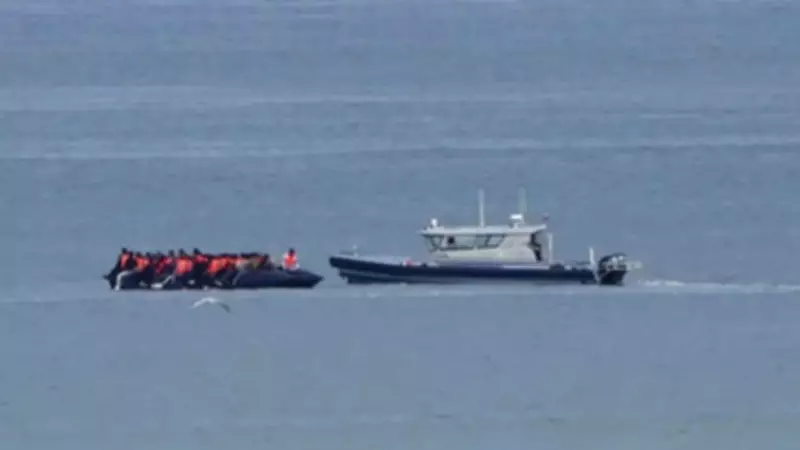
The United Kingdom and France have solidified a significant new three-year agreement valued at over £650 million, specifically designed to address the escalating issue of illegal migrants attempting to cross the English Channel in small boats. This comprehensive pact introduces robust enforcement measures, including the deployment of riot-trained police units, enhanced surveillance technologies, and stricter accountability mechanisms to curb the persistent flow of unauthorized crossings.
Escalating Crossings Prompt Urgent Action
The agreement emerges against a backdrop of a steady and alarming surge in Channel crossings. Official data reveals that over 41,000 migrants successfully reached UK shores in 2025, marking the highest annual figure since such perilous journeys became prevalent in 2018. The crisis has intensified in early 2026, with more than 6,000 crossings already recorded, placing immense political pressure on the UK government to implement more effective solutions.
British authorities have consistently argued that existing bilateral measures have proven insufficient to stem the tide. Concurrently, critics have pointed to perceived inconsistencies in enforcement efforts along the French coastline. The newly inked pact is fundamentally intended to fortify border control operations and systematically disrupt the sophisticated human smuggling networks that operate with impunity across northern France.

Key Components of the Enhanced Agreement
Under the terms of this landmark deal, France has committed to a substantial expansion of its on-ground presence and surveillance capabilities. This strategic enhancement includes the deployment of nearly 1,100 personnel, comprising a mix of law enforcement officers, intelligence agents, and military personnel, stationed along critical coastal areas. A particularly notable addition is a specialized 50-member riot-trained police unit, specifically tasked with managing hostile crowds and physically preventing migrants from launching boats into the Channel.
Surveillance efforts will be significantly upgraded through the utilization of drones, helicopters, and advanced camera systems to meticulously track migrant movements and facilitate timely interceptions. Maritime enforcement will also see a marked increase, with the introduction of a new patrol vessel and additional officers focused on targeting the so-called “taxi boats” frequently employed by smuggling syndicates.
Performance-Linked Funding Model Introduced
A major and innovative shift embedded within this agreement is the introduction of a performance-based funding model. Of the total £650 million commitment, approximately £150 million—constituting nearly a quarter of the entire deal—will be directly contingent upon France's demonstrated success in reducing the number of crossings. The UK government has explicitly stated that it reserves the right to redirect or withdraw a portion of this funding after a one-year review period if satisfactory results are not achieved, a move strategically designed to ensure greater accountability and tangible outcomes.
Mixed Political and Advocacy Reactions
Opposition leaders in the UK have been quick to criticize the government, arguing that committing such substantial public funds without guaranteed outcomes is imprudent, especially given that previous agreements have failed to produce a significant and lasting reduction in crossings. Some political voices have called for more drastic measures, including potential revisions to international legal commitments, while others have outright labeled the deal a misuse of taxpayer money.
Refugee advocacy groups have raised profound concerns, asserting that a reliance on enforcement and deterrence alone will not resolve the underlying humanitarian crisis. They contend that without the establishment of safe and legal routes for legitimate asylum seekers, desperate migrants will continue to undertake these dangerous journeys across one of the world's busiest shipping lanes. Independent experts echo this sentiment, suggesting that effectively dismantling smuggling networks requires broader international cooperation and long-term policy solutions that address root causes, rather than a singular focus on increased policing.

Building on Previous Cooperation Efforts
This new pact builds upon a foundation of earlier cooperation between the UK and France, including a 2023 deal worth £476 million that funded additional coastal patrols. It also operates in conjunction with a “one-in-one-out” migrant exchange arrangement that was introduced in 2025. Officials from both nations report that their joint efforts have already prevented tens of thousands of attempted crossings and led to the arrest of hundreds of individuals involved in smuggling operations.