

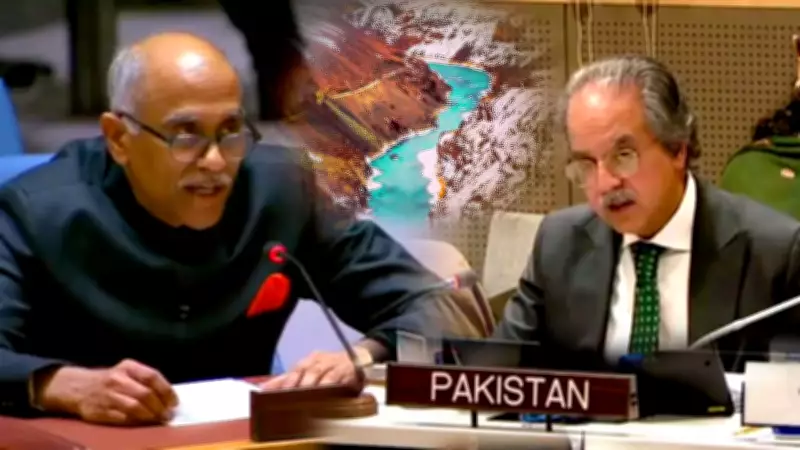
UNSC Drama: Pakistan Invokes Indus Waters Treaty As India Exposes Terror Nexus
In a dramatic exchange at the United Nations Security Council (UNSC), Pakistan sought to internationalize the longstanding Indus Waters Treaty issue through an Arria-Formula meeting. Pakistani representatives accused India of failing to uphold its treaty obligations, invoking the principle of pacta sunt servanda (agreements must be kept) and warning of potential risks in a nuclearized region.
India's Firm Rebuttal: Linking Terrorism to Treaty Compliance
India delivered a powerful counter-narrative, systematically dismantling Pakistan's claims with documented evidence of cross-border terrorism. Indian envoy P Harish presented a compelling case before the Council, highlighting how Pakistan's decades-long use of terrorism as an instrument of state policy has resulted in the loss of thousands of Indian lives.
The Indian delegation made several key points during the heated exchange:

- No international treaty can remain insulated from sustained cross-border terrorism
- India was forced to hold the Indus Waters Treaty in abeyance following the devastating Pahalgam attack
- Pakistan's victim posture is completely unacceptable and terrorism cannot be normalized under diplomatic cover
- Pakistan has no legitimate authority to comment on India's internal affairs, including matters concerning Jammu and Kashmir
Reaffirming Sovereignty and Exposing Duplicity
The Indian delegation firmly reiterated that Jammu and Kashmir remains an inalienable and integral part of India's sovereign territory. This clear assertion came as part of India's comprehensive response to Pakistan's attempts to internationalize bilateral matters.
The UNSC session once again exposed what India described as Pakistan's characteristic duplicity – simultaneously engaging in terrorism while attempting to leverage international treaties for diplomatic advantage. The exchange highlighted the fundamental disconnect between Pakistan's treaty-related complaints and its continued support for cross-border terror activities.
This diplomatic confrontation at the highest international level underscores the complex interplay between water-sharing agreements and security concerns in South Asia, with India maintaining that compliance with treaties cannot be separated from broader security considerations and regional stability.






