UPSC Key Highlights for January 14, 2026
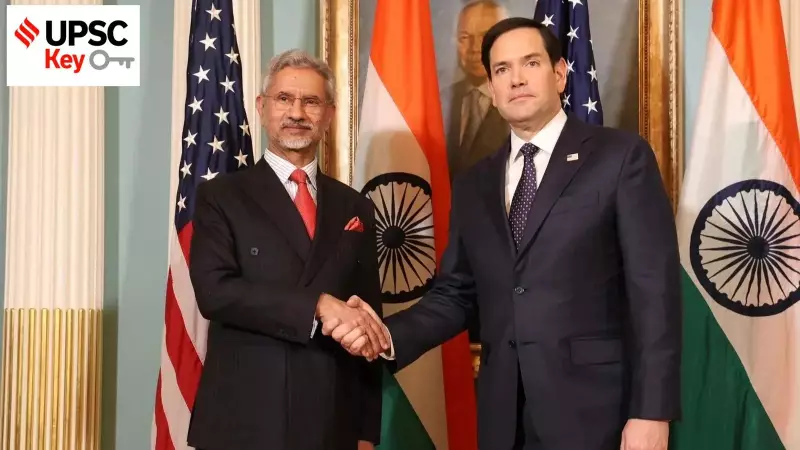
External Affairs Minister S. Jaishankar held a phone conversation with US Secretary of State Marco Rubio on Tuesday. They discussed critical bilateral issues. Topics included trade negotiations, defence cooperation, and nuclear energy. The talk aimed to strengthen India-US ties after recent strains.
India-US Relationship: Key Points
Jaishankar and Rubio focused on several areas. Bilateral trade talks remain a priority. Both sides also talked about critical minerals and energy security. They considered a possible meeting next month.
The Sustainable Harnessing and Advancement of Nuclear Energy for Transforming India Act came up. Rubio congratulated India on this law. He expressed interest in enhancing civil nuclear cooperation.

US Ambassador-designate Sergio Gor had earlier struck a conciliatory tone. He mentioned trade negotiators would speak soon. Gor also indicated India might join the Pax Silica initiative.
Pax Silica is a US-led effort. It focuses on securing AI and tech supply chains. The initiative aims to build safe technology networks.
Recent months saw tension in India-US relations. Issues included US tariffs on Indian goods. Closer US-Pakistan ties also caused concern. The latest conversation signals a willingness to move forward.
Gig Economy and Government Intervention
The Ministry of Labour and Employment has intervened in the gig economy. It asked quick commerce firms to drop "10-minute delivery" deadlines. Companies like Blinkit, Swiggy, and Zomato attended a meeting with the minister.
This move addresses worker safety concerns. Delivery partners often face dangerous road conditions. Extreme stress and unsafe working conditions are common.
Unions welcomed the government's step. They called it a victory for gig workers. A nationwide strike occurred recently. Workers demanded better pay and social security.
India's gig economy employs millions. A NITI Aayog report noted 7.7 million workers in 2020-21. This number could reach 23.5 million by 2029-30.
The Code on Social Security brings gig workers under a welfare framework. It enables registration on a national database. Workers gain access to health and insurance schemes.
Aggregators must contribute 1-2% of their annual turnover. This funds social security for gig workers.
Germany and India: Building Indo-Europe Stability
German Chancellor Friedrich Merz visited India this week. The talks aimed to deepen bilateral partnership. Both countries seek stability amid global disruptions.
They reaffirmed commitment to conclude the EU-India free trade agreement. The deal might finalise by month-end. European leaders will visit Delhi for Republic Day.
Defence cooperation also advanced. India and Germany agreed to develop a joint roadmap. Germany plans significant defence spending increases.
The concept of "Indo-Europe" gains strategic importance. It refers to enhanced cooperation between India and European nations. This partnership helps counterbalance US and Chinese influence.
Initiatives like the India-Middle East-Europe Economic Corridor support this vision. The corridor aims to improve trade connectivity. It involves ports, railways, and pipelines.
BRICS and India's Presidency
External Affairs Minister Jaishankar launched the BRICS 2026 logo and website. India holds the presidency this year. The summit will occur later in 2026.
Jaishankar highlighted global challenges. He mentioned geopolitical uncertainties and economic complexities. BRICS encourages dialogue and practical responses.
India's priorities include resilience, innovation, cooperation, and sustainability. Meetings will occur across Indian states and union territories.
BRICS now has 11 member nations. It represents nearly half the world's population. The group advocates for the Global South.
Urban Co-operative Banks: RBI Proposes Licensing Reopening
The Reserve Bank of India proposes reopening UCB licenses. This move comes after a two-decade freeze. The RBI favors large co-operative credit societies.
Credit societies are regulated by state registrars. They lack full banking capabilities. Converting to UCBs requires strong financial records.

The RBI suggests a 10-year operational track record. Applicants need a capital to risk-weighted assets ratio of at least 12%. Net non-performing assets should not exceed 3%.
Challenges include capital mobilization and governance issues. UCBs often face director-related lending problems.
Shaksgam Valley: India's Assertion Against China
India reaffirms its claim over Shaksgam Valley. The Ministry of External Affairs called the 1963 China-Pakistan agreement illegal. India does not recognise this boundary pact.
Shaksgam Valley lies in Pakistan-occupied territory. Pakistan ceded it to China in 1963. The area is north of the Siachen glacier.
China's infrastructure build-up in the region continues. This includes projects under the China-Pakistan Economic Corridor. India consistently protests these actions.
The CPEC passes through disputed territory. India asserts it violates sovereignty and territorial integrity.
Other Important Updates
The Home Ministry asks DGPs to standardise protocols for large crowds. Event organisers must submit comprehensive security plans.
A committee forms to examine digital arrests. The Centre informs the Supreme Court about this step.
The Supreme Court delivers a split verdict on anti-graft law provisions. The prior approval clause for investigating public servants faces scrutiny.
The Election Commission asserts its right to examine citizenship for voter lists. This comes amid challenges to summary revision exercises.
Syria declares a military zone east of Aleppo. Tensions with Kurdish forces rise.
The World Bank retains India's GDP growth forecast at 6.5% for 2026-27. It expects a slowdown from the current fiscal year.